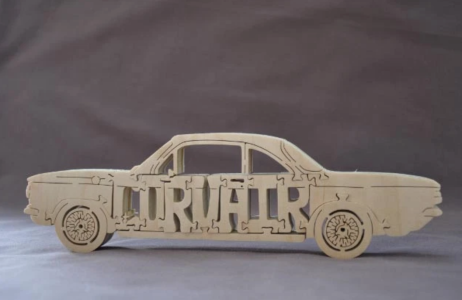
1962 Corvair

To this day, if the weather is nice and I have the driver’s window open, I instinctively hand-signal instead of using the blinkers. Probably a bad habit as no one looks for hand signals anymore.
The only hand signals we see on the roads here are people flipping the bird! ;-)
 
Michael

The Corvair heated the passenger compartment by pulling air across the exhaust manifolds into a distribution box which then had a fan that pushed it through the ducts to provide heat and defrost. The controls allowed cool air to be mixed with the heated air to adjust the temperature and divert the heat to the compartment or the windshield defroster. Since you were essentially you were pulling air off the engine if you had any oil leaks which they usually did you would get oily smoke. If you had a cracked or leaking manifold you actually got CO into the passenger compartment.

Ron
Really was unsafe at any speed in that case.
 
Really was unsafe at any speed in that case.
Not really Michael, it was certainly weird & quirky by American car standards but when viewed through European glasses, it was interesting and maybe even a little bit exciting considering that at the time, that 95% of all US manufactured vehicles were rear wheel drive with an approximate 70/30% weight distribution. The Europeans on the other hand, were aiming for a 50/50% weight distribution to make the car more stable and handle better. Add in that the Corvair had an air-cooled flat 6 engine that only had a displacement of 165 cubic inches and sipped petrol compared to the typical US V-8 that guzzled petrol and there were many compelling reasons to purchase the vehicle.
Remember, that attaining an honest HP rating for a production engine that was equal to the cubic inch size of the engine was a really big deal back in the 60's-70's. So, a flat 6 comprising only 165 cubic inches and yet pumping out 180 HP was a big deal at the time. Especially so, because everything was mechanically controlled, no fuel injection, no computer programming or mapping, no multiple valves/camshafts or electronically controlled camshaft timing. Everything was strictly and crudely controlled by mechanical means.

 
Last edited:
The Corvair had very light steering. Power steering was not needed, though it might have been offered.

I do consider early VW Beetles to be dangerous. Poor brakes, no substantial chassis structure or unibody structure, no anything that relates to safety.

If a boyfriend comes to the house with a fully restored 1960 VW Beetle to pick up your daughter, offer to lend your car. In my opinion, the VW was worse than the Corvair. Indeed, you are probably safer pedaling a tricycle.
 
To Packard's post I'll just add, that from 1960 to 1969 there were a total of 1,789,384 Corvairs sold in the US while for the same time period there were a total of 2,600,448 Beetles sold in the US, that's over 800,000 more Beetles. Both vehicles used a swing-axle rear suspension so any "Unsafe at any Speed" moments were common to both vehicles. And yet, Volkswagen did not get rid of the swing-axle suspension until the 1969 model year while Corvair changed out their swing-axle suspension to an IRS system back in 1965.

After that, we can talk about the 356 Porsche that also used a swing-axle rear suspension... :ROFLMAO:
 
Not really Michael, it was certainly weird & quirky by American car standards but when viewed through European glasses, it was interesting and maybe even a little bit exciting considering that at the time, that 95% of all US manufactured vehicles were rear wheel drive with an approximate 70/30% weight distribution. The Europeans on the other hand, were aiming for a 50/50% weight distribution to make the car more stable and handle better. Add in that the Corvair had an air-cooled flat 6 engine that only had a displacement of 165 cubic inches and sipped petrol compared to the typical US V-8 that guzzled petrol and there were many compelling reasons to purchase the vehicle.
Remember, that attaining an honest HP rating for a production engine that was equal to the cubic inch size of the engine was a really big deal back in the 60's-70's. So, a flat 6 comprising only 165 cubic inches and yet pumping out 180 HP was a big deal at the time. Especially so, because everything was mechanically controlled, no fuel injection, no computer programming or mapping, no multiple valves/camshafts or electronically controlled camshaft timing. Everything was strictly and crudely controlled by mechanical means.
You’re describing an unusual and interesting vehicle that a lot of people found fun to drive. I agree with that. My step brother had one of the souped up versions and he really dug it. He has swapped out to all kinds of hot cars over the years. The one he has kept the longest is the Mazda Miata. Not powerful compared to the others but a lot of fun.

My comment has to do with the ability of a Corvair needing maintenance (how many others?) to asphyxiate you if you’re parked and listening to the radio in the winter. No speed danger.
 
You’re describing an unusual and interesting vehicle that a lot of people found fun to drive. I agree with that. My step brother had one of the souped up versions and he really dug it. He has swapped out to all kinds of hot cars over the years. The one he has kept the longest is the Mazda Miata. Not powerful compared to the others but a lot of fun.

My comment has to do with the ability of a Corvair needing maintenance (how many others?) to asphyxiate you if you’re parked and listening to the radio in the winter. No speed danger.
On a recent TV show (I forget which) they had a guy commit suicide by running a hose from his new car to the passenger compartment. Apparently you need an old car for this type of suicide. The new ones have clean enough exhaust to simply leave you with a bad headache. Of course I am not going to personally test that theory, but I read it in a publication (not a post).

The only credible source I found online listed the results (death) from exhaust (Daewoo Nubira). I’m not sure a Daewoo exhaust it really a “modern car”, but It appears that you can still kill yourself with car exhaust given enough time. Alcohol was also a contributing factor.

I still think you will have to be very patient for the desired result. Alcohol may make waiting easier, but the long wait time may require a rest room break.

 
Last edited:
How about we move the discussion away from the suicide via car exhaust. I think that there may be some readers like myself who would rather read about woodworking than have bad memories resurrected.

It would be appreciated.

Peter
 
My comment has to do with the ability of a Corvair needing maintenance (how many others?) to asphyxiate you if you’re parked and listening to the radio in the winter. No speed danger.
Ha...not to worry, the radio was an option. :ROFLMAO: :ROFLMAO:

The thing you did learn early on was to keep a roll of paper towels in the car in case you needed to wipe the inside of the windows. That fine oil mist from the manifold heater coated everything inside (and was probably beneficial to the vinyl upholstery :) ) and that included the windows. Wiping the windows with a cloth towel only spread/smeared the oil film around whereas, the paper towels cut through the oil film although it took several paper towels to suck up the mess.
 
Last edited:
I added a windshield washer to my Corvair. it was essential with all the snow and salt on the ground in Syracuse. Syracuse also had a nickname at the time as “Salt City” because it had a history of salt mining in the area. It was no longer profitable to ship the salt, but it was fairly inexpensive to use. The soles of my boots could attest to the damage salt could do (like disintegrating thread).

In any case the after market kit included a vinyl bladder to hold the washer solution and a rubber pedal to pump it to the windshield. I would have to pump it several times to make the washer solution to flow.

I also added a rear window defogger, which was sticky copper foil that applied like window alarm tape. It worked but the lines of copper were annoying.

No power windows or door locks (I don’t even know if those were available).

The best feature of the car was the two fresh air vents in the footwell. Since there was no engine heat to pre-warm the air, it came in at outdoors temperature, and with a huge flow of air. No other car that I have owned did as well.
 
Crash pads (dash soft covering) were not a thing in the early ‘60’s. Never found any of it scary, it just was.

Tom
That was still going up into the late '70s. I had a '78 Jeep CJ-5. They had all metal dashes and a metal grab-handle, on the passenger's side, along with a wiper motor bulge, that was unpadded too. They did install a pad along the upper edge in later years but I don't remember if it was by regulation or just voluntary.

As far as Corvairs, I'm pretty familiar, though never owning one myself. Both my grandmother and a great aunt had them, when I was a kid. The aunt had one, at two different times.
A high school friend had one in the 80s, with a 327 Chevy in the back. It was quite the ordeal, manually wrangling that thing into it place. The biggest hurdle was getting the cooling system working, on a car intended for an air-cooled engine. Plumbing was one thing, getting decent airflow to it was challenging.
 
I will have to go back later and read the posts more closely.
But I don’t think I saw anyone comment about the Corveight.
Corvair with the engine swapped for a V-8. A wild machine that apparently handled just fine from what I recall.
 
I will have to go back later and read the posts more closely.
But I don’t think I saw anyone comment about the Corveight.
Corvair with the engine swapped for a V-8. A wild machine that apparently handled just fine from what I recall.
Was this a factory option? Or just something hot rodders did?

[Another case od artificial “intelligence” at work in my spell checker. It changed “hot rodders” to the more sensible “hot rudders”. What are “hot rudders” anyway?]
 
Was this a factory option? Or just something hot rodders did?

[Another case od artificial “intelligence” at work in my spell checker. It changed “hot rodders” to the more sensible “hot rudders”. What are “hot rudders” anyway?]
The flat 6 cylinder was the only factory engine in a Corvair. There were 3 different displacements over the life of the Corvair. There was a turbocharged performance option.

Tom
 
Was this a factory option? Or just something hot rodders did?

[Another case od artificial “intelligence” at work in my spell checker. It changed “hot rodders” to the more sensible “hot rudders”. What are “hot rudders” anyway?]
It was a gear-head thing. Some genius mechanical type figured it out. I think a few were made in the 1970s.
 
Included in the purchase price: Rust.

Mine rusted in the rear corners of the front wheel wells, and the front corners of the rear wheel wells.

I knew nothing of autobody work, but bought some Bondo, filled the voids with crumbled up aluminum foil, and applied and sanded the Bondo. The paint on the roof, hood and rear deck had flaked off, and I sanded those surfaces smooth and sprayed 3 coats of lacquer. The lacquer looked great after compounding. I sold the car to a commercial airliner employed aircraft mechanic.

He looked the car over, said it looks great and never inspected any of the mechanicals. He said, “There’s nothing on a Corvair that I can’t fix.”

[Once again the A.I. spell checker has made a dubious substitution. Changed “flaked” to “flakes”, which is wrong, and “wells” to “walls” which makes no sense.]
 
It was a gear-head thing. Some genius mechanical type figured it out. I think a few were made in the 1970s.
More than a few...like tons. :) There was a kit produced by someone that you could purchase and install/weld together and then you just added the engine, usually a small block Chevy. Someone also made a kit to install a complete 455 Olds Toronado engine and drive system. Again, moving the engine closer to mid-ship, got you closer to that ideal 50/50 weight distribution.
 
More than a few...like tons. :) There was a kit produced by someone that you could purchase and install/weld together and then you just added the engine, usually a small block Chevy. Someone also made a kit to install a complete 455 Olds Toronado engine and drive system. Again, moving the engine closer to mid-ship, got you closer to that ideal 50/50 weight distribution.
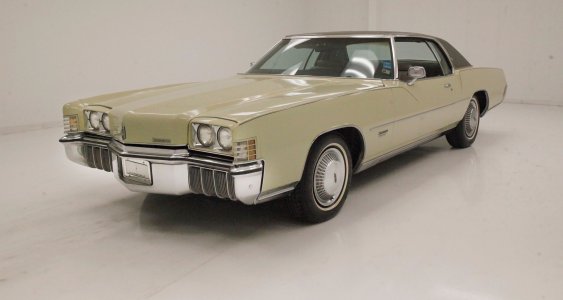
I had a 1972 Oldsmobile Toronado, and aside from the aside from the huge displacement, it was as far from a high performance engine as you could get.

I once burned out a directional signal bulb up front. The workshop manual called out 6 hours labor to replace it. It required removing the entire front bumper. Luckily, my local mechanic had a high school basketball player working for him. He was an about 6’ 2’ and 130 pounds. His arms were long and thin enough to reach behind the bumper and replace the bulb in minutes. Luckily I was there to watch or it probably would have cost hundreds of dollars.

Source for high performance engine:

1764620645277.jpg
 
More than a few...like tons. :) There was a kit produced by someone that you could purchase and install/weld together and then you just added the engine, usually a small block Chevy. Someone also made a kit to install a complete 455 Olds Toronado engine and drive system. Again, moving the engine closer to mid-ship, got you closer to that ideal 50/50 weight distribution.
That's the way the one my friend had was setup. The engine was in front of the transaxle, leaving that original location empty. We literally lifted the engine in place, with a long piece of a 4" x 4" through the open windows. IIRC, there were 4 of us, 2 on each side, walking it back. This would have been 1982 or 3?
 
Back
Top