Circle Jig

I looking to purchase to cut circle out of speaker baffles to fit the drivers. I need it to be able to cut small to medium sized circles.
 
If it is something you are only going to use very rarely, then a shop made jig can work, though setup will be more tedious.

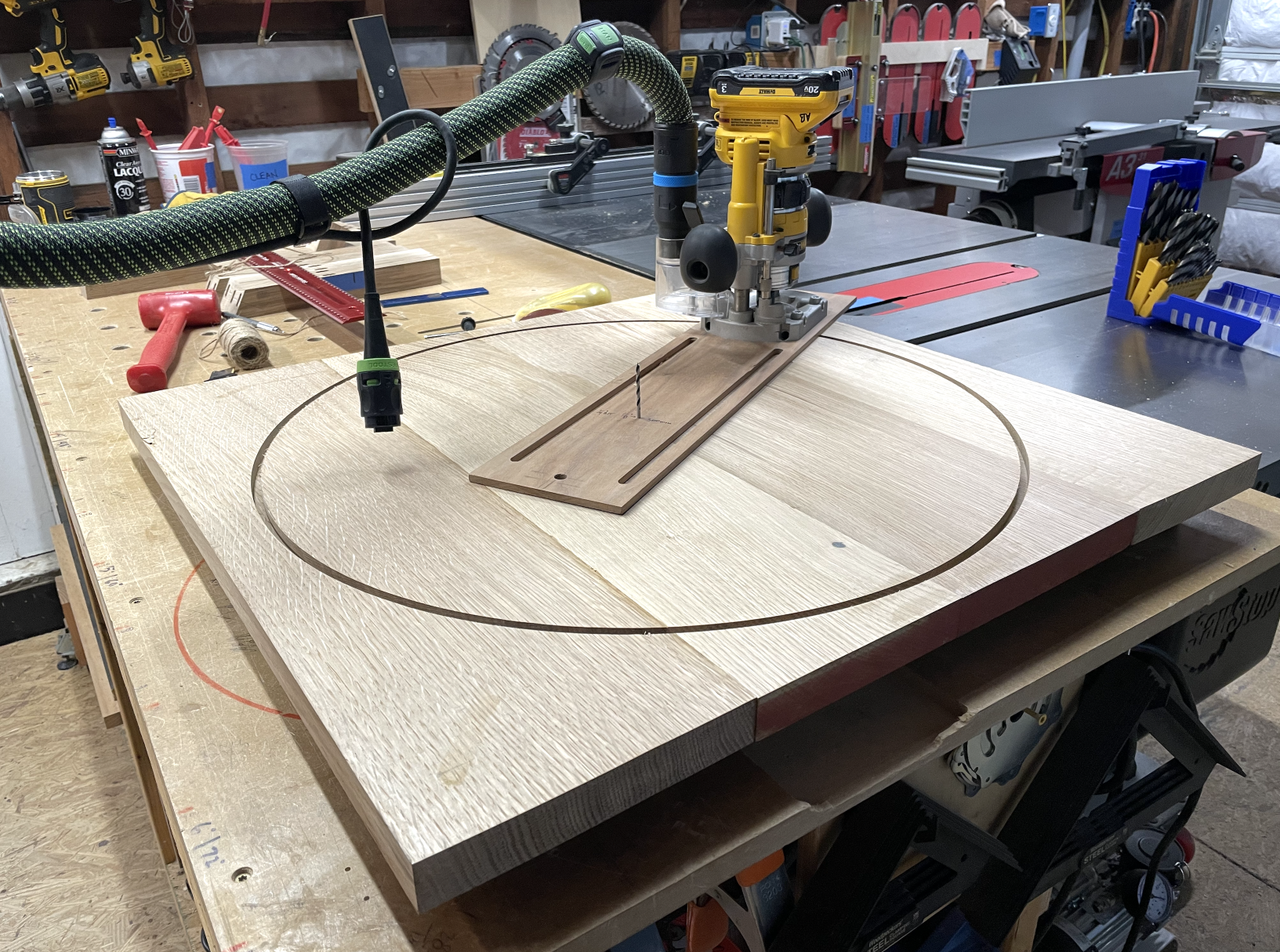
I wanted to make a large radius end to a butcher block countertop. I tried (in vain) to get an acceptable result just cutting the radius with my jigsaw. I ended up making my own shop made circle cutter.

I cut a piece of 1/2” thick MDF about 1” wider than the diameter of my router bottom plate. I used the bottom plate (removed) as a drilling template and used a vix bit for the pilot holes. I then drilled and countersunk the holes. I used the existing screws to mount the piece of MDF to the router and then plunged a hole in the center. I measured from the center of that hole to mark the radius and drove a really sharp, hardened nail through.

Use is pretty intuitive. Drive the nail into the stock at the center point and run your router. If you are cutting an end like I did, or are cutting out a disk, I recommend that you first rough cut the circle with your jigsaw, leaving about 1/8” - 3/16” material to remove.

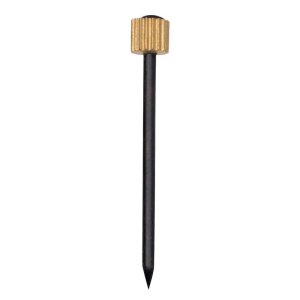
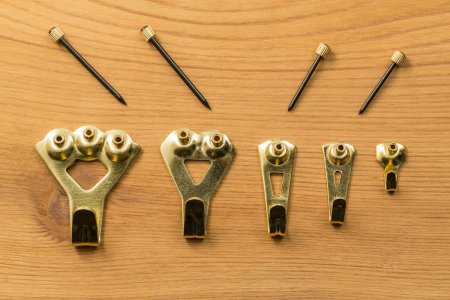
I used this type of nail—stolen from a package of picture hanging hooks. Available at Home Depot, Lowes, Amazon, etc. It has a small diameter hardened shaft and is needle sharp. Other nails will work but will be less satisfactory.

1763913893391.jpg

NOTE: The actual length of the nail is about 1” - 1-1/4”. The image above makes it look like a giant spike. The image below gives a better sense of scale:

1763914453679.jpg

The shop made circle jig should take less than 30 minutes to make and is re-usable. You can pre-drill holes at fixed increments if you like. I just measure and make a new hole for each circle. These jigs are so easy to make that I don’t retain them. I would typically hang them on a peg hook until I need the wall space and then I dispose of it.

Functionally it works as well as a store-bought version. If you are going to make frequent use of it, go ahead and buy one. Otherwise, make one yourself.
 
I must have 6 different ways to cut a circle up to using the Shaper Origin, however I don't have a 1010.

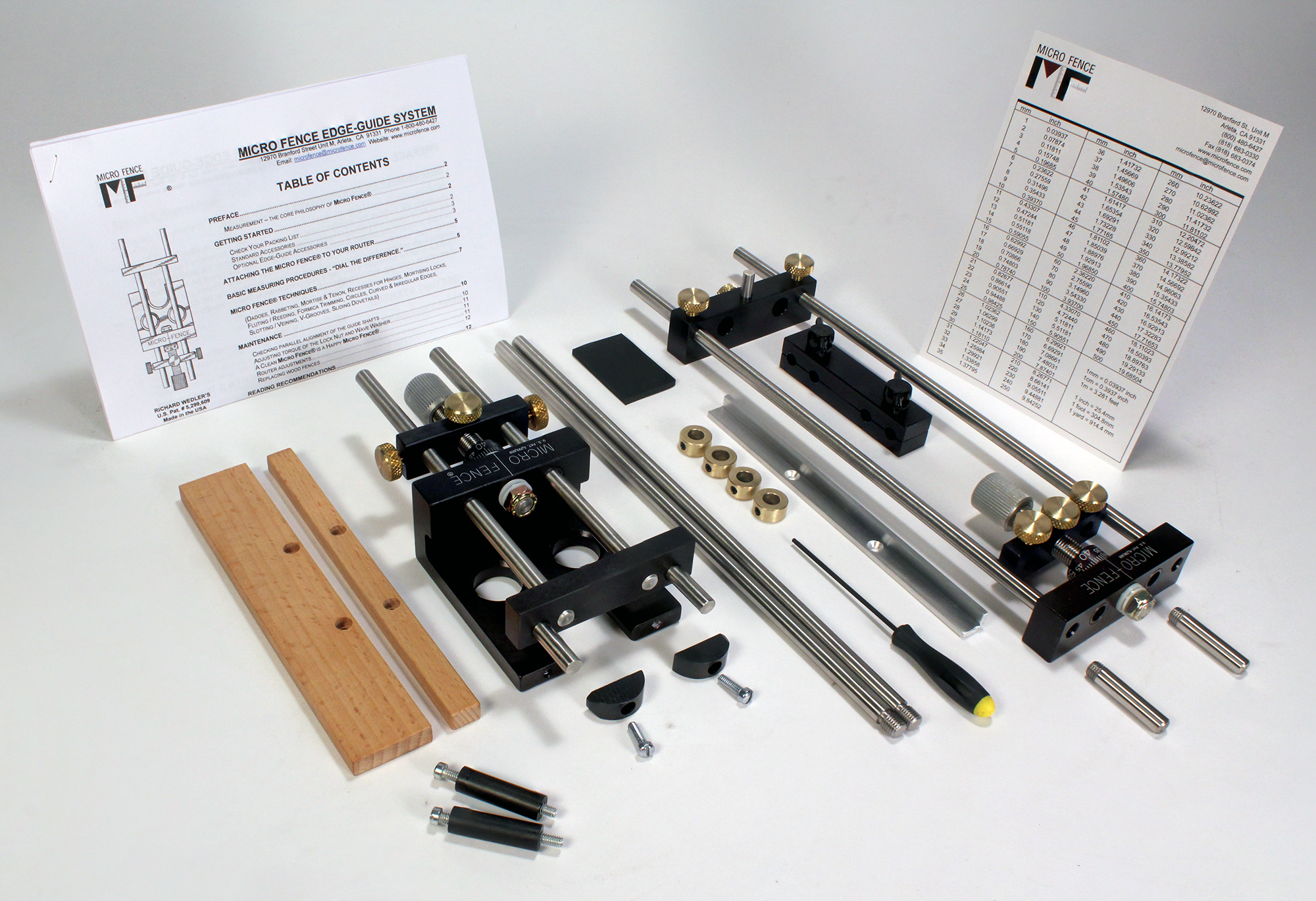
Aftermarket ones have always been harder to find. This is one that is designed for the 1400 and 2200 that rarely gets mentioned. I have one but because I tend to get things in advance of usage (and then potentially never use them) I haven't taken it and all of its accessories out of the case. https://www.woodcraft.com/products/...cTbYBHKtADd7amywOFs7LPDX1-4quzIRoCuqQQAvD_BwE

Peter
 
I looking to purchase to cut circle out of speaker baffles to fit the drivers. I need it to be able to cut small to medium sized circles.

How small?

If it is something you are only going to use very rarely, then a shop made jig can work, though setup will be more tedious.

...

Functionally it works as well as a store-bought version. If you are going to make frequent use of it, go ahead and buy one. Otherwise, make one yourself.

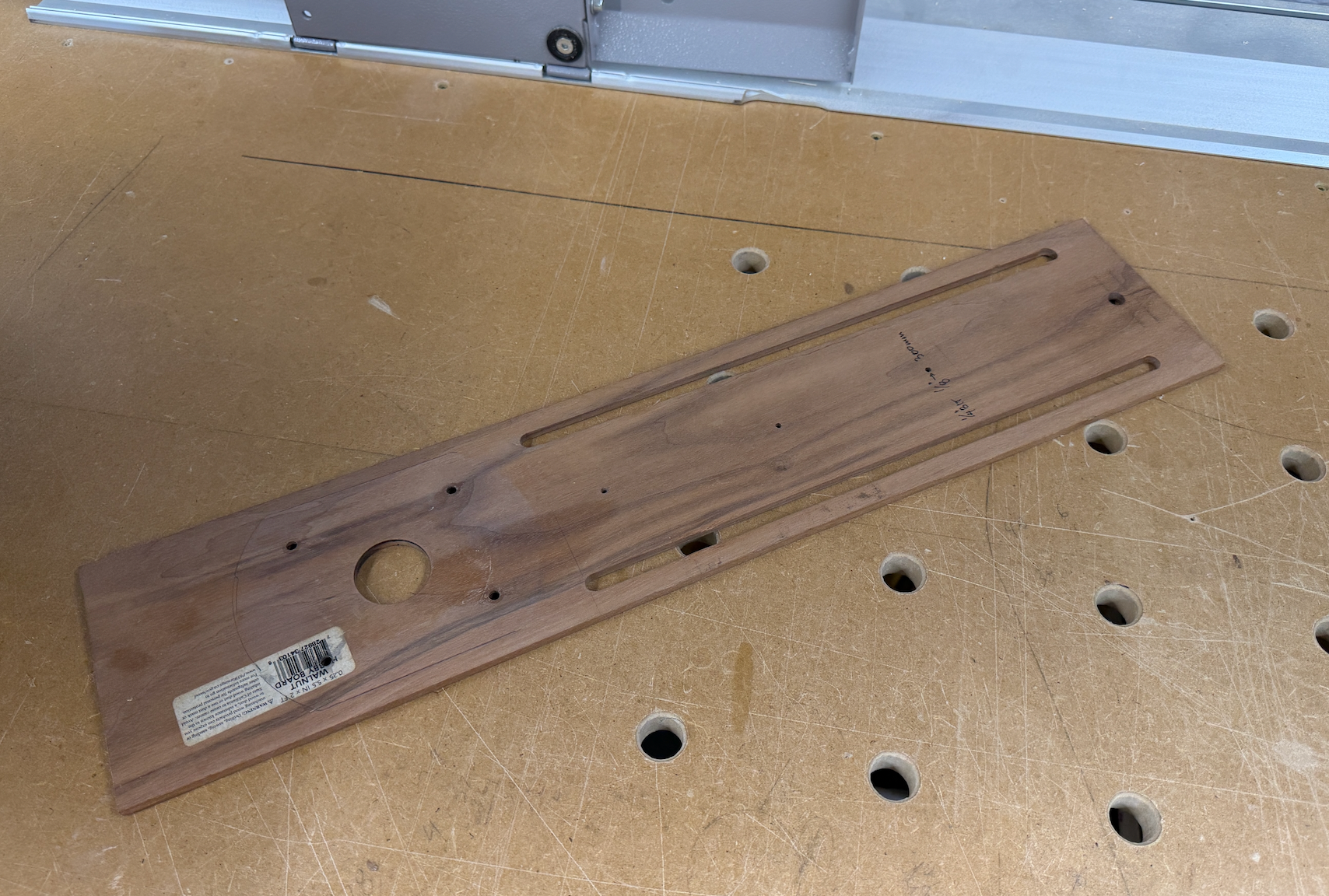
I agree with this. If you're cutting a lot of circles, store bought can be useful. If you just need a few, DIY is the way to go. I think circle jigs are probably the easiest jigs to make.

This old piece of scrap has been been very useful and whenever I need a circle, I just add a new hole to pivot from.

Monosnap_2024-01-20_09-48-45.png


Library_2025-11-23_09-38-12.png
 
I've used this one for speaker building for last 15 years, have cut anything from 2" tweeter holes to 14" subwoofer. Initial setup is a bit fiddly but works great. Also handy for various edge trimming tasks where a larger base support is helpful.
Not sure if the rods are correct diameter for your router though.

 
I thought that’s what the holes in the guide rails are for?

Tom
 

Attachments

  • IMG_0371.jpeg
    IMG_0371.jpeg
    1.1 MB · Views: 31
  • IMG_0369.jpeg
    IMG_0369.jpeg
    1 MB · Views: 29
  • IMG_0368.jpeg
    IMG_0368.jpeg
    1.2 MB · Views: 33
  • IMG_0367.jpeg
    IMG_0367.jpeg
    1.3 MB · Views: 31
What jig you use might depend on the tolerance you wish to hold.

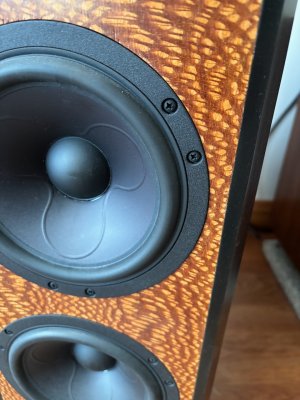
In below photo I made scrap wood test cuts for the drivers for this pair of speakers until they were pretty much friction fit in the cutouts. Some amount of fussing with digital calipers and eventually cut holes about 0.2mm bigger than the drivers. This is a pretty high end build with high tolerance Danish drivers, you might have speaker bodies that are not 100% round - test cuts are your friend and a jig that allows micro adjust will be desirable.


IMG_0704.jpeg
 
Smallest would be 45 mm in diameter and biggest would be 150.5 mm in diameter. I realize I could use a hole saw for some of them but I fear the cut quality would suffer.
You could use the hole saw to make a pattern/jig that you then rout out with a guide bushing or ball-bearing pattern bit. Although 150mm is a pretty big hole saw.

@Vtshopdog , is that Lacewood? Very nice.

At any rate, if you want to justify another tool purchase, this is the kind of thing a Shaper Origin does in its sleep.
 
I've used this one for speaker building for last 15 years, have cut anything from 2" tweeter holes to 14" subwoofer. Initial setup is a bit fiddly but works great. Also handy for various edge trimming tasks where a larger base support is helpful.
Not sure if the rods are correct diameter for your router though.

Another vote here for the M Power jig
 
Much like @4nthony I have more than a handful of ways to make holes, that are bigger than normal drilling.
Shaper Origin is, as quoted by Russ, "the most expensive drill press in the world", but it's also the most precise.
However, it is also wayyy overkill for this type of project.
Tom's suggestion of a track is really good too, but again, way too big for a job like this. Tabletops, radius ends, etc. it's great.
Jigs, like the M Power are really good too, but again pretty expensive, for a simple hole.
IMHO, the way to go here is a simple shop-made trammel. Mine is basically like 4nthony's, but easier to make.
It's a simple strip of 1/4" MDF, with pivot holes drilled as needed. The simplicity is on the other end. Instead of bolting the router to the strip, drill a hole that matches a router bushing. A clean smooth hole, from a Forstner bit (or similar) is best. Then when you need to use it, you just place the bushing into that drilled hole. This is not only far easier than getting the drilling pattern right, but it also works with any router, plus you don't twist the cord up with every pass around the hole. The router will spin, in the jig, rather than being mounter solidly to it.

In this particular instance, with possibly assembled speaker boxes, I think I would use the trammel to make templates. Then cut the actual holes, in the workpiece, using the template. I say this, mostly because there is the potential for movement, when the center plug is cut free, while using a trammel. When everything is well controlled, on a large work surface, it's not too bad. On a smaller project/assembly, cutting around a template, allows the plug to fall free, since it is not constrained by the center pivot.
 
There is also the consideration of edge-quality on holes.

When I was making pour-over coffee makers (for sale and as gifts), I had to make a hole at the top for the filter holder. A hole saw cut slowly, and left a rough, sawn edge.

A forstner bit generated so many chips that it was unmanageable.

I ended up routering the hole using a template, rather than a trammel. I found the trammel difficult to use in those small diameters.

If you are going to use a hole saw, adding a sawdust purge hole will speed things up.

First make a light cut with the hole saw to indicated the location of the hole. Then through-drill a hole that is tangential to the waste side of the hole. That will allow saw dust to exit the saw kerf, reducing heat and speeding up the cut.
 
Most speaker drivers will be countersunk to a very specific depth. Basically cut a round dado in face and then a second, smaller full depth concentric hole is cut to open up the box to mount the driver. Woofers and midrange speakers generally like some sort of bevel or round over on the back side of hole to allow them to "breathe"

The specific countersink depth is a big deal for the sound wave propagation (blah, blah, blah, insert arcane audio language here....) Making both cuts from a single trammel pivot hole is generally easiest.
 
Back
Top