derekcohen
Member
- Joined
- Jun 22, 2008
- Messages
- 1,060
I have worked with Jarrah for a number of reasons. Firstly, it is in a sense the most famous of West Australian timbers, growing in a small area south of Perth, and no where else in the world. Secondly, it has potentially beautiful figure and colour, and can create stunning furniture. Lastly, it is endangered, and the forests have been decimated to meet demands for exports around the world over the past 100 years. So durable is it, that it paved the roads of London, became railway sleepers, flooring, and jettys. Resistant to termites, it found its way into roofing timbers and pergolas. And that is where mine comes from .. old roofs and pergolas. Out in the sun for many decades. By the time I get it, it has been baked and close to petrification (is that a word?).
This past July, which is the middle of our winter, I was gifted several pergola beams,. Owing to a lack of space, these lay unceremoniously in the garden, open to the rain and pools of rain water. When the rain abated, I hauled them into the workshop and took a chainsaw to them, cutting them into convenient lengths, before storing them on shelves. The beams were sodden, or at least the ends were, since the sides were painted and only the end grain was open. I cut away about 6" from each end, and noted the wood was dry. Interesting.
A few weeks ago I pulled out some of these beams, curious to see if they could be used now. I was not optimistic, but I needed Jarrah to build a pair of bedside tables. This is a painted beam about to be power planed (a much faster and less messy method of removing paint than using a paint stripper) ...
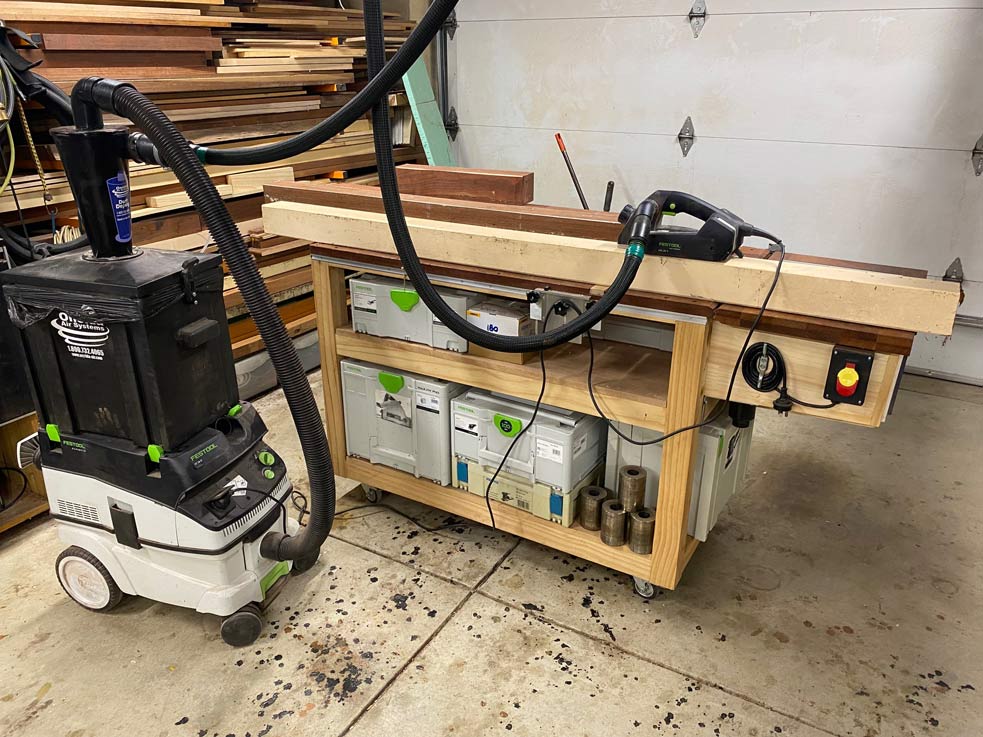
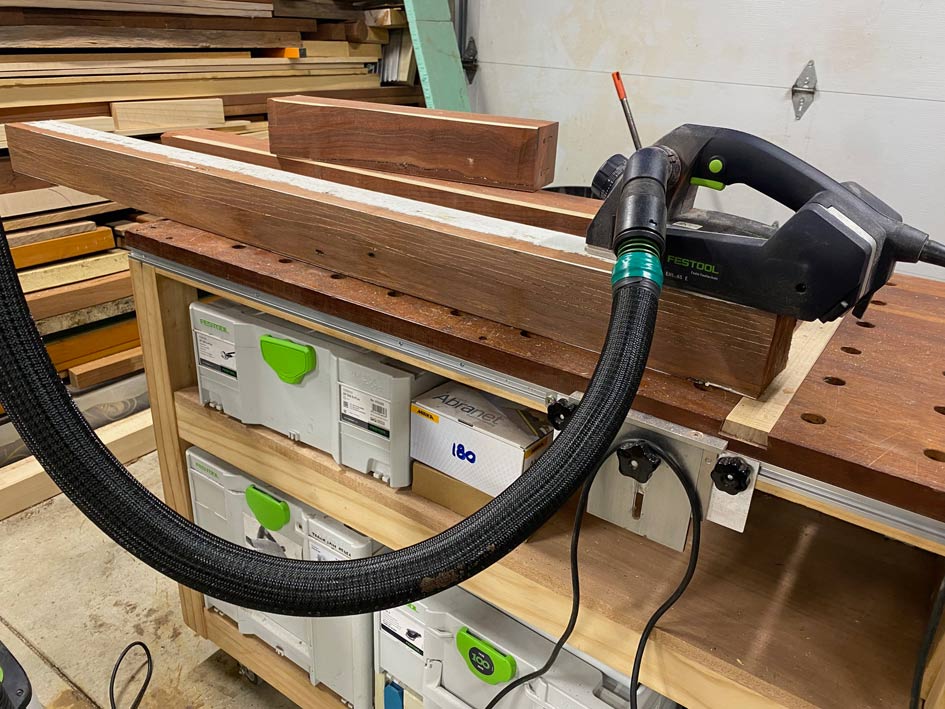
The wood was dry, so I re-sawed it into roughly 4" wide boards, jointed and thicknessed them, match-planed, and glued up into panels.
For tools, I wanted to use the tool kit I had recently made. Working Jarrah would be a stern test of their ability to build furniture when I attend a course in New Zealand in August.
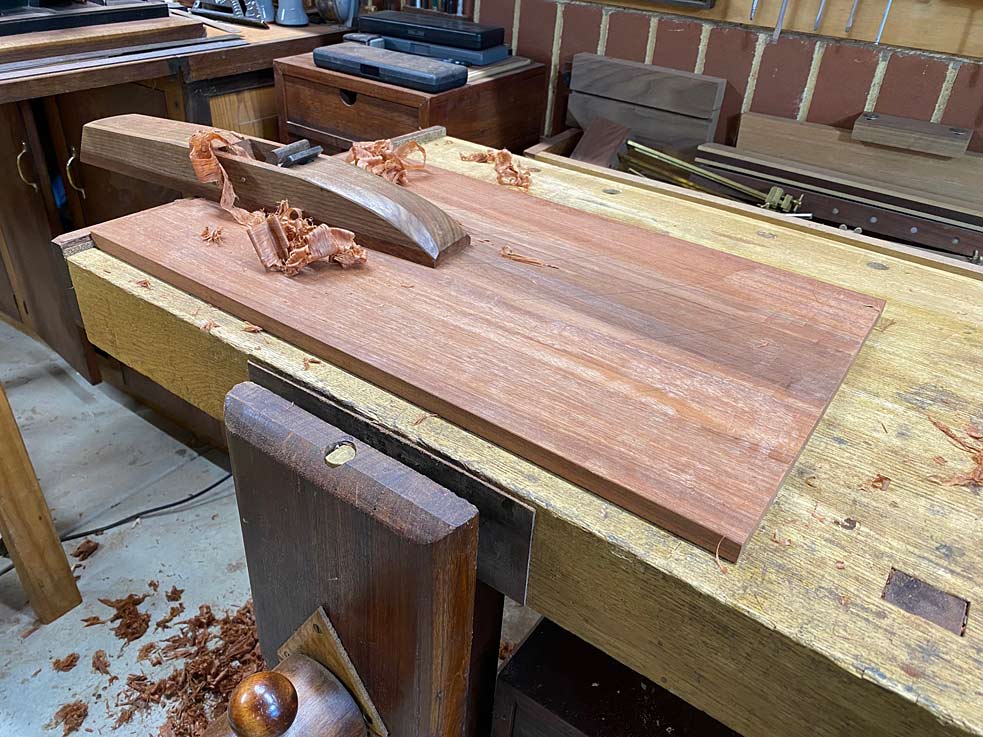
Here is the Trying plane (as a short jointer) levelling panels ...
And the smoother ... well ... smoothing ...
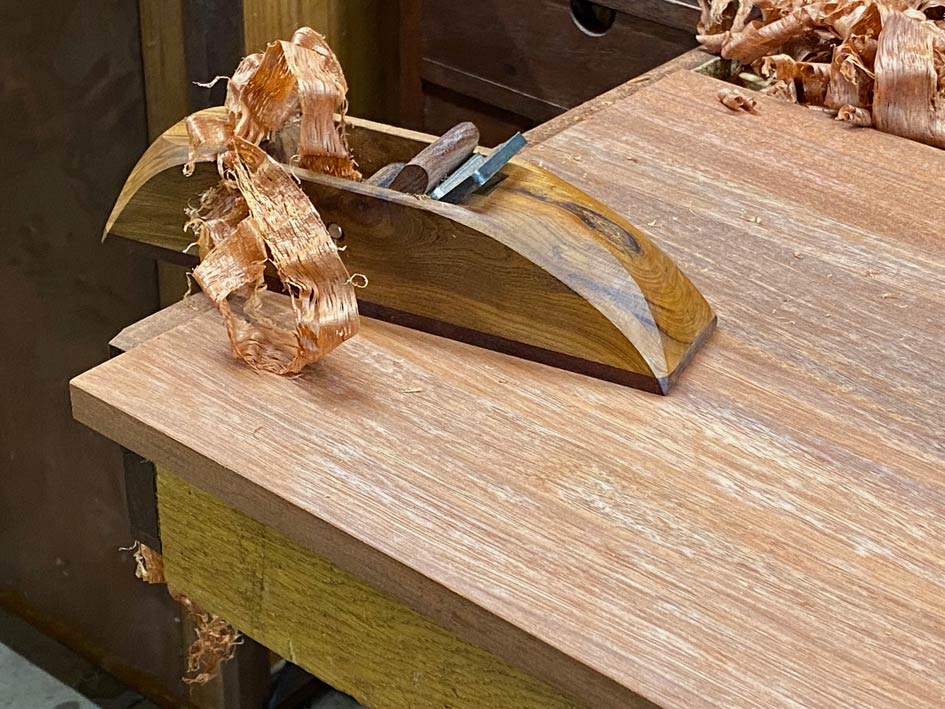
It was evident that this Jarrah was unusually hard and interlocked. That these planes coped was inspiring!
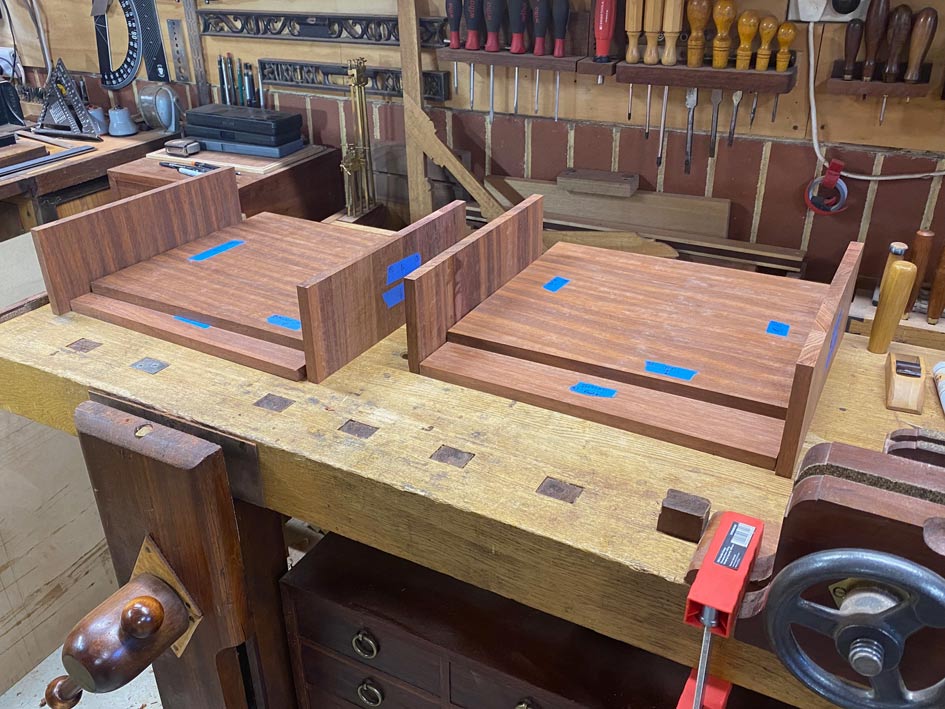
Loose parts to make two cases. I think that dovetailing these is going to be interesting ... not.
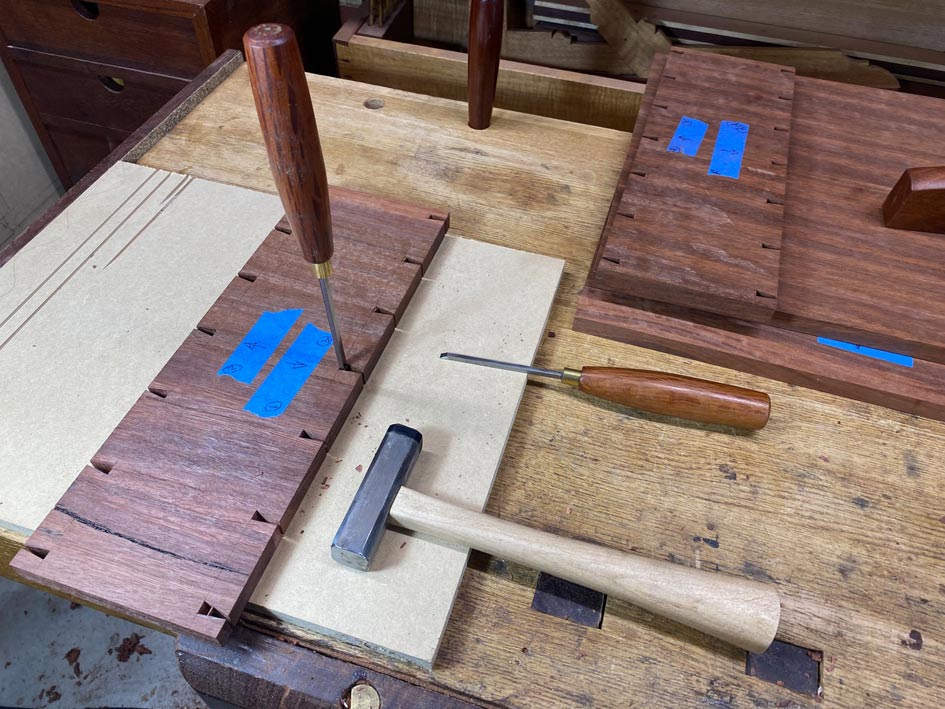
I was unsure whether the chisels I had made could chop into this wood. The steel is 3mm thick M2. They are very light in the hand, and I was concerned that they would be too light. Perhaps I should take my Koyamaichi oire nomi?
I need not have been so pessimistic. The chisels worked wonderfully. Perhaps the thinner blades had less difficulty. Perhaps they were sharp and that was the main thing ...
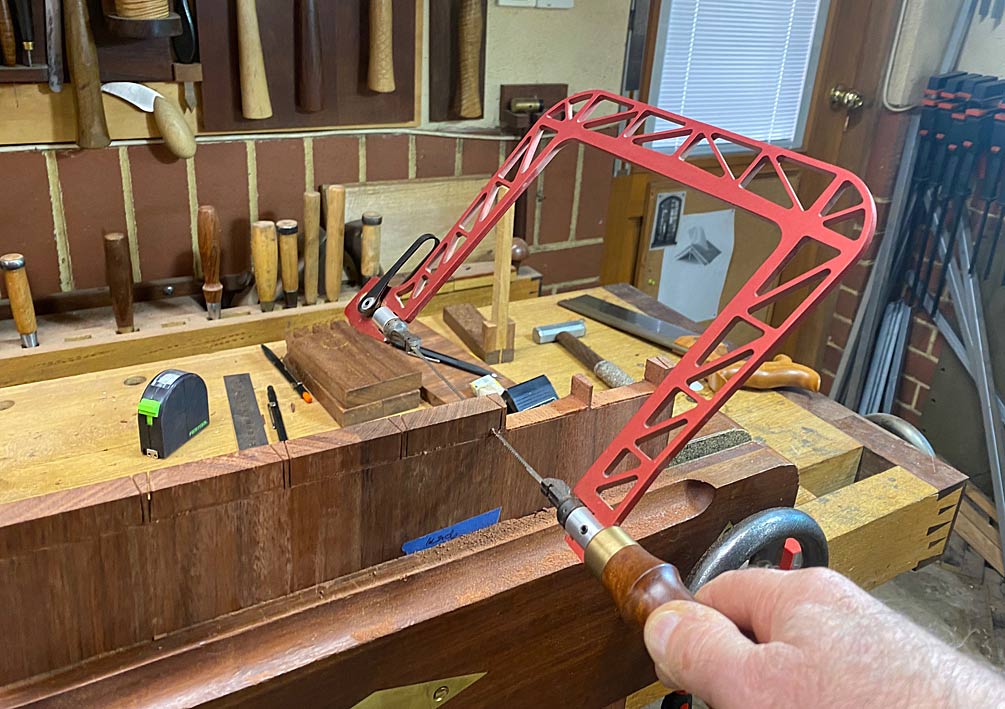
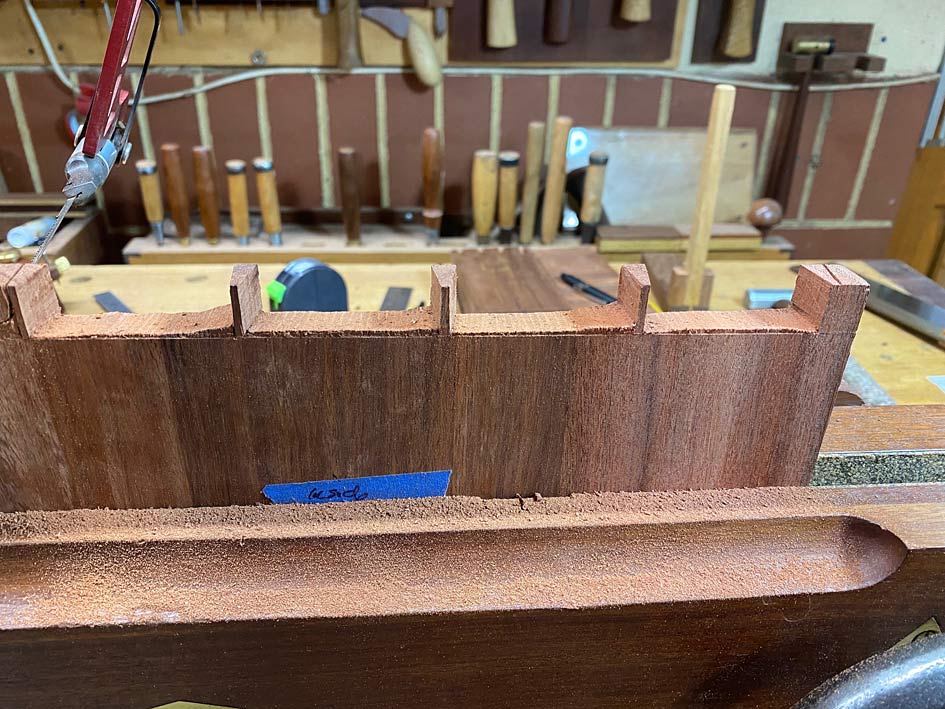
Cutting the pin board waste showed up the limitation of a fretsaw and its thin blade. It worked, it cut, but oh sooo slowly. I really did not wish to spend my weekend fretsawing waste. I doubt that this will be an issue in New Zealand. Out came the New Concepts coping saw. This had been a gift from Lee Marshall about a year before he passed. I miss our emails.
Blade - Pegas Skip Tooth 18 tpi. These are brilliant! Thin enough to slide down a saw kerf, just like a fretsaw blade, and turn the corner at the lower end of the socket. One motion, not two.
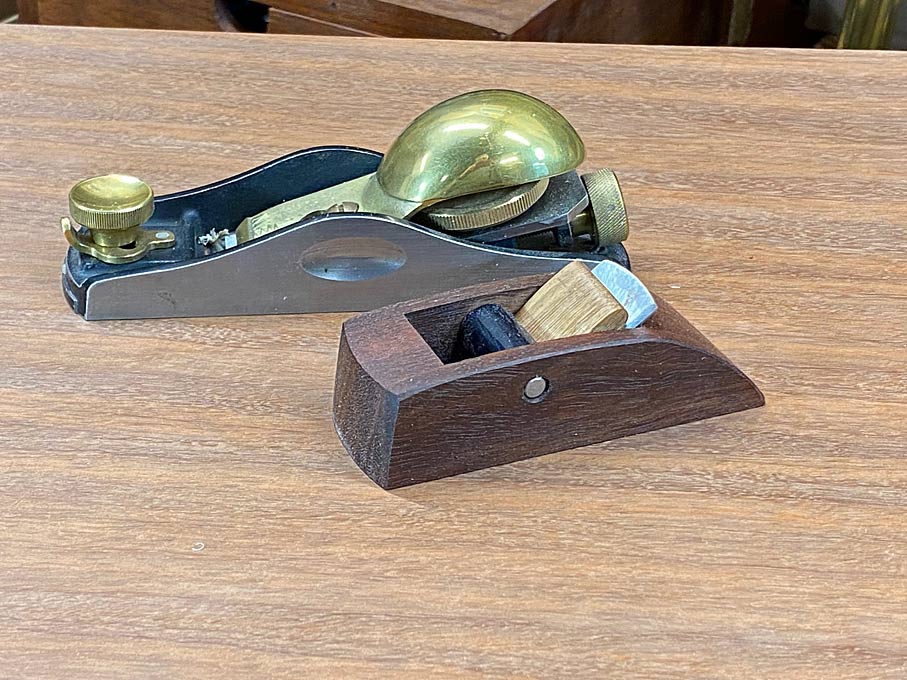
As with all my tools, I am an inveterate modifier ...
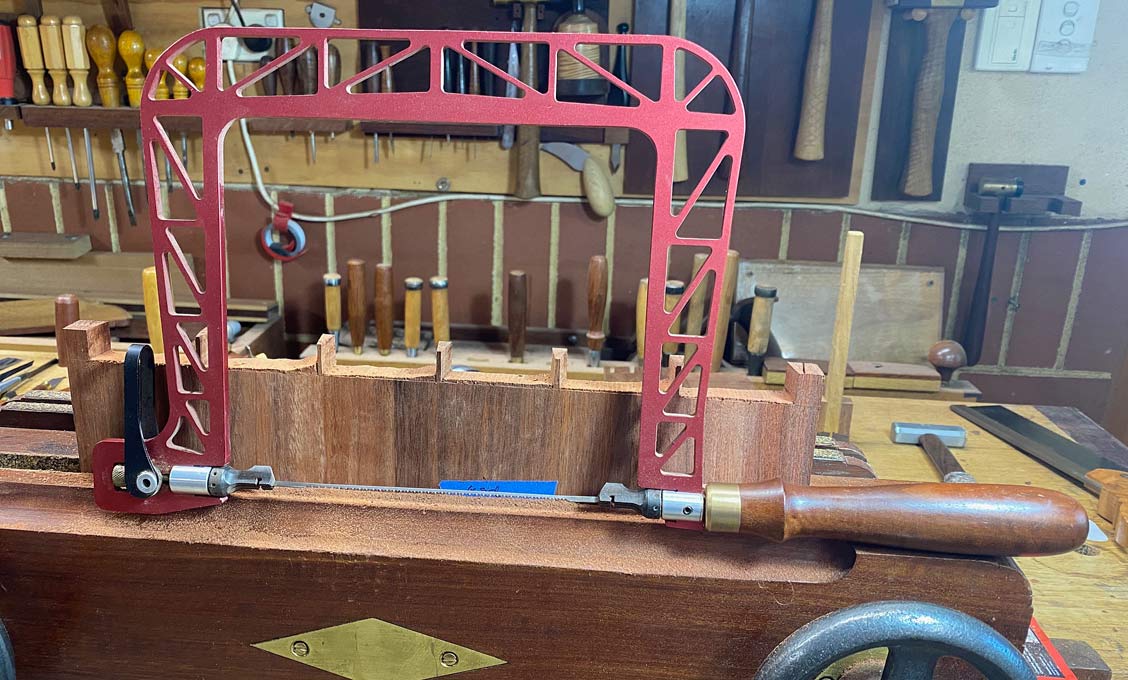
All the cases are through dovetailed, with mitres at each corner. The mitres at the front are purely aesthetic (the front will receive a slight curve), but mitres are important for the rear to hide a rebate for the rear panel.
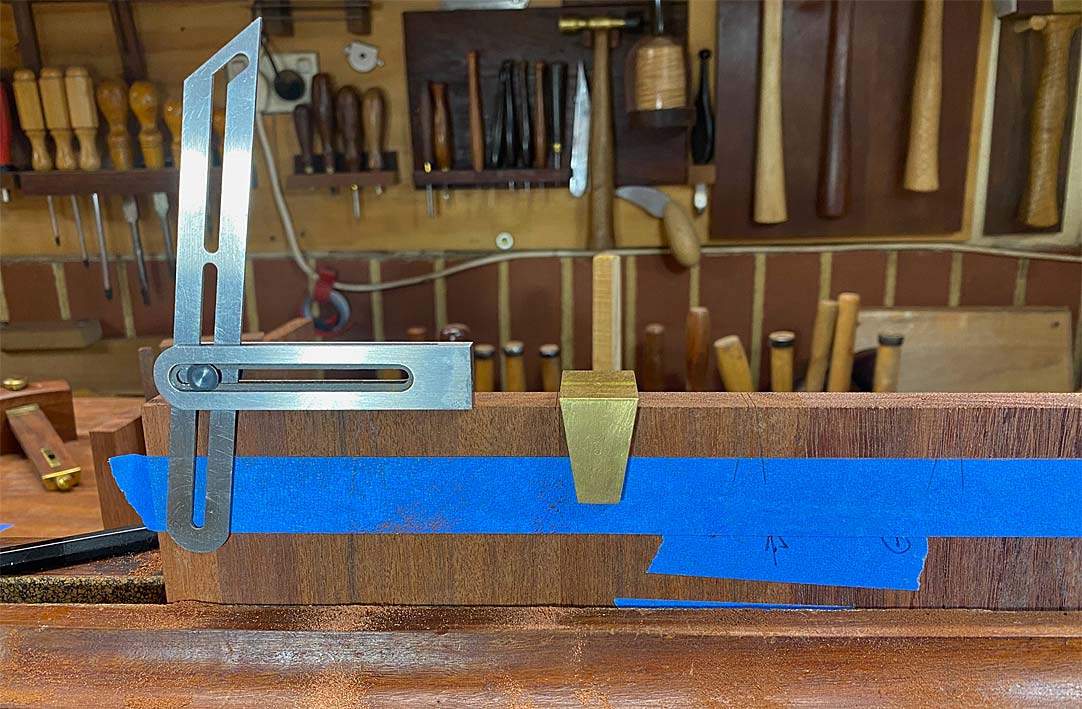
I had made a tiny saw guide for the mitre cut ...
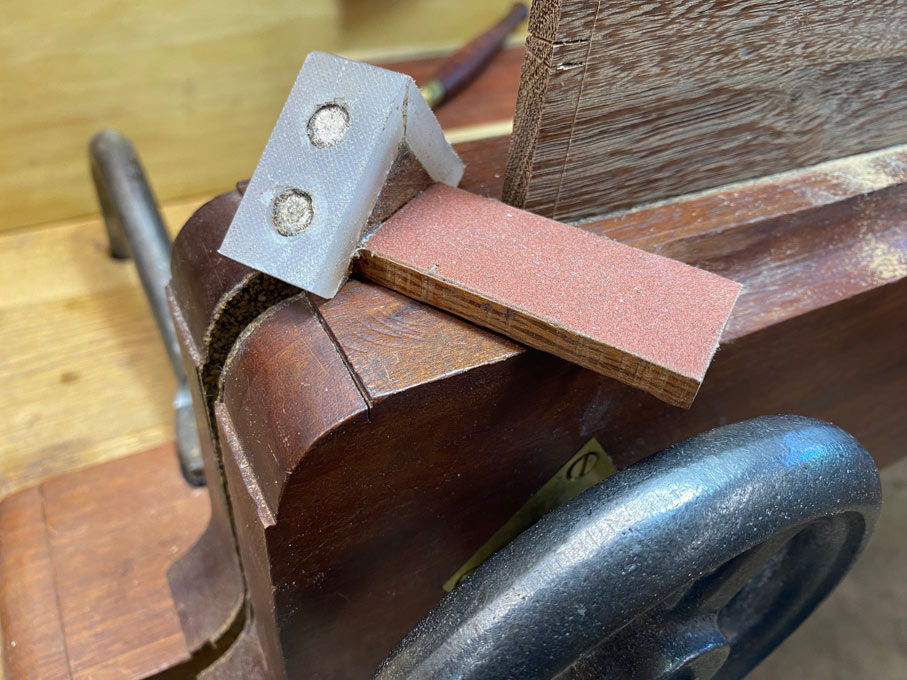
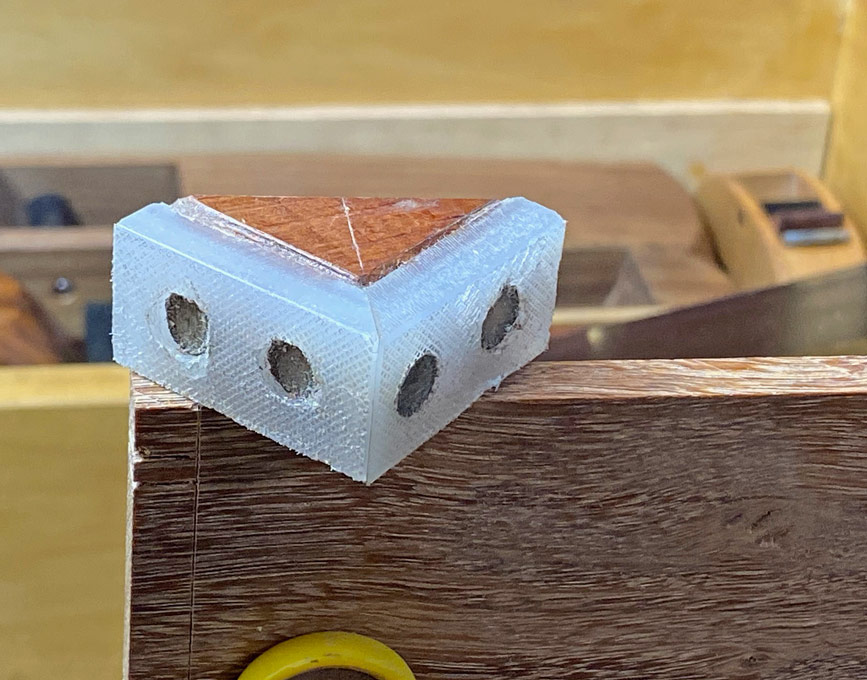
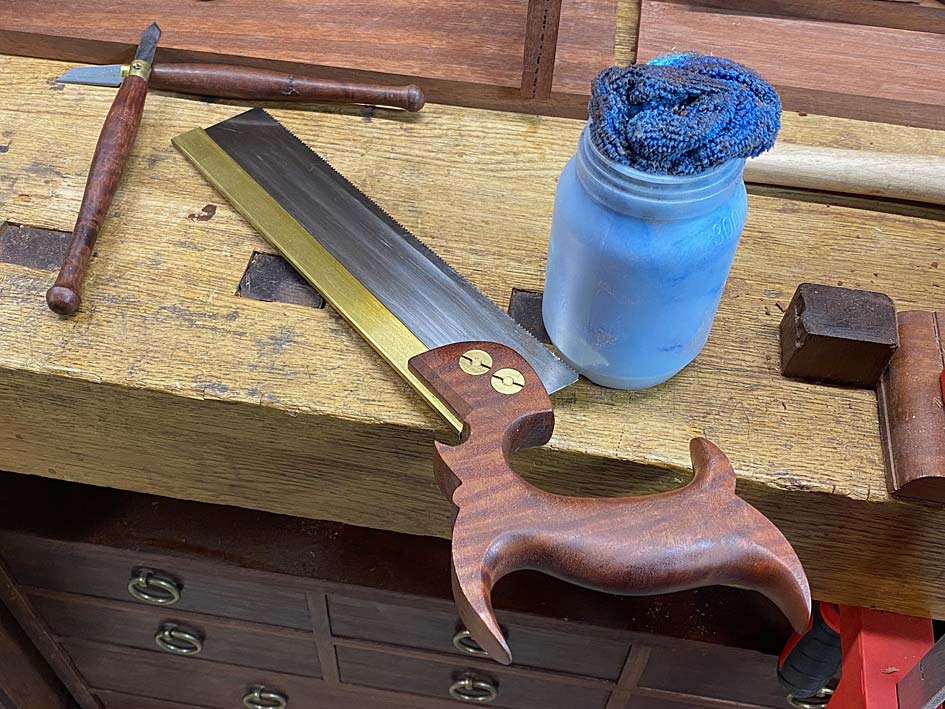
The 6" dozuki is great for this cut ...
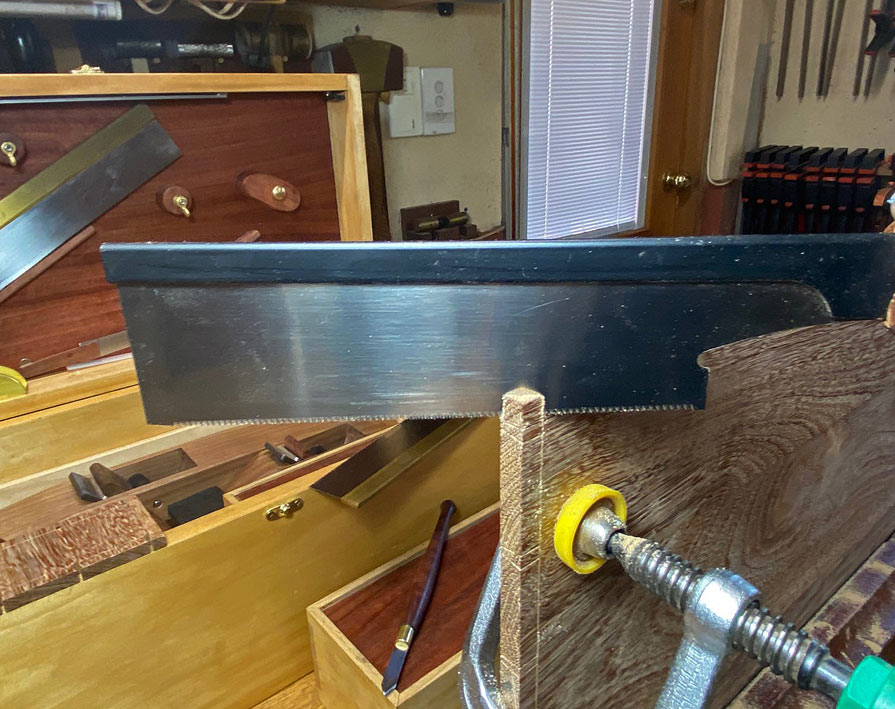
Not one of the 16 mitres so cut needed any tuning. Perfect off the saw.
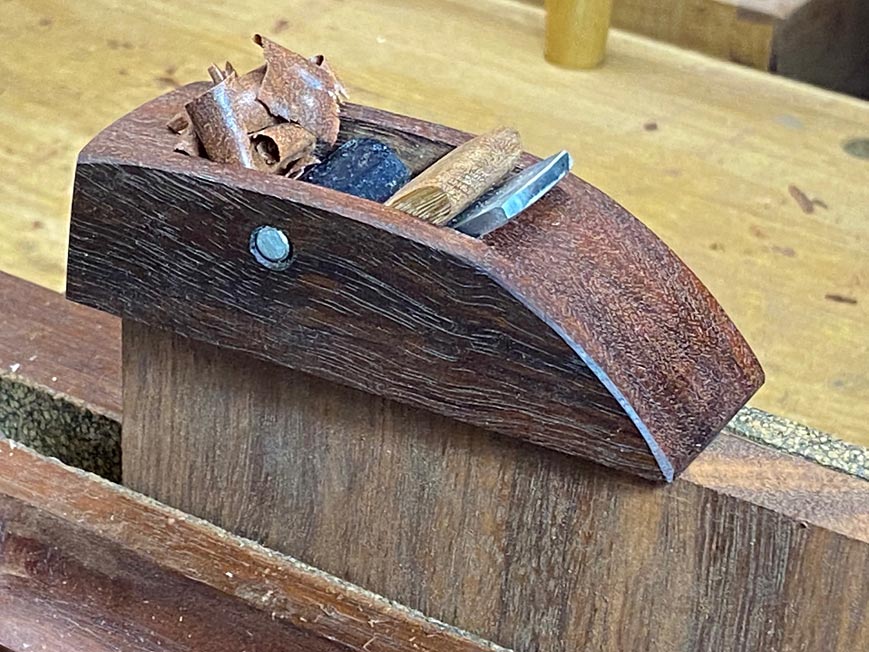
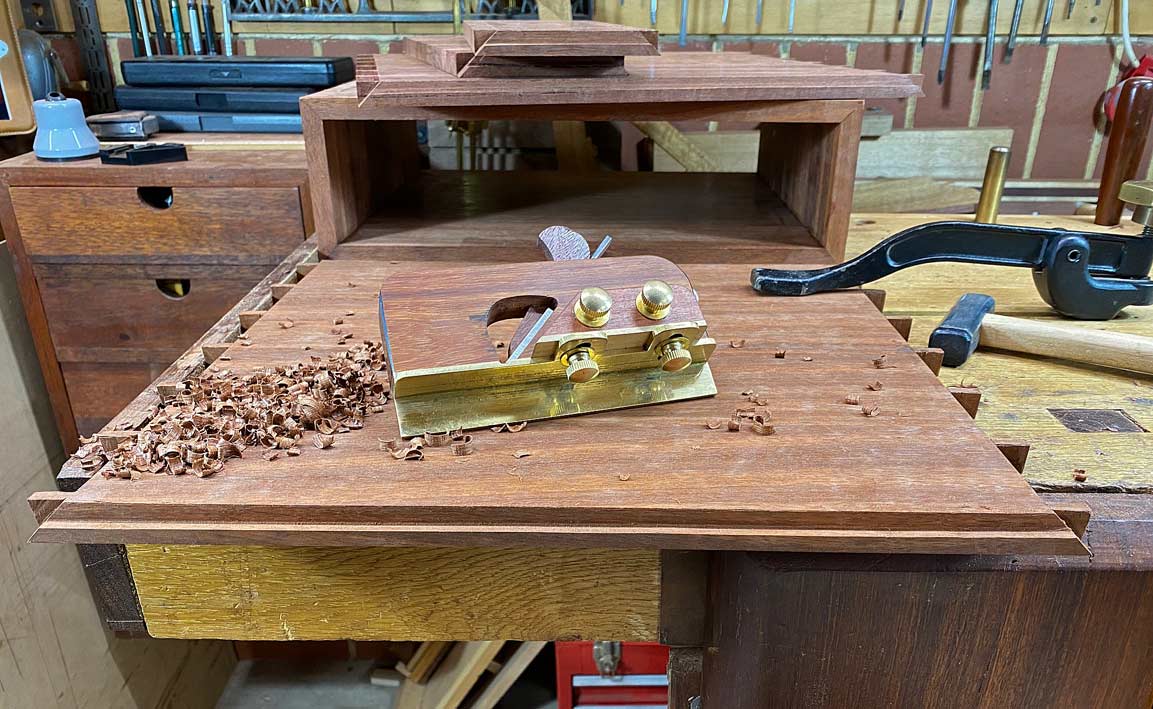
The rebate at the rear of each case was made with the moving fillister. The last time I used it to rebate hardwood boards, the damn thing refused to cut. It turned out that the M2 blade I had made was fine for softer woods, but not for anything harder. I made another M2 blade from a different supplier, and it had worked perfectly. Would it still continue to do so on this Jarrah?
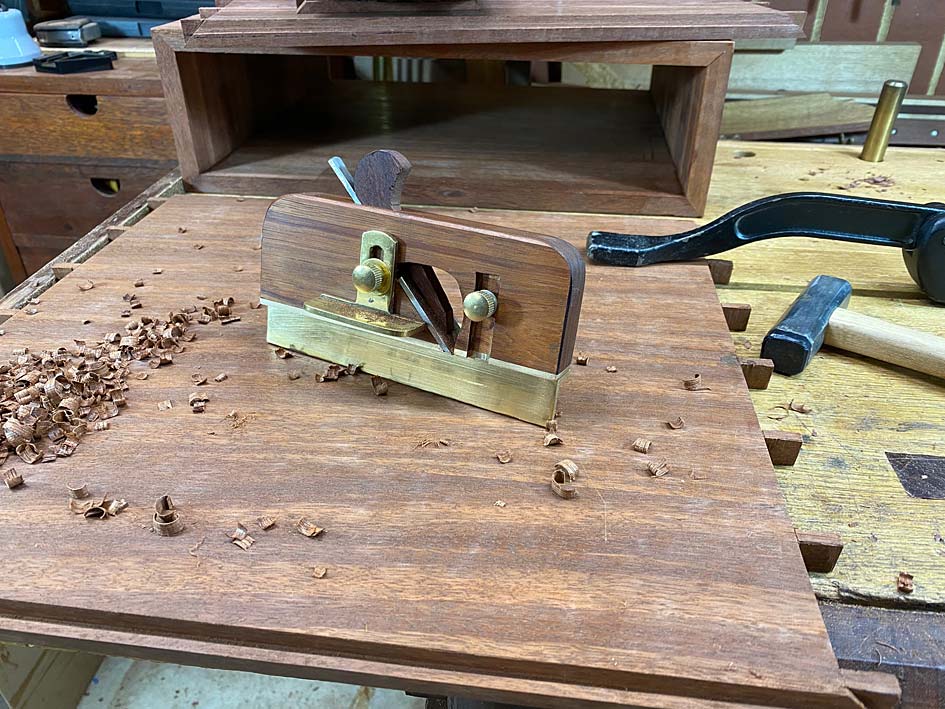
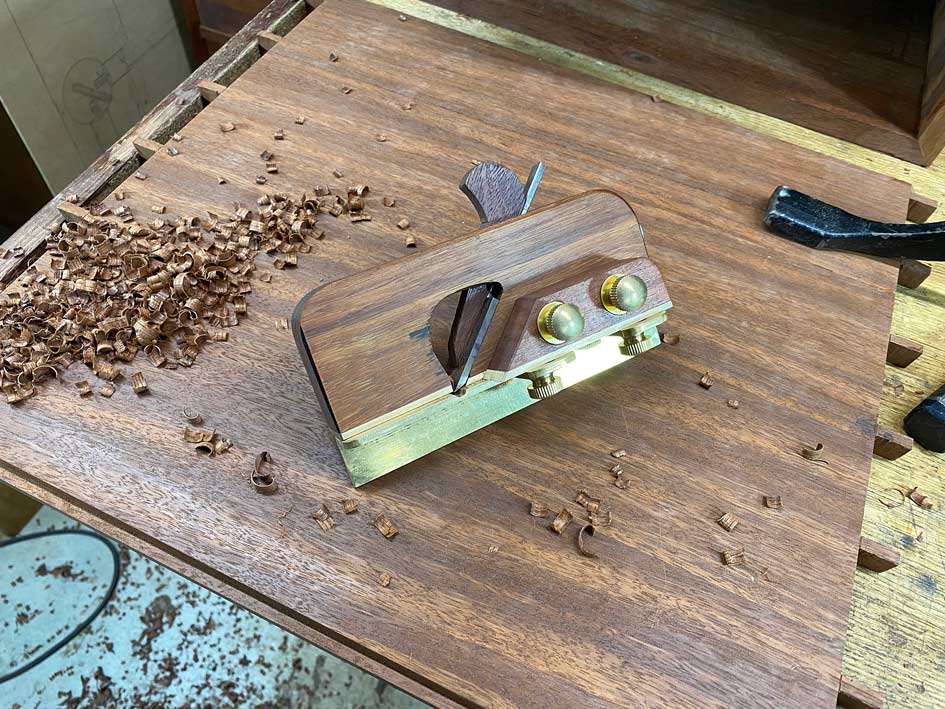
Very happy with these rebates and the blade.
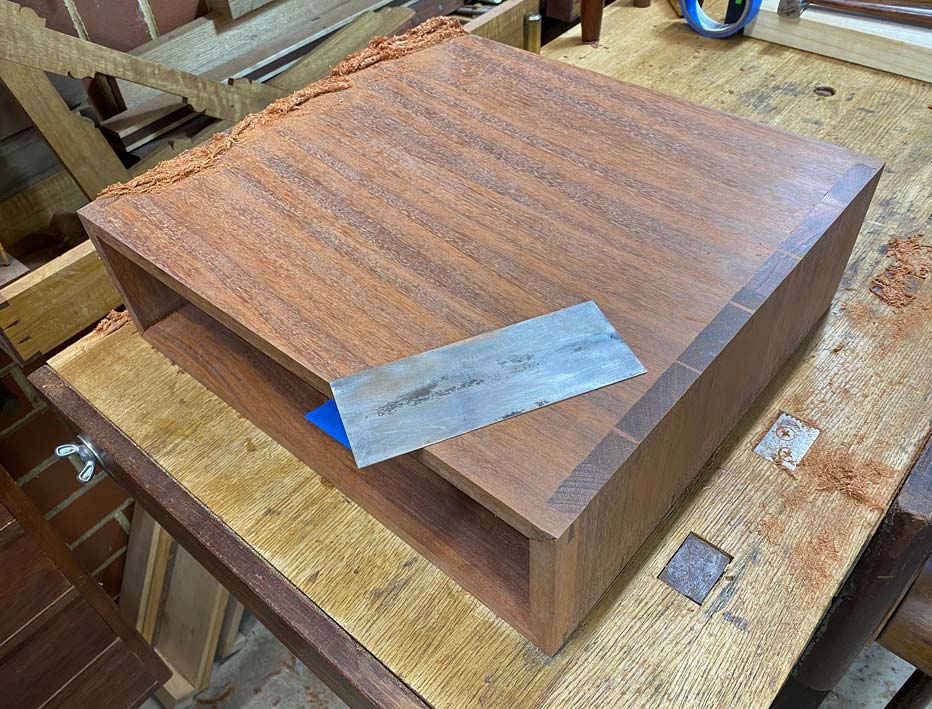
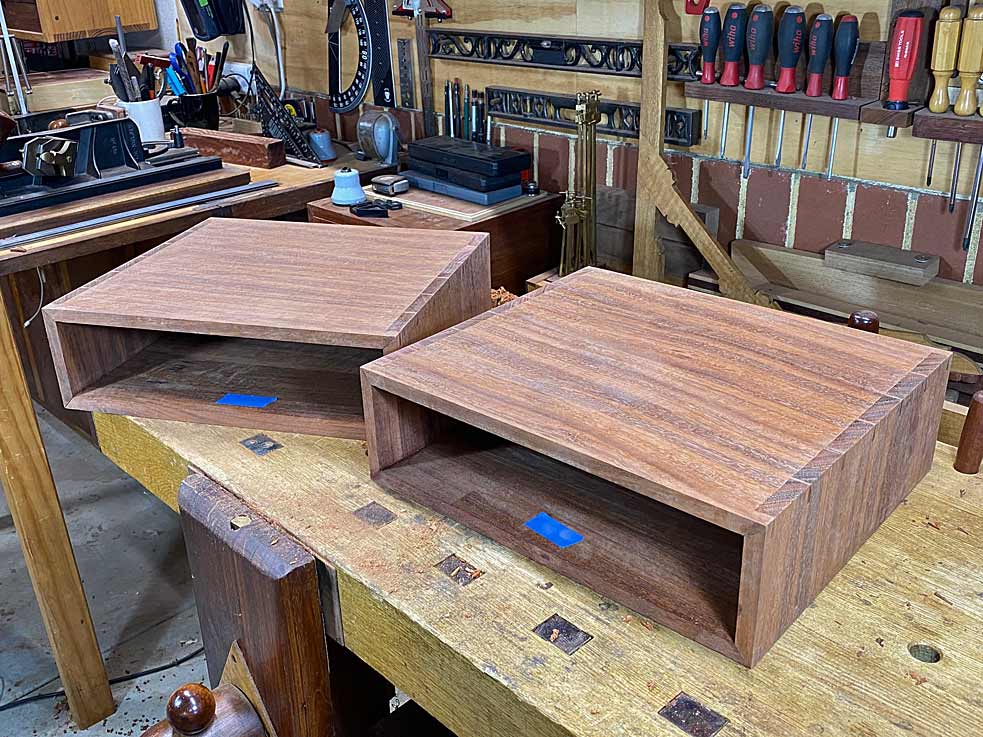
With the cases glued together, the surfaces (which were previously hand planed) were scraped to a finish. The reason for this is that I fear that the wood is brittle and the edges may spelch with planing. And, yes, you can scrape endgrain. Not bad jointing - each panel is four boards.
And that is where we are at currently ...
Regards from Perth
Derek
This past July, which is the middle of our winter, I was gifted several pergola beams,. Owing to a lack of space, these lay unceremoniously in the garden, open to the rain and pools of rain water. When the rain abated, I hauled them into the workshop and took a chainsaw to them, cutting them into convenient lengths, before storing them on shelves. The beams were sodden, or at least the ends were, since the sides were painted and only the end grain was open. I cut away about 6" from each end, and noted the wood was dry. Interesting.
A few weeks ago I pulled out some of these beams, curious to see if they could be used now. I was not optimistic, but I needed Jarrah to build a pair of bedside tables. This is a painted beam about to be power planed (a much faster and less messy method of removing paint than using a paint stripper) ...
The wood was dry, so I re-sawed it into roughly 4" wide boards, jointed and thicknessed them, match-planed, and glued up into panels.
For tools, I wanted to use the tool kit I had recently made. Working Jarrah would be a stern test of their ability to build furniture when I attend a course in New Zealand in August.
Here is the Trying plane (as a short jointer) levelling panels ...
And the smoother ... well ... smoothing ...
It was evident that this Jarrah was unusually hard and interlocked. That these planes coped was inspiring!
Loose parts to make two cases. I think that dovetailing these is going to be interesting ... not.
I was unsure whether the chisels I had made could chop into this wood. The steel is 3mm thick M2. They are very light in the hand, and I was concerned that they would be too light. Perhaps I should take my Koyamaichi oire nomi?
I need not have been so pessimistic. The chisels worked wonderfully. Perhaps the thinner blades had less difficulty. Perhaps they were sharp and that was the main thing ...
Cutting the pin board waste showed up the limitation of a fretsaw and its thin blade. It worked, it cut, but oh sooo slowly. I really did not wish to spend my weekend fretsawing waste. I doubt that this will be an issue in New Zealand. Out came the New Concepts coping saw. This had been a gift from Lee Marshall about a year before he passed. I miss our emails.
Blade - Pegas Skip Tooth 18 tpi. These are brilliant! Thin enough to slide down a saw kerf, just like a fretsaw blade, and turn the corner at the lower end of the socket. One motion, not two.
As with all my tools, I am an inveterate modifier ...
All the cases are through dovetailed, with mitres at each corner. The mitres at the front are purely aesthetic (the front will receive a slight curve), but mitres are important for the rear to hide a rebate for the rear panel.
I had made a tiny saw guide for the mitre cut ...
The 6" dozuki is great for this cut ...
Not one of the 16 mitres so cut needed any tuning. Perfect off the saw.
The rebate at the rear of each case was made with the moving fillister. The last time I used it to rebate hardwood boards, the damn thing refused to cut. It turned out that the M2 blade I had made was fine for softer woods, but not for anything harder. I made another M2 blade from a different supplier, and it had worked perfectly. Would it still continue to do so on this Jarrah?
Very happy with these rebates and the blade.
With the cases glued together, the surfaces (which were previously hand planed) were scraped to a finish. The reason for this is that I fear that the wood is brittle and the edges may spelch with planing. And, yes, you can scrape endgrain. Not bad jointing - each panel is four boards.
And that is where we are at currently ...
Regards from Perth
Derek