Just bought an angle grinder - what discs should I get?

smorgasbord

Member
Joined
Jan 7, 2022
Messages
1,604
Location
NorCal
The Makita cordless and brushless 4.5"-5" angle grinder I've had on my wishlist for a while just went cheap enough for me to pull the trigger. In the past, I've used a manual hacksaw, heavy sanding with coarse grits, even an oscillating machine with metal cutting blades, etc.

So, what's a good starting assortment (and brands) to buy? I'm going to be doing everything from removing rust on crude metal things to cutting small to medium bolts to trimming aluminum stock for my CNC, etc.
 
As far as assortments go, really don’t know - I buy on a by case base what I need pretty much when I need it. Please remember that pretty much all “bonded” products have an expiration date. Whether one adheres to that or not is obviously a personal decision.

Klingspor is a tried & true brand I like to use, they have a presence in the US: https://www.klingspor.com/

3M has interesting products as well when it comes to “speciality” abrasives.

Tyrolit is another solid brand. https://www.tyrolit.com/at-en/

What I keep stocked are cut-off wheels (Klingspor), a fairly universal grinding disc (Tyrolit), a carbide multi-material cut-off wheel (Bosch Expert) & a diamond wheel for stone/concrete (Bosch Expert).

Kind regards,
Oliver
 
Pferd and 3M make good but pricey stuff

For cleaning up Mill scale and rust I like non woven abrasive disks. I have found that these imports on Amazon work well


Aluminum and standard wheels don’t do well together tending to gum up. You should look at specialized stuff for aluminum. Or use non ferrous blade in a saw.

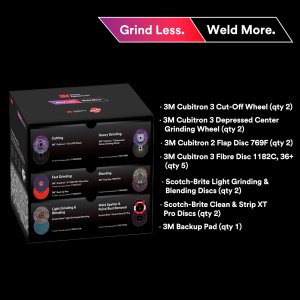
This 3M kit is a good starter kit


for wood Kutzall wheels or Holey Galahad wheels

I like Weiler for wire wheels. Available on a Amazon

PPE and awareness of what you are doing is an important part of using an angle grinder. Full face shield is a good idea especially with wire wheels. Those wires like to come loose or break off and come at you. [eek] [eek]

Hearing protection is a great idea too most are noisy.

Try not to have too loose clothing or pieces of it flopping around. It takes micro-seconds to get a piece of clothing caught and wound up, pulling a spinning weapon back at you.

Synthetic fabrics are a big NO. metal dust coming of is hot and will melt most synthetic fibers and embed in your skin as well. 100% cotton or fire resistant fabrics work. Long sleeves too.

Always wear preferably leather gloves. Don’t ask me how I know. [scared] grinding, cutting etc doesn’t take long too get really hot.Metal dust is a pain. Hot metal dust embeds into everything. Get it on wood and you can get rust spots if using water based finishes. Try to use outdoors.

The wood sculpting disks make a monumental amount of dust. I use them outside and then grab the leaf blower to clear the area. I using wear a respirator and tight fitting goggles when using them. Dust kept getting in my eyes with glasses Or a full face shield.

Ron
 
I bought mine for cutting porcelain tile to fit irregular spaces. All the discs wore down quickly. I ended up buying by price, and while Amazon was sometimes cheaper, Harbor Freight was just 4 miles from my house, and two stores away for Barnes & Noble where I get my afternoon coffee. So H-F, for the low cost and instant gratification.
 
Lots of good advise above so I’ll just add that some of you use cases sound small scale which are better served by smalle cut off tools that use 3” diameter abrasive wheels that are only 1/32” thick. These are great for cutting a slot in the head of a frozen screw or for grinding down one side of a washer (held with vise grips) so it fits a tight space. They are an order of magnitude (approximately) quieter than ordinary right angle grinders and much smaller and safer to use.

All the major manufacturers make them, usually for their 12v range. This Bosch 12v version is the latest design and sweetest form.

This is the Makita 18v version but it’s way overpriced at nearly $200.
 
I prefer using the 3M line of abrasives, specifically Cubitron™ II and Cubitron™ 3. The new Cubitron™ 3 line has 3X the service life of the older Cubitron™ II product line and the pricing is the same. 3M has been making abrasives since 1905 so they know what they're doing and I trust 3M more in their ability to prevent catastrophic failures of a disc rotating at 13,000 RPM. That happened once...I learned my lesson.

That 3M sample pack that Ron referred to is a great introduction to the many, many uses of a RA grinder. You get 16 items in some clever packaging as the box has 3 pull-out drawers to keep all the contents in. I put all of the stuff into an extra Systainer I had but there's nothing wrong with the cardboard packaging it comes in. (y)

I also tend to purchase 5" discs over the 4-1/2" variety if I can. The larger discs give a lot longer life and the cost of the discs are usually the same.

For the aluminum cutting, make sure to get a disc specifically made for aluminum as it will not load as quickly as a standard disc. 3M, Pferd, Norton & Sait all make good aluminum cutting wheels.

If you need to cut/grind stainless, make sure that you use the proper fresh disc and keep that disc/wheel for stainless work only. If you use a disc/wheel that was previously used on steel, there are extremely fine steel grindings that contaminate the wheel and will then contaminate the stainless and cause rust to form. The only way to remove the carbon contamination is through chemical methods...think acid. 😢

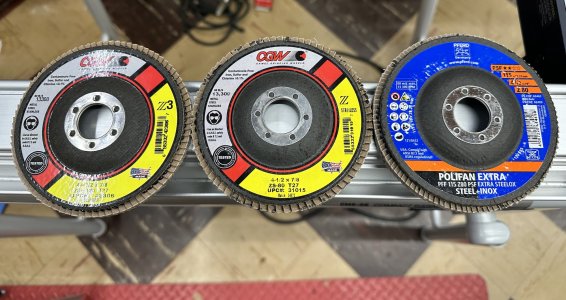
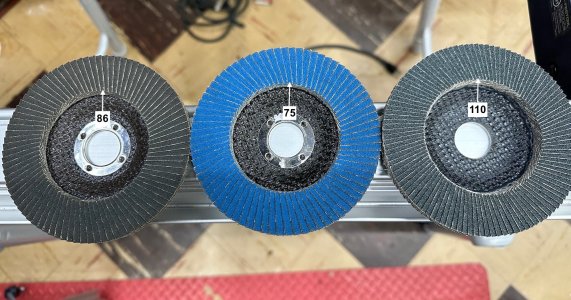
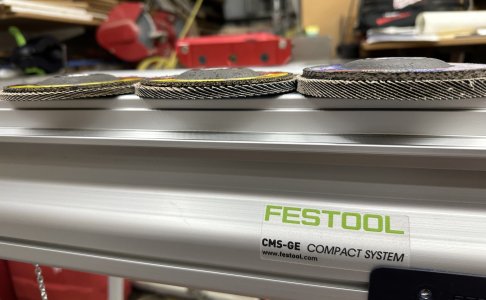
Finally, all discs are not created equal, here's an example. Here are 2 CGW flap discs and a Pferd flap disc. From the top, everything looks the same. From the bottom however, note the additional leaves of abrasive material in the Pferd disc. And from the side, you don't even need to count the abrasive leaves to see the difference. More abrasives...longer life and smoother finish.

 

Attachments

  • 67115 Sample Pack.jpg
    67115 Sample Pack.jpg
    114.4 KB · Views: 15
  • 12459.jpg
    12459.jpg
    618.3 KB · Views: 15
  • 12458 abrasive leaves.jpg
    12458 abrasive leaves.jpg
    934.2 KB · Views: 13
  • 12457.jpg
    12457.jpg
    462.6 KB · Views: 15
For heavy, and fast metal grinding on ferrous metal, I really like the 3M Cubitron depressed center wheels. For other tasks like cutting out Mortar from bricks to repair tuckpointing, I just grab what's at the local Orange Store. I really don't use my Angle Grinders for metal cutting since I have multiple pneumatic cut-off wheel tools for that purpose. Weld splatter or light sanding, fiber backed sanding disc or flap style wheel for that purpose.
 
In any case, leave the guard on if at all possible. A shattered disc could have pieces flying around the room.Best if those pieces are confined to between the work piece and the guard.

The first time you shatter a disc, I can almost guarantee that the next word out of your mouth is “whoa!”

And safety classes are essential.
 
A full face shield is far better than safety glasses and I don't think wire brushes on an angle grinder is a good Idea but that is just me because picking bits of wire out of me does not sound like a good idea at all.
 
This is one of those "it depends" questions.
If it is the same one I have, the first thing I would buy is a screw style adaptor for the XLock mount.
XLock is fantastic, but there are plenty of available attachments that are not made to accept it.
Some have direct screw threaded fittings, others use a 7/8" hole for a flange/nut.
I keep all options on the table.
As far as abrasives, again, it depends on what you are grinding. Most prefer hard wheels for weld grinding, and it pays to have some flap wheels too. They blend/smooth better. I also have a hook&loop adaptor, for regular abrasive sheets.
Thin cutoff wheels are good to have, especially with the XLock.
Wire wheels are often threaded, again depending on where you are, there are Imperial (5/8-11) and Metric (M14) variants. I have both, but I'm also a bit of a nut job about adaptability and being able to use anything. You just never know what is available, in an odd place/situation.
I stick with better brands for abrasives. They cost more up-front, but nearly always last longer. Bad technique can wreck any of them, basically instantly, but that's not the product's fault.
3M, Bosch, Klingspor, Makita, they are all good.
Ditto on the eye protection, and leather gloves, especially with wire wheels. Legit sealing goggles or a face shield are best. The first piece of metal I had to have removed, from my eye, bounced off of my eyebrow, onto the inside of my safety glasses, and into my eye. It was nearly 40 years ago, and I thought I was being careful, obviously not enough.
 
A full face shield is far better than safety glasses and I don't think wire brushes on an angle grinder is a good Idea but that is just me because picking bits of wire out of me does not sound like a good idea at all.
Wire brushes are often the only way.

The point is not to skimp on them though. I am fine with cheapo grinding discs or abrasives, not so with brushes. Cheapo wire brushes tend to work more like wire-launchers than brushes..

A good quality hard-wire wire brush will last you for very, very long and is well worth the cost. My 3" bell brush cost €30 and I still have it and use it regularly, 10 years on. That brush looses a wire in about an hour plus of hard work, mostly not even that. Safety still absolutely needed, but it is far from being faced with an autocannon of flying wires from a low quality brush ..
 
A full face shield is far better than safety glasses and I don't think wire brushes on an angle grinder is a good Idea but that is just me because picking bits of wire out of me does not sound like a good idea at all.
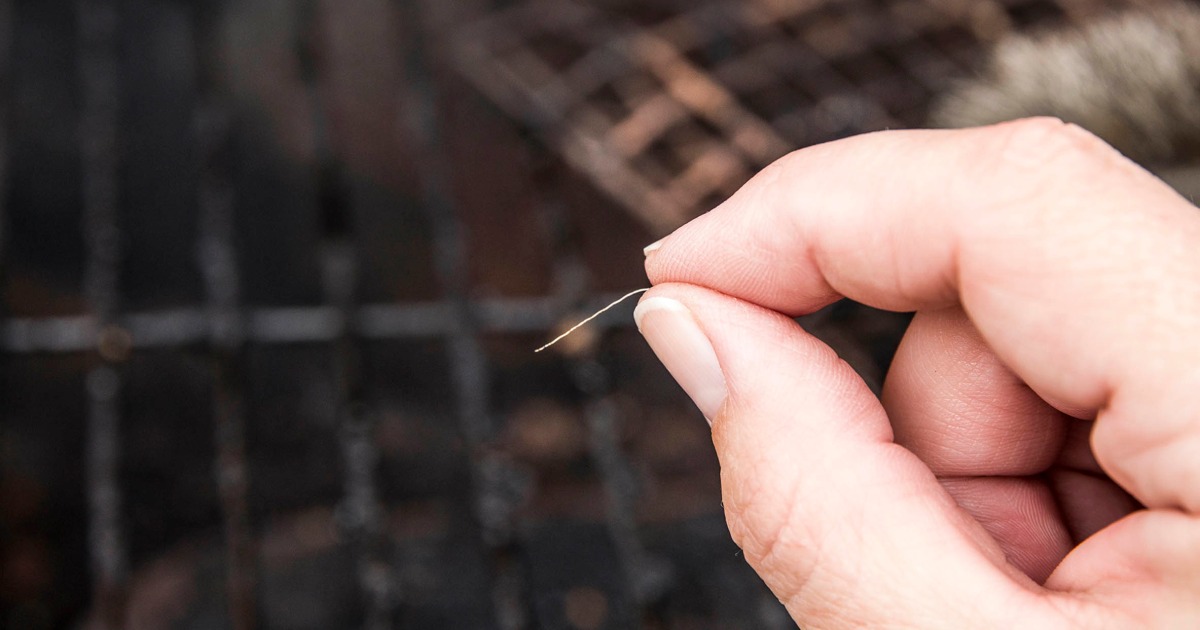
On the subject of wire brushes, never use them to clean your grill, manually or powered. They land people in the emergency room every year. Made the local papers last summer.


Now, back to our regularly scheduled thread.
 
Lots of good advise above so I’ll just add that some of you use cases sound small scale which are better served by smalle cut off tools that use 3” diameter abrasive wheels that are only 1/32” thick. These are great for cutting a slot in the head of a frozen screw or for grinding down one side of a washer (held with vise grips) so it fits a tight space. They are an order of magnitude (approximately) quieter than ordinary right angle grinders and much smaller and safer to use.

All the major manufacturers make them, usually for their 12v range. This Bosch 12v version is the latest design and sweetest form.

This is the Makita 18v version but it’s way overpriced at nearly $200.
At Amazon for $150 now.

Food for thought…
 
On the subject of wire brushes, never use them to clean your grill, manually or powered. ...

Now, back to our regularly scheduled thread.
Sorry but never to use a wire brush to clean a grill manually as in, why?!? And even powered, why?

Warning to use eye protection, even with a manual brush, I can understand. But such a blanket statement is just wrong.


As for it landing lots of people in ERs .. not surprised. The supply of clueless idiots out there is almost unlimited. Hence my signature.

---
Wire brushes are absolutely a potentially dangerous tool - especially on an angle grinder. But they are not nearly as dangerous as other angle grinder attachments that are capable of detaching your head, not just shooting darts into it. So if one is being sufficiently idiotic ..

The usual applies. Give an idiot a gun/hammer/brush/XYZ and he is sure to make a hole in himself or someone around. Not the fault of the gun/hammer/XYZ though.
 
Here’s the wire wheels I use:


As mentioned sometimes a wire wheel is the only thing that works. I use an oxy/acetylene cutting torch to make jagged edge cuts for texture. The flat wire wheels are the only things that get into the nooks, creases and crannies to get the dross out.

Ron
 
There are basically two types of angle grinders. One that has a slide switch to turn the machine on or off. Technically the switch is spring loaded to make it easier to switch off, but when you are trying to face down a rogue grinder it’s hard to do.

The other type has a paddle switch. Has a latch on the paddle to push to operate the grinder. Let go of the paddle and the grinder stops. Generally considered a bit safer. Some employers only allow the paddle version.

Ron
 
Sorry but never to use a wire brush to clean a grill manually as in, why?!? And even powered, why?

Warning to use eye protection, even with a manual brush, I can understand. But such a blanket statement is just wrong.


As for it landing lots of people in ERs .. not surprised. The supply of clueless idiots out there is almost unlimited. Hence my signature.

---
Wire brushes are absolutely a potentially dangerous tool - especially on an angle grinder. But they are not nearly as dangerous as other angle grinder attachments that are capable of detaching your head, not just shooting darts into it. So if one is being sufficiently idiotic ..

The usual applies. Give an idiot a gun/hammer/brush/XYZ and he is sure to make a hole in himself or someone around. Not the fault of the gun/hammer/XYZ though.
The “why” was explained in the attached link. I should have added a quote from the link. I will now.

Even when these brushes are used correctly, the wire bristles can break off and become stuck to the grill grates and surfaces, where they can then end up in food. When eaten, the wire bristles can cause a range of injuries and even life-threatening complications.
 
Back
Top