Know someone that has trouble hearing on an IPhone?

Packard

Member
Joined
Nov 6, 2020
Messages
5,632
Location
Hudson Valley, NY
I am hearing impaired. I can hear, but in real life, I mostly read lips. I can’t do that on the phone.

I recently ordered a FOSI AUDIO in-line amp designed for IPhones and IPads. It arrived today. A tiny thing measuring 2”.x 3/4” v 1/2” (using a 6” ruler).

It does not require batteries or recharging, so I imagine there is some extra drain on the IPhone battery. I am a light user, so not an issue for me.

The clarity for music and voice is excellent. And it can be VERY LOUD.

I obviously have no data on durability, but the reviews were very good. So far, I give it a A+ review (if you require the amplification.

It appears to be machined from a solid block of aluminum. Nothing more I can say about it at this time.


Check out this image
https://share.google/images/g4j7g9N83w0ayPDKS
 
I am hearing impaired. I can hear, but in real life, I mostly read lips. I can’t do that on the phone.

I recently ordered a FOSI AUDIO in-line amp designed for IPhones and IPads. It arrived today. A tiny thing measuring 2”.x 3/4” v 1/2” (using a 6” ruler).

It does not require batteries or recharging, so I imagine there is some extra drain on the IPhone battery. I am a light user, so not an issue for me.

The clarity for music and voice is excellent. And it can be VERY LOUD.

I obviously have no data on durability, but the reviews were very good. So far, I give it a A+ review (if you require the amplification.

It appears to be machined from a solid block of aluminum. Nothing more I can say about it at this time.


Check out this image
https://share.google/images/g4j7g9N83w0ayPDKS
Interesting.
Do you know about the bone conduction headphones?
I use the ones made by Shokz. They are NOT noise-cancelling. So you can still hear the sounds around you that you would otherwise be able to hear.
 
I am hearing impaired and if I am having trouble hearing a conversation on my phone I ask if they are using an Iphone and just about every time they are. What it is about Iphones I don't know but it happens and I have aways been puzzled as to why.
 
I have fairly severe hearing loss of 44-55dB across the spectrum. I used OTC hearing aids for almost a decade with OK but mixed results. Five years ago, my niece became an audiologist, and I got fitted by her with Resound One aids with bluetooth. My hearing is greatly improved...not great mind you but greatly improved. The best feature is bluetooth for phone calls, which I really used to struggle with! If you haven't already, do yourself a favor and get your hearing loss professionally evaluated.
 
Off-topic warning!
… if I am having trouble hearing a conversation on my phone I ask if they are using an Iphone … What it is about Iphones?…
I wager that if you follow up the iPhone question with, “can you switch the phone to your left hand, please?”, that the audio would improve.
As screen sizes have increased, placing the pinky finger under the phone, for extra support, has become very common. Unfortunately for iPhone users, this inadvertently covers the microphone port on the bottom. There are other microphones, but this is the one that is used for phone calls that are not using “speakerphone”.
By switching the phone the to left hand, their pinky finger will no longer block the microphone and only block the currently unused bottom speaker port.
 
Last edited:
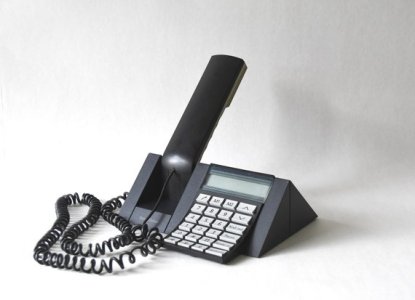
When my hearing became a problem, I had heard that Bang & Olufsen, the high end audio manufacturer, made the best on the market. I bought one. Unfortunately, it was not very loud and it would not function with an amplifier. So I gave it to my parents.

Funny thing, when I spoke to them on the phone, it sounded like they were in the room with me. Both clearer and louder.

While there is some motivation for a phone maker to incorporate a good speaker in a phone, there is almost no motivation to incorporate a really good microphone in a phone. The buyer of the phone will never hear the benefit.

B & O seems to have stopped making land line phones, though their Beocom phones are still available on EBay, (used, I assume). My experience is only with their wired phones. They also made wireless land line phones.

At any rate, after I learned that the microphone made all the difference, I bought my sister and brother a B & O phone too.Back then, about $75.00–at a time when you could buy a serviceable phone for under $10.00.

In any case, if you can find one used at a good price and you have someone you want to speak with on the phone, it works as promised (if the phone is in good condition). Note: They make a wall mounted version (cheaper) and a desk top version.

This is the desk mounted version (note, the handset is very light weight and the perceived quality does not match the actual quality. Don’t let that fool you.

1772224040192.jpg
 
I am hearing impaired and if I am having trouble hearing a conversation on my phone I ask if they are using an Iphone and just about every time they are. What it is about Iphones I don't know but it happens and I have aways been puzzled as to why.
To clarify my post I rarely use a cell phone and all my received calls are on a landline. I have bluetooth HA's but my main use (very little) of my cell phone is in my car hands free and it actually lives in my car on permanent charge as a rule.
 
I am hearing impaired and if I am having trouble hearing a conversation on my phone I ask if they are using an Iphone and just about every time they are. What it is about Iphones I don't know but it happens and I have aways been puzzled as to why.

Perhaps your callers with iPhones are doing one of these things that cause a hearing problem for you.

Ask them to check the Settings app for these items:
  • Enabled Voice over LTE or 5G [ Cellular, Cellular Data Options, Voice & Data ]
  • Enabled WiFi calling [ Apps, Phone, WiFi Calling ]

This is just a guess. I had to check those items for problems with multi-person phone calls.
 
I have found that the quality of the speaker’s phone has a far greater impact on the listener’s hearing than does the quality of the listener’s phone.

The first thing I ask, when speaking to someone on an office phone is, “Are you on a speaker phone? I’m having trouble hearing your.” The speaker phone results in dreadful clarity, even if the sound levels are decent. I would note that some users of speaker phones will get annoyed by this request. They regard a speaker phone as a much appreciated convenience, and they become annoyed by anyone asking them to give that up.

As I have mentioned earlier, phone makers are reluctant to spend money on quality microphones, even when they are willing to spend on quality speakers. The phone buyer cannot hear the improvement that a quality microphone makes, so it makes little sense for the manufacturer to use high quality microphones.

Quality microphones add clarity and accuracy of sound transmission. Amplifiers only add loudness. If the speaker’s phone transmits an inaccurate and garbled mess of sound, then the amplifier will make it a louder, inaccurate mess of sound.
 
It is reassuring that I am not the only one here that doesn't hear as well as I once did. When I went thru my cancer treatment now eleven years ago at NIH, after the first five day chemo treatment and a couple of weeks recovery, when I came back and we discussed side effects, they realized that they hadn't put me thru the hearing examination to establish a benchmark. The doctor was wonderful and he even was wearing a Festool baseball cap. We talked for a few moments before we started the tests. Afterwards we discussed the test results and when he asked me how I thought I did, my answers about various scenarios was pretty much correct. He was surprised on how I actually did better accuracy wise with the scenario similar to a crowded restaurant. I hate those and prefer to watch the lips of those talking. I thought about it for a second and asked him to check my response times because I theorized that I was answering slower to give my brain time to sift out the background noise before responding. Indeed my response times were slower.

Based on my hearing scores and my feeling that the drugs were negatively affecting my hearing, they eliminated one of the four drugs in my chemo cocktail.

Peter
 
Starting at age 7, I’ve been wearing hearing aids. @Crazyraceguy will be piqued to know I was the first kid to be gifted a hearing aid by the great State of Ohio. Much later, it was during tOSU days that I started wearing the aids in both ears.

Lately my wife has been pushing me to get a new set of hearing aids. So I’m focusing on Starkey, as I’ve been okay with the Starkey set that I currently have.

I found out that the previous generation of Starkey has been re-branded as Soundjam or something. Costco has started to sell them in select stores across the USA.

On a recent visit to Costco, I stopped at the Hearing Aid counter and talked to the nice people.

My first question was: “How long do these modern hearing aids last, when do they get replaced?”

OMG‼️ — she said “About 4-5 years”

Even with my severe loss, I’m averaging about 10 years between hearing aids.

I concluded the built-in batteries die, and cannot be replaced. She confirmed my thoughts. (I’m using replaceable air-charged button batteries)

What the heck — why would I buy disposable hearing aids⁉️ (old school philosophy might need adjustment)

I’m back to doing more investigation and research. (kicking the can down the road)

Meanwhile, I really should make an appointment with the audiologist dispenser to re-calibrate my current hearing aids. (now where’s that can again?)

Thus far, I’ve stayed away from Bluetooth-enabled hearing aids. After all, why do I want RF radiating next to my brain. However, the BT technology and standard has evolved considerably. I might re-consider my decision.

Instead of using headphones, it sure would be nice to directly hear the iPhone and television.

Oh, and I’ve learned the iPhone is only compatible with MFi (Made For iPhone) hearing aids. The iPhone is not compatible with Bluetooth hearing aids.

Anyhow, I’ve forgotten the topic of this thread. “What’s that you said, honey?” Sincere apologies for the tangent.
 
I had a co-worker who looked forward to her hearing aids failing. Each time she replaced them, the new ones were better than the old ones. (In the 1970s, 1980s and 1990s, it seems there were significant improvements on a 5-year cycle.).

I, on the other hand, would try them on a 5-year cycle and the results were always the same: I heard better without the hearing aids than I did with them.

New York State lawmakers had received solid advice: Unlike eyeglasses, hearing aids do not always help. So they incorporated a provision that allowed the hearing aids to be returned for a full refund within 90 days. The custom ear mould would have to be paid for—the last time about $75.00.

There are two basic types of hearing losses: First, and most common, is what I call “mechanical” in origin. That is the eardrums and the bones that transmit the sound to the brain. Those are the causes of most age related hearing losses, and typically affect the higher frequency sounds the most.

The second type is neural. And relates to the nerves that transmit the sounds to the brain. Those types of hearing losses can affect almost any frequency, high or low, or a very specific frequency in the middle.

Reverse slope hearing loss, which is the type that I have, is very rare. There are fewer than a dozen diagnosed reverse slope cases each year, and all or most will die within 6 months as they typically are caused by an inoperable brain tumor. My case was caused by genetics and I have no tumors.

I also tried hearing aids on a 5 year cycle for many years until I realized that the manufacturers were never going to develop a hearing aid designed for a market of one or two users a year. It has been about 20 years since I last tried a hearing aid, at which time the pair cost $12,000.00 and were the latest and best.

Instead, I went to Long Island Jewish Hospital, where they had a 20 week course on lip reading.

Lip reading is a strange skill. Unlike “listening” which I call a “passive” activity as you can just sit back and listen, lip reading is an active skill that requires a good deal of concentration. For that reason, lip readers who have mild hearing loss tend to use the skill lightly, but as the hearing continues to fail, the lip reading continues to pick up the slack.

There is a strange phenomenon involved in lip reading. Although the activity is visual, the brain interprets it as “sound”. So if I eavesdrop with lipreading on someone across the room where I cannot actually hear them speak, my brain thinks I am actually hearing their voices. From what I have been told, that is almost universally true.

I have long since learned not to eavesdrop from a distance. It is rude, intrusive and socially unacceptable.

In any case, in the beginning I estimated I was getting 5% t0 10% of what I “heard” from the lip reading, and I kept up with that belief over the years. But the Pandemic taught me otherwise. I understood almost nothing that a masked speaker said. And when they spoke louder, I still heard almost nothing. If they lowered their mask, I was able to hear almost all of what they say.

I am pretty good at lip reading when facing the speaker. Reading lips of someone I can see in profile is vastly more difficult and I generally give up.

The biggest problem with reverse slope hearing loss is the medical insurance industry. As soon as a doctor, any doctor, learns that I have reverse slope hearing loss they order up a brain scan. This, despite the fact that there is no viable treatment for those tumors. This, because if they failed to do so, and their insurance company found out they would lose their coverage.

And if the last MRI is over 5 years old, they will order a new one. And I hate the process.

As an aside, Long Island Jewish Hospital was so intrigued at finally having a true reverse-slope case to study, they went to elaborate lengths to try to come up with a workable hearing aid solution. They made about 8 different ear molds and fitted me with 3 different brands of hearing aids, all to negative effect. I was out of pocket a total of $0.00. They charged me nothing and they donated the lip reading course tuition. So I took the course for free too.

Of course I am due for some doctor to realize that I have not had a brain scan in several years and he will order it. And since all my doctors belong to the same medical practice, I will have no access to a doctor until the brain scan is done.
 
Back
Top