Can Festool replace my jointer?

Boards were being jointed before either machine was invented.
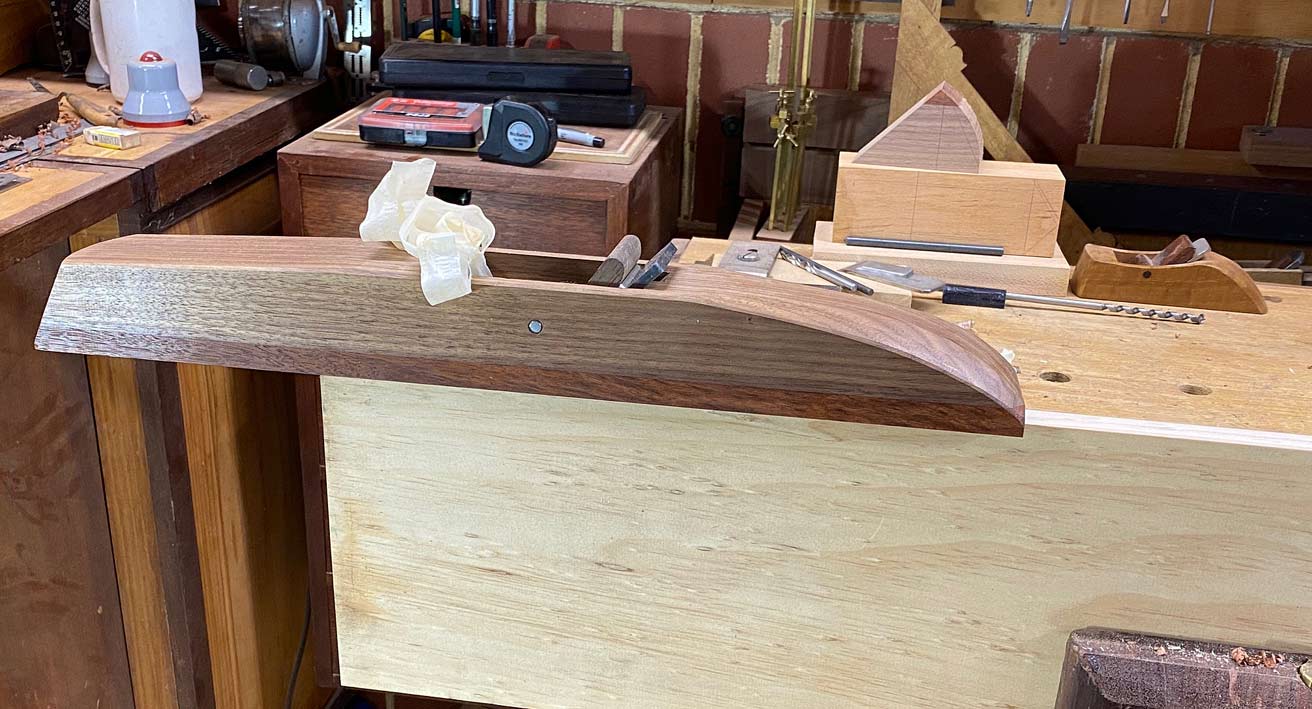
Yes. Hand plane. I had to joint two boards uising a hand plane to pass my wood shop class. We had access to a really long plane, probably around 2 feet long, so not as hard as with a shorter plane. But not easy and was time consuming. I assume that with practice it becomes easier and faster.

I’ve been successfull jointing boards as long as 4’ using just a table saw. I simply cut one board and the second board on the opposite side of the blade. That will guarantee that the angle of the blade does not affect the fit. But you need to start with a straight board and your technique has to be good, or use a couple of feather boards to hold the boards against the fence.

You will have to mark the boards with pencil marks showing the correct assembly or you will end up confused and getting the fit right will drive you nuts.

I assume that you could do the same with a track saw. Cut one board with the right side of the blade and the mating board with the left side of the blade. I’m not sure how much technique affects the straightness of a cut on a track saw. But I believe, that for shorter boards this would work.

Note: The thickest I have used this technique on is 1-1/4”, so this applies to (probably) 3/4” to 1-1/4”, but likely to a bit thicker.

 
Yes. Hand plane. I had to joint two boards uising a hand plane to pass my wood shop class. We had access to a really long plane, probably around 2 feet long, so not as hard as with a shorter plane. But not easy and was time consuming. I assume that with practice it becomes easier and faster.

The plane you used was likely a jointer plane, the longest one in the usual family of planes. Many traditional woodworkers don't have one and would use a low angle jack instead. Paul Sellers often uses a #4 to do it.

To make life easier, some learn how to plane two boards together by bookmatching, standing and clamping them in a vise. Or use a plane with a fence:

 
The plane you used was likely a jointer plane, the longest one in the usual family of planes. Many traditional woodworkers don't have one and would use a low angle jack instead. Paul Sellers often uses a #4 to do it.

To make life easier, some learn how to plane two boards together by bookmatching, standing and clamping them in a vise. Or use a plane with a fence:

With that jointer plane, the only issue was maintaining perpendicularity to the edge. That turned out to be more difficult to achieve than to write about. It took me one entire class (45 minutes) to joint two boards. I would imagine that a machine jointer would be quicker. I would also imagine that one with a nice long bed would be better than one of those benchtop versions.

I would say that after jointing those two boards, I felt more like a real wood worker than anytime since. There was a good deal of satisfaction derived from that process. Especially nice was the long curls of wood peeled off with each pass. With each pass of the plane I had to get out the square and check. Checking tool more time than planing.

And that jointer fence, if it worked like it appears, would have been a great help. I would think that it would have to be wider to be really effective though.
 
With that jointer plane, the only issue was maintaining perpendicularity to the edge. That turned out to be more difficult to achieve than to write about. It took me one entire class (45 minutes) to joint two boards. I would imagine that a machine jointer would be quicker. I would also imagine that one with a nice long bed would be better than one of those benchtop versions.

I would say that after jointing those two boards, I felt more like a real wood worker than anytime since. There was a good deal of satisfaction derived from that process. Especially nice was the long curls of wood peeled off with each pass. With each pass of the plane I had to get out the square and check. Checking tool more time than planing.

And that jointer fence, if it worked like it appears, would have been a great help. I would think that it would have to be wider to be really effective though.
Veritas fences (including variable or BU) are 11" long, long enough for squaring edges.
 
As Packard pointed out, with practice, [jointing] becomes easier and faster. Paul Sellers certainly wouldn't want you or anyone to think that handplaning is an insurmountable task, After all, the exactly opposite message is what he is trying to spread through his teaching.


Paul Sellers removes the tiny gap in the middle in the video. But some would leave it there:

 
Last edited:
I looked for, but couldn’t find a clip of “Book” (Harrison Ford) after he was on the mend on an Amish farm, building a replacement birdhouse for the one he crashed into.

He was hand planing a plank, and he looked like he was a real woodworker.

((The barn raising scene, and especially the music by Jare, are among my favorites. I’m going to find that clip and post it.)

Found it. (But could not find a “Building the birdhouse” scene.)

 
I looked for, but couldn’t find a clip of “Book” (Harrison Ford) after he was on the mend on an Amish farm, building a replacement birdhouse for the one he crashed into.

He was hand planing a plank, and he looked like he was a real woodworker.

((The barn raising scene, and especially the music by Jare, are among my favorites. I’m going to find that clip and post it.)

Found it. (But could not find a “Building the birdhouse” scene.)


Ford was a real carpenter before he was able to make a living as an actor.
 
In my never ending quest to eliminate my large tools, I've successfully killed off my table saw and router table, now my sights are set on the jointer. I already use a TS55/75 on longer boards to edge join, but I do make small parts too, though not as much. I have the HL850 but it's too large to edge joint small things that the track saw can't do. Any chance that smaller planer (not in the USA yet) might be what I need? Anybody successfully get rid of the jointer?

The small power planers are only for smoothing and straightening an edge. Jointing is done in three dimensions, not two. If not a machine jointer, then a tablesaw or possibly a tracksaw, but the best way is a jointer hand plane ...


Regards from Perth

Derek
 
Back
Top