mino
Member
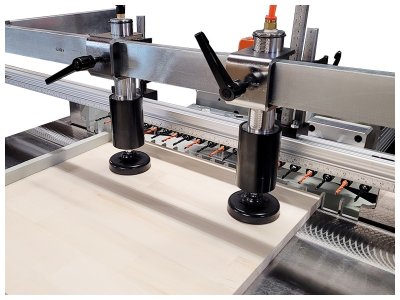
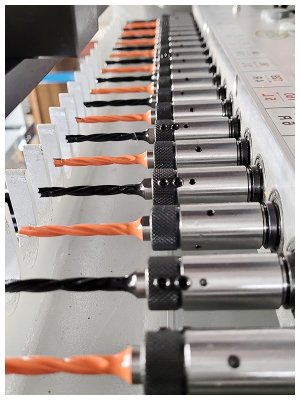
Indeed.The one advantage of dowels vs. dominoes, and the reason the kitchen cabinet manufacturers and the KD furniture manufacturers associations did not include dominoes in their testing, is that there are fully automated dowel drilling and assembly machines available for dowels and none for dominoes.
So transitioning from dowel construction to automated dowel construction is simpler than from dominoes to dowels.
For very small shops the dominoes hold an edge, but for larger ones they get blown away.
Dowels are universally cheaper on materials as well as tools as-long-as you can use robotic and a semi-automated workflow. Drilling is cheap, Routing is expensive on a CNC. Tenons are thus expensive both on material and tool, so they are used but only where dowels are plain inadequate.
The one advantage of a tenon is that its strength allows one to minimize their quantity and thus the required workflow steps. The second advantage is self-alignment, something irrelevant if not outright undesirable in a CNC workflow.
Both are critical for labour costs when bespoke or very-low-volume production is concerned, thus saving expensive labour.
The floating tenon is an artisan woodworker's tool and DOMINO is what makes it cheap(er).
It is not a manufacturer's tool. In plain language.
---
This is why all these "DOMINO killers" dowelling jigs are so absurd. For DOMINO, the concept, is designed to bypass the expense and complication of dowels for ad-hoc and custom furniture...
This is like "discovering" horse-drawn carts as "Car killers". They clearly need no gas while grass is everywhere .. and they can unquestionably haul more than a car trunk can ..
Last edited: