
You are using an out of date browser. It may not display this or other websites correctly.
You should upgrade or use an alternative browser.
You should upgrade or use an alternative browser.
Residential window film for IR/heat rejection?
- Thread starter squall_line
- Start date

smorgasbord
Member
For double-pane glass, does it matter whether the heat rejecting film is on the inside or outside? Outside it can get damaged, but inside it might reflect heat back through the glass and cause the seals to fail, leading to fogging.
I have a couple skylights in my garage workshop that are 30 years old and are fine, but transmit a lot of heat through them. I was thinking of adding film to them, but worried about the double pane seals failing. In my house, with a dozen skylights also 30 years old, one skylight seal as failed and is fogging. Since we need a new roof this summer anyway, we're also replacing all of the skylights. The new skylights have a heat rating of 0.26, which means they let only 25% of the heat through (I can look up the exact term if anyone's interested) since they're both tinted and argon gas filled - so I'm expecting it won't be as warm inside as currently.
But, I'm cheap and didn't want to replace the skylights in the garage (at a couple grand each) so thinking about films and shades. I do like having more natural light in the shop, though, and opening them to vent hot air out is nice, too.
I have a couple skylights in my garage workshop that are 30 years old and are fine, but transmit a lot of heat through them. I was thinking of adding film to them, but worried about the double pane seals failing. In my house, with a dozen skylights also 30 years old, one skylight seal as failed and is fogging. Since we need a new roof this summer anyway, we're also replacing all of the skylights. The new skylights have a heat rating of 0.26, which means they let only 25% of the heat through (I can look up the exact term if anyone's interested) since they're both tinted and argon gas filled - so I'm expecting it won't be as warm inside as currently.
But, I'm cheap and didn't want to replace the skylights in the garage (at a couple grand each) so thinking about films and shades. I do like having more natural light in the shop, though, and opening them to vent hot air out is nice, too.
The newer dual glazed windows have IR blocking and work well. You could try to position an awning or a gazebo style structure attached to the house. Heavy drapes or black out curtains work well. Try calling Smith and Noble they make a good product albeit pricey. There might be a solution by applying a window screen that could filter some of the sunlight out. Conversely, go to Home Depot and purchase some potted plants to shade the window as a temporary fix. Then come fall return the plants or winter over. If you’re on a tight budget just take some cardboard boxes and cover the windows during the heat of the day. It might look like a kitchen house but it’s a simple fix to keep yourself from baking in the next 1-2 weeks while you sort things out. Good luck.
I went this route a while back and ended up skipping films altogether after comparing them to Passive house glass I had installed in a remodel. The glass itself blocked a ton of heat and light without needing anything extra, and it performs way better year-round. If you're already doing new windows, skipping films might save you a step and give better long-term results.
Last edited:
JasperCole
Member
- Joined
- Sep 20, 2025
- Messages
- 5
3M window films work really well for heat and UV protection. Pro installs are easiest for big windows, while DIY can work if you’re patient. Gila is fine for smaller or budget-friendly DIY projects.Since we lost all of the trees on the west side of the house, summers have been a bear. Doubly so now that my wife stays home all day with kids instead of leaving to go to an office.
I'm strongly considering putting IR/heat rejecting film on the glass of our west-facing windows, and left a voicemail for a local company that uses 3M products to come out to provide an estimate. Window film is my preferred route compared to replacement windows since the windows themselves are otherwise in decent shape (wood single pane with a storm window or wood double-pane picture windows).
Does anyone have experience with 3M, Gila, or other brands of residential window film, either DIY or pro installed? DIY appears to be $1-2/sf plus time spent cleaning and installing (which sounds relaxing and/or miserable depending on my mood), pro installed looks to be possibly $10/sf and up.
Thanks in advance for input!
johnmpf
Member
We installed Gila film on the inside of our large West facing windows over a decade ago. This was one of the best things we ever did. The film is still looking good and doing the job keeping the house a lot cooler when the sun is out.
Not hard to install. The windows have to be cleaned well. The install cannot be done when the sun is shining on the windows.
Not hard to install. The windows have to be cleaned well. The install cannot be done when the sun is shining on the windows.

Cheese
Member
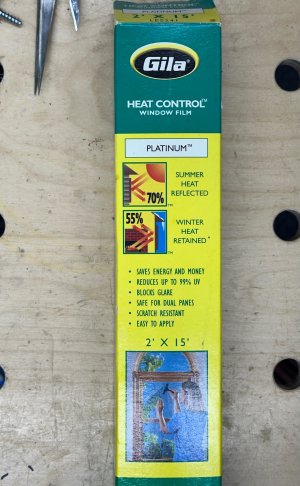
FWIW...I also installed Gila film on some windows at least 10 or maybe 15 years ago. The film has held up well with no scratches or other issues. It works well but the only thing I don't like is the silver look from the outside of the house, it looks like an office building in Manhattan.  I installed Gila Platinum film, maybe they now have better offerings?
I installed Gila Platinum film, maybe they now have better offerings?Attachments
Cleaning is the most important aspect, as a commercial glazier, I do this often. We use a commercial product, Film-On, to wet the glass and film. Check out YouTube vids for advice.That sounds like a great idea, heat-rejecting film can really help with west-facing windows. 3M is solid, but professional installation gives a cleaner result and longer life.
Similar threads
- Replies
- 10
- Views
- 3K

- Replies
- 11
- Views
- 2K
