Top 3 makers of impact driver bits (If you believe Slash Gear)

The Robertson does not cam out as EASILY as the Phillips does. I have had Robertson bits cam out on me when I'm not careful, especially when using stainless screws as the stainless is relatively soft. And when a Robertson cams out, they can become almost impossible to remove.

That's the reason I've pretty much switched over to Torx for everything when that's possible.
I don’t know if there is an intentional difference between R2 and S2 bits (nominally the same) but some hold much better than others. Same with “square drive screws”. The ones I find most annoying are the combination Phillips/square from McFeely’s. The fit with a good bit is sloppy and they even can out occasionally.

Yes, soft stainless is worse. Depending on the use/wood I might treat the screw as if it was brass and drill a pilot hole or use a harder steel screw first to make seat.
 
Phillips bits are intended to cam-out, it's a feature, not a bug. They were part of the original assembly line process, where self-centering was needed, because of power drivers, but they would slip before overdriving.

People have been saying this for years, but if you go back and look at the original patent documents, no such capability is mentioned.

I think this is a case of Mandela Effect where people are so used to cam out they believe it must have been a design feature rather than an artifact.
 
People have been saying this for years, but if you go back and look at the original patent documents, no such capability is mentioned.

I think this is a case of Mandela Effect where people are so used to cam out they believe it must have been a design feature rather than an artifact.
Patents do not mention every feature of an invention.

For anyone who ever saw the geometry it is slam dunk that Philips is a cam-out design. There is nothing to discuss so not surprising someone would even mention it in a patent.. The primary invention was the self-centering aspect of it which none of the other standard heads possess.
 
Patents do not mention every feature of an invention.

For anyone who ever saw the geometry it is slam dunk that Philips is a cam-out design. There is nothing to discuss so not surprising someone would even mention it in a patent.. The primary invention was the self-centering aspect of it which none of the other standard heads possess.
It’s a very frustrating surprise when holding the driver as far as you can reach and the bit just won’t find the seat.
 
A little Google research yielded this:


(…). The Phillips screwdriver design has a tendency to cam out during operation due to angled contact surfaces, which create an axial force pushing the driver out of the recess as torque is applied. Despite popular belief, there is no clear evidence that this was a deliberate design feature. When the original patent application was filed in 1933, the inventors described the key objectives as providing a screw head recess that (a) may be produced by a simple punching operation and which (b) is adapted for firm engagement with a driving tool with "no tendency of the driver to cam out".

Nevertheless, the tendency of the Phillips screw to easily cam out was found to be an advantage when driven by power tools of that time which had relatively unreliable torque limiter clutches, as cam-out protected the screw, threads, and driving bit from damage due to excessive torque. (…)
 
(a) may be produced by a simple punching operation and which (b) is adapted for firm engagement with a driving tool with "no tendency of the driver to cam out".
...
Pretty sure that text references to the slotted head screws it replaced .. and thus the self-centering behaviour of an X slot keeping the driver inside it /as long as pressure is applied/. Not to POZI or Robertson.
 
I would love to change over but I have so much money invested in fasteners it is simply not feasible so I have gone over to Wera diamond tipped drivers to minimise the problems with Phillips screws. Torx is now available in two forms these days which most people are not aware of due to patent expiry on the original version.
 
So many people think Torx doesn't cam out, but if you've a Home Depot with a Milwaukee demo table featuring their drill/impacts with a block of wood with Torx screws available, you know that's not at all true.

My favorite Phillips bits are Wera or Wiha, but frankly Milwaukee's third generation Shockwave bits are quite good.

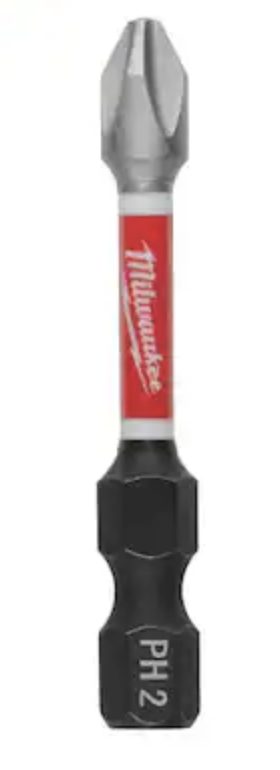
Surprisingly, Festool's PH2s seem prone to slip pretty easily, but Festool's PH3 bits are the absolute best ones I've found; Makita and Milwaukee's somehow don't even seem to fit most PH3 screw heads.
 
Patents do not mention every feature of an invention.

No, but at the same time if it was an explicit design consideration the way people claim it was, it would have been as part of the reason the patent should be granted.
 
Surprisingly, Festool's PH2s seem prone to slip pretty easily, but Festool's PH3 bits are the absolute best ones I've found; Makita and Milwaukee's somehow don't even seem to fit most PH3 screw heads.
Okay, now I need to try one... Fortunately, I have a bunch of Festool inserts from an installer kit
 
No, but at the same time if it was an explicit design consideration the way people claim it was, it would have been as part of the reason the patent should be granted.
Why?

Philips was not a patent troll like Apple that felt the urge to 'patent' round corners. This was also back in the time when patents were still respected and professional patent trolling was not really a thing company like Philips would want to tarnish its name with.

Realize I am not saying that the *company* of Philips set out to design-in the cam-out as a capability. But the that *team* who built the prototypes and tooling and tested the prototypes with actual industrial workflows absolutely did choose a compromise angle that worked well with power drivers yet allowed enough grip to not cam out prematurely. Pretending they were unaware of this is just condescending to the folks. If they saw cam-out as a concern, as opposed to being a feature, they could have gone with a vertical angle like the POZI did later.

Keep in mind the original Philips head bolts and bits were actually looser, less precise, to those sold today - they slipped more.
 
As for a US-based tuber saying the big three in the US have the best kit. Yeah. He would say that.
(y) (y)
When I first started to read the article I only managed to get to the 2nd paragraph before this statement stopped me in my tracks. 😵‍💫

"While price wasn't a concern, popular opinion, durability test results, and my own experiences using several different brands in a professional setting were all considered when making these picks."

What does popular opinion have to do with testing hex drivers for durability?

I prefer and use Festool, Wiha and Apex. Apex offers their bits in 3 levels of heat treatment to better match the bit to the job. They also offer Phillips bits with ACR® ribs that grab the screw drive in the head and minimize cam-out.

 
Okay, now I need to try one... Fortunately, I have a bunch of Festool inserts from an installer kit

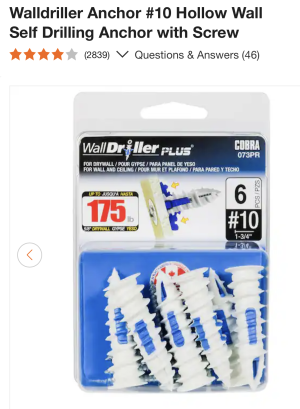
This is the most egregious example I've found. These are designed so that you screw them into the wall using a Phillips PH3 screwdriver.

The bits from Makita and Milwaukee just slide inside and spin without turning the wall anchor or worse, slip and strip out the interior.

Festool bits fit absolutely perfectly.

Prior to checking the Festool bits, I had to insert them with a manual screwdriver, all of which fit perfectly; I don't know why so many other companies' bits get it so wrong.

1776093974475.png
 
I would love to change over but I have so much money invested in fasteners it is simply not feasible so I have gone over to Wera diamond tipped drivers to minimise the problems with Phillips screws. Torx is now available in two forms these days which most people are not aware of due to patent expiry on the original version.
As I mentioned above, Apex offers their ACR® style for Phillips bits which would be the equivalent of diamond tipped bits but less expensive.


They also offer the Hex Power Drive bits in 4 different lengths. Nominally 2", 3", 4" & 6".

 
Talking about changing out fasteners, throughout the USA municipalities are changing out rivets on brides and replacing them with bolts. This for improved joint strength.

The obvious reasons are not the reasons driving the changes. I would have thought that rivets were stronger. They have a larger base diameter than bolts both of which are limited by the hole diameter. But they are made from very soft steel in order to facilitate the peening over of the heads. Whereas the bolts are made from a high grade of steel.

But the real reason is that rivets leave a rather loose joint—with gaps as much as several thousandths. Bolts, on the other hand can be torqued down. So the joints are very tight and the added friction in the cross joints substantially improves the strength of the joints.

At one point, I used copper or brass rivets at joints and sanded them smooth to the surface. A nice look. But the glue joint suffered. I should have glued and clamped the joints first and then peened over the rivets. I gave up the practice because I thought the hammering of the joint might break the glue bond. In any case, rivets are rarely the best choice of fastener.
 
Wera are the ones I find last the best. Followed by Bosch and Wiha.
I've only ever bought one box of Milwaulkee bits, I kept the box and wrote "Sh#$, Avoid" on the box so I remembered to never ever buy them again.

No test date though eh? I wonder why?
 
Talking about changing out fasteners, throughout the USA municipalities are changing out rivets on brides and replacing them with bolts. This for improved joint strength.
...
Wow!
I knew there are places in US where they do some seriously kinky stuff .. but bolting up brides for their joints strength is .. something else.

Yeah, I know, couldn't resist..
 
Wow!
I knew there are places in US where they do some seriously kinky stuff .. but bolting up brides for their joints strength is .. something else.

Yeah, I know, couldn't resist..
I try to watch for the A.I. introduced nonsense, but every once ina while the spell checker defeats me. It was typed “bridges” and apparently changed to “brides”. I missed that one.

No wonder that Trump ended up looking like J.C. When he was trying to look like a Md.

How does someone specify an image on AI? Is it “make me look like a sailor in whites”? Or is there some sort of algorithm that requires a detailed questionnaire be filled out?
 
Back
Top