todd_fuller
Member
- Joined
- Jun 7, 2016
- Messages
- 36
Long story short, I didn't want to shell out the $$$ for a UDD to keep my CT from getting zapped by a static discharge. I picked up the static conductive Dust Deputy cyclone to supplant my existing non-antistatic cyclone. In the process, I learned is pretty difficult to find affordable conductive hose. In the process, I bought a cheap $40 insulation resistance tester so I could actually determine if I was achieving my goal of maintaining a path to ground. Since I made these measurements, I thought I'd share them with the general community.
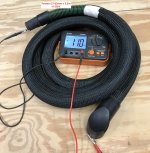
Standard CT Midi hose
View attachment 1
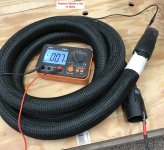
36mm hose from the workshop cleaning kit
View attachment 2
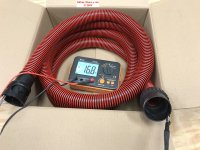
$70 Nilfisk 1-1/4" AS hose (I was actually able to read this resistance with my Fluke DMM)
View attachment 3
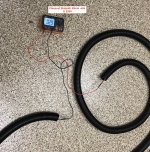
Flexuast 2" (Got this due to Amazon pricing algorithm, paid $75 for 25')
View attachment 4
The Flexuast cuffs were very conductive, less than 0.1MOhm.
The black, static conductive Dust Deputy is very conductive as well, less than 0.1MOhm.
Standard CT Midi hose
View attachment 1
36mm hose from the workshop cleaning kit
View attachment 2
$70 Nilfisk 1-1/4" AS hose (I was actually able to read this resistance with my Fluke DMM)
View attachment 3
Flexuast 2" (Got this due to Amazon pricing algorithm, paid $75 for 25')
View attachment 4
The Flexuast cuffs were very conductive, less than 0.1MOhm.
The black, static conductive Dust Deputy is very conductive as well, less than 0.1MOhm.