Box for Lauren

derekcohen

Member
Joined
Jun 22, 2008
Messages
1,028
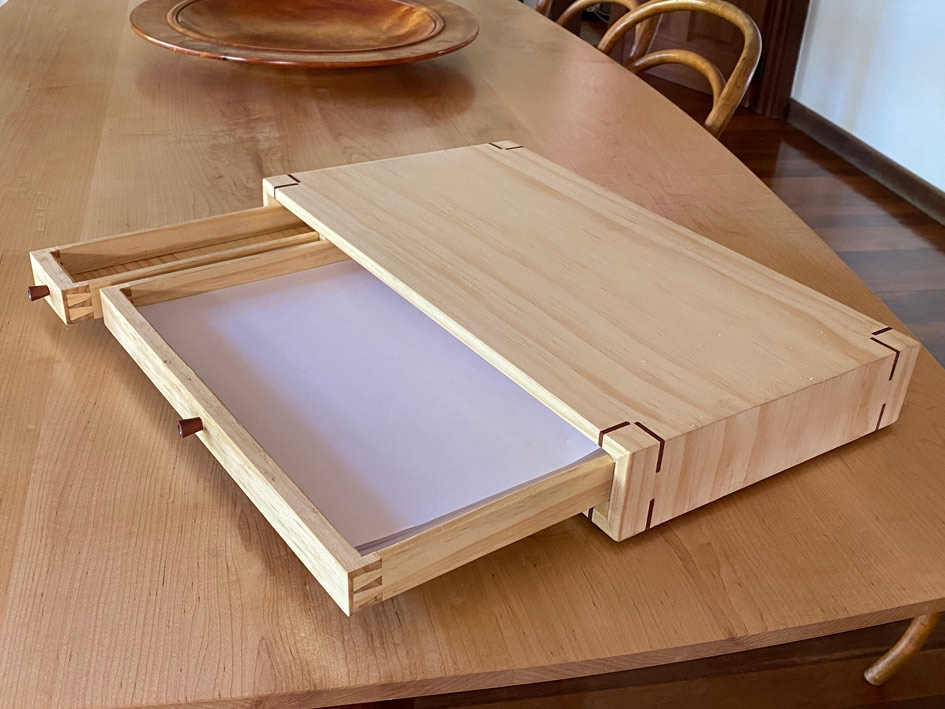
Lauren is my daughter-in-law, an aspiring woodworker, and she requested a stand for her computer monitor. My son was very specific about the size: 400mm wide, 250mm deep, and 60mm high. A drawer for A4 paper.

The wood was Radiata Pine, to match the desk/table she uses for study.

This was the result. Let me know if you spot anything unusual ...
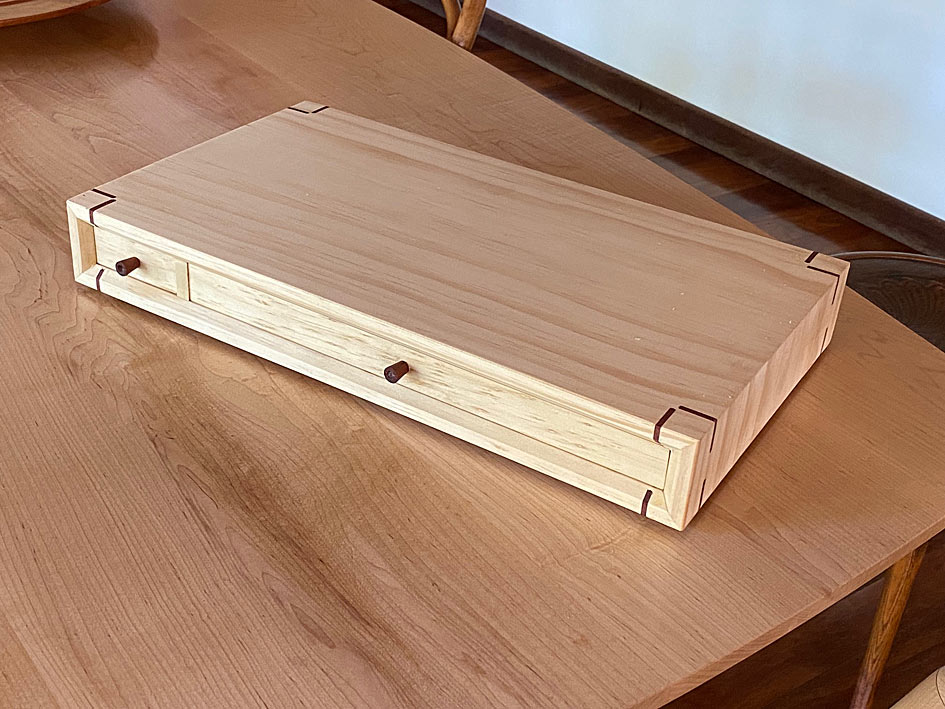


Now this box is to be in full sunlight, and even though I believe that mitred corners do not need more than glue, especially if they are waterfalls, I decided to add reinforcing splines. The problem? I was not paying attention and cut the first one at the front, not the side! Damn and blast!! I tried to fill this with a matching spline of Radiata Pine but, of course, this was evident.

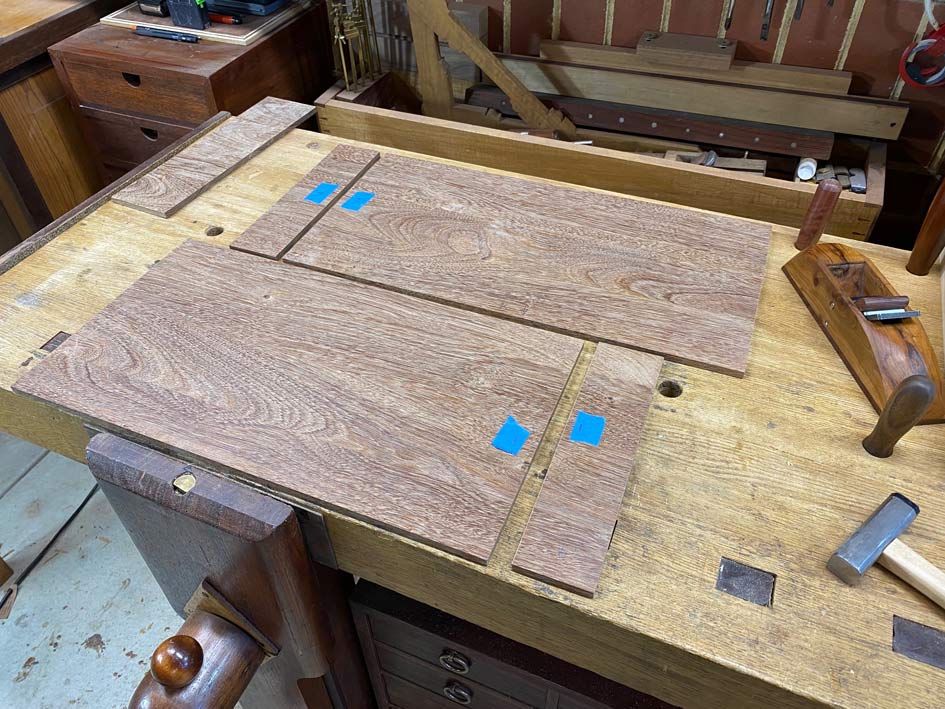
There was nothing for it, but I decided to junk the box and make another, this time in hard wood and dovetailing the corners. I have started on this ...


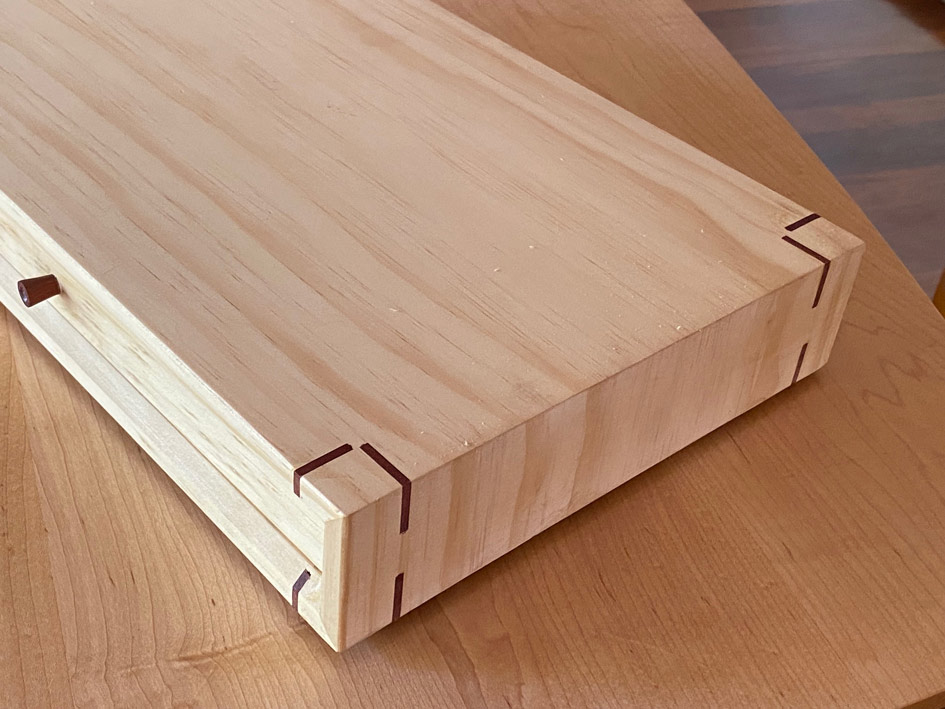
However, I had an inspiration, and decided to cut splines on all faces of the corners, and it created this pattern ...


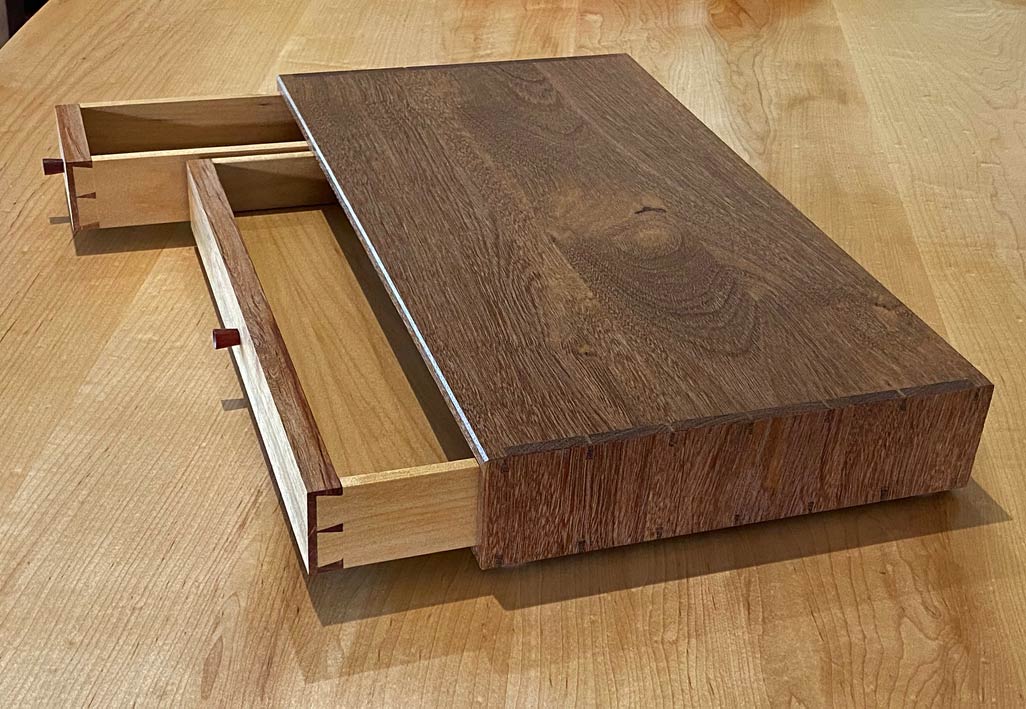
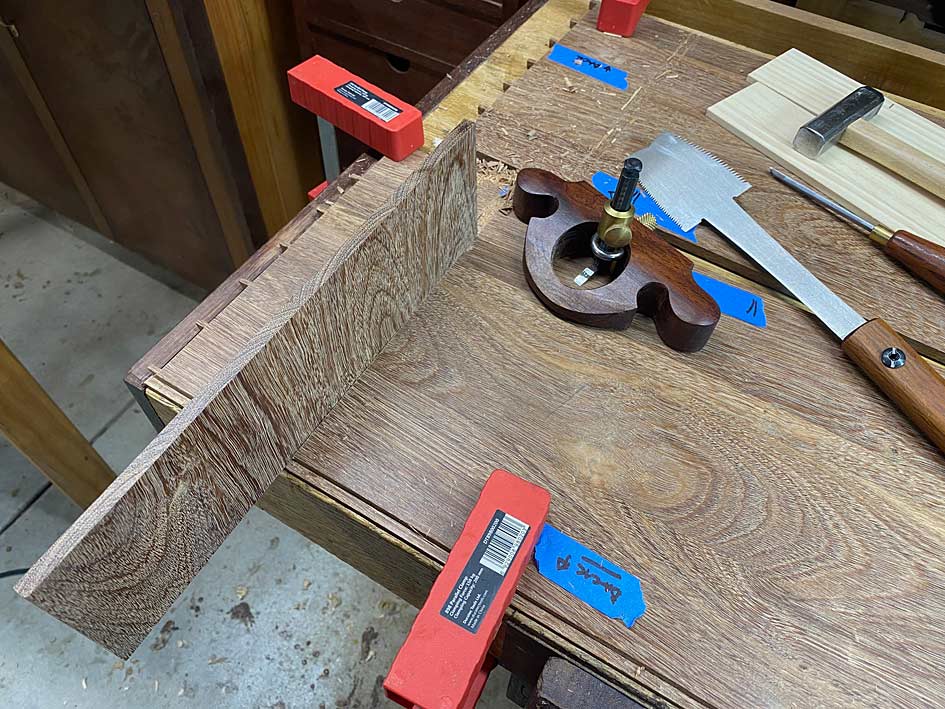
Well, I still remade the monitor stand .... box, really. I have no idea what the wood is, but it is one of the hardest, densest woods I have ever used. It chipped HSS chisels when chopping, and showed up the weakness of the moving fillister plane blade I made. I made another, thankfully durable.


Anyone recognise this wood? I suspect it is Indonesian. Part of a pile of boards I picked up at a salvage yard about 15 years ago. Very well seasoned!!!


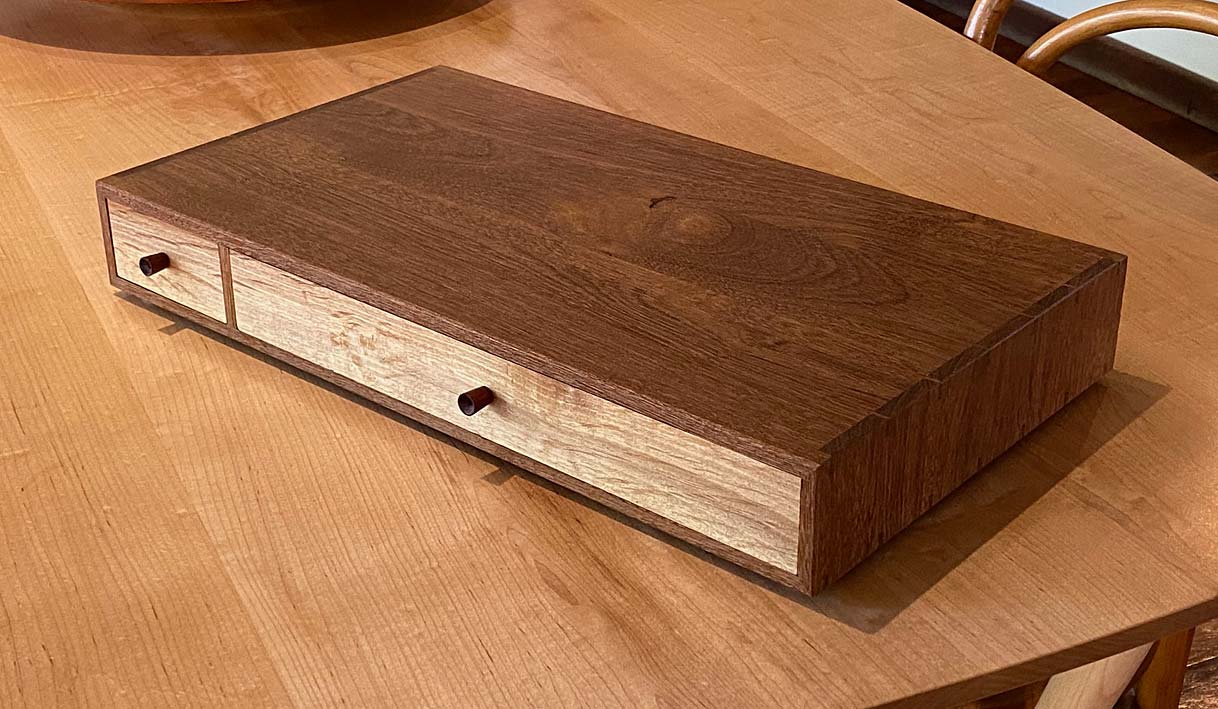
The replacement box is the same size as before, but the shell is thinner, and this makes for significantly more internal space.


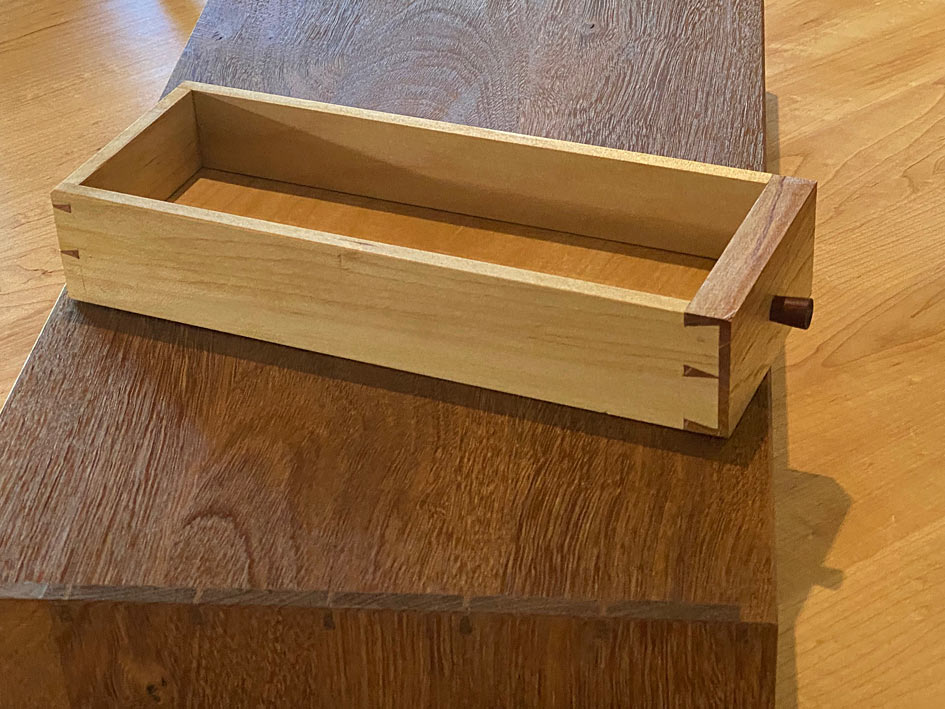
On the left a drawer for pens and on the right a drawer for A4 sheets ...


Construction is mitred through dovetails ...


Dovetailed ... of course
smile.gif


Even my wife, who liked the first version, prefers this one. Happy wife, happy life.


Regards from Perth


Derek
 
I like the unusual splines in the original box, although I’m not a fan of radiata pine. But the new box from mystery wood is gorgeous! The wood didn’t look so great in the raw form but it takes that finish beautifully. And of course your skill is extraordinary, goes without saying at this point, actually for many years.
 
Nice box.

On only wish the thread had a different title. My intitial thought was it was a coffin for Lauren.

But the boxes look great. The second one is the one I preferred.

Maybe it is Ipe, which is usually used for decking and outdoor furniture, but is reputed to be very hard and dense, significantly harder than teak.

My brother-in-law used it for decking and he had to pre-drill for screws.


More Information: https://harborexports.com/ipe-vs-teak-comparing-high-end-lumber/
1769011351309.png
 
On only wish the thread had a different title. My intitial thought was it was a coffin for Lauren
I have to laugh a little because: leave it to Packard to lay it out there. :) But admittedly, even I thought that for a moment.

The box looks great. However, since you mentioned that your DIL is an aspiring woodworker, why did you not make a project that you did together so she could learn more?
 
Beautiful work on both boxes Derek!

I must admit I kinda feel that level of effort on pine to be a bit of a waste, but beautiful nonetheless!
 
Beautiful riser units, great work as always Derek.
What inspired the change from recessed drawers, on the first one, to the flush inset of the second?
 
Beautiful riser units, great work as always Derek.
What inspired the change from recessed drawers, on the first one, to the flush inset of the second?

Good question. They have a sunroom, which is used as a study. Lauren's desk is sited close to a window, which means that it is bathed in sunlight and heat. A joint made of a simple mitre would not last long, and I was concerned also if one was reinforced. Dovetails, on the other hand, are mechanical joints, and will not come apart.

Ṟegards from Perth

Derek
 
Window glass absorbs/blocks UVB, but not UVA rays.

That means you won’t get a sunburn through the glass, but you can get some deep tissue damage (though I don’t know what that is). UVA also causes fading.

If it is single glazed windows, there is UV blocking glass used by picture framers, and there is UV film you can apply to the existing glass (which is what I would look into, if I was concerned.)
 
Window glass absorbs/blocks UVB, but not UVA rays.

That means you won’t get a sunburn through the glass, but you can get some deep tissue damage (though I don’t know what that is). UVA also causes fading.

If it is single glazed windows, there is UV blocking glass used by picture framers, and there is UV film you can apply to the existing glass (which is what I would look into, if I was concerned.)
I think he is concerned about the infrared from the insolation.
 
Window glass absorbs/blocks UVB, but not UVA rays.

That means you won’t get a sunburn through the glass, but you can get some deep tissue damage (though I don’t know what that is). UVA also causes fading.

If it is single glazed windows, there is UV blocking glass used by picture framers, and there is UV film you can apply to the existing glass (which is what I would look into, if I was concerned.)

Sun > heat > expansion > wood moving > mitres coming apart.

Regards from Perth

Derek
 
If you heat an area the humidity drops.
Yes. But it matters not at all whether the heat is from a radiant source like a window or from a radiator or heat register.

Also, from my picture framing days, I found that wide mouldings are far more likely to have their miters fail than narrow moldings. I would not expect a 5/8” or 3/4” wide miter to suffer very much from seasonal movement. (Only guessing that the stock is fairly narrow, as there is nothing in the images to use for scale.)

I assumed the splines were mainly decorative.

I would note that mitered plywood generally makes a stronger joint than mitered end grain lumber. In any case, I expect that Loren’s box is destined to be an heirloom and will live a long life with nice tight miters.:)
 
Humidity rises with heat, Antarctica is the driest place on earth due to low temperatures there. I don't want to speak for Derek but in general Australia has very consistent humidity levels within any given area such as Sydney or Melbourne or inland and we have in general low humidity levels apart from the far north and far south.
 
Sydney and Perth are climatically very different, but this is not the issue. Nevertheless, I will comment here.

Perth has a Mediterranean climate, which means rain in Winter and none in Summer. We have typically very negligible humidity in Summer. Sydney, on the other hand, has rain in Summer and is dry in Winter. The combination of Summer heat + rain creates the conditions for humidity. My son and daughter-in-law live in Canberra, which is on the Sydney side of Australia, and has a similar climate.

In regard to heat through window glass, which is radiant heat, AI says:

Radiant heat, which travels via infrared waves directly to objects rather than heating the air, has a significant, often drying effect on wood furniture. Because wood is a hygroscopic, natural material that retains heat, it is highly sensitive to the intense, localized heat from sources like fireplaces, direct sunlight, or underfloor heating systems.

Impact on Wooden Furniture
  • Cracking and Splitting: Excessive, direct radiant heat dries out the wood, causing it to lose its natural moisture content, leading to surface cracking, splitting, and damage to joints.
  • Warping and Cupping: If one side of a wooden piece is exposed to intense heat while the other is not, the resulting uneven contraction causes the wood to warp, twist, or cup.
  • Adhesive Failure: High temperatures can weaken the adhesives used in furniture construction, leading to structural instability.
  • Finish Damage: Prolonged exposure can dry out, fade, or discolour varnish, oils, and other furniture finishes.

Regards from Perth

Derek
 
Both boxes look great.
I guess my wife and I are in the minority and like the pine one best. The spline remind ne of printer marks to line up a document.
Great work.
 
Lauren is my daughter-in-law, an aspiring woodworker, and she requested a stand for her computer monitor. My son was very specific about the size: 400mm wide, 250mm deep, and 60mm high. A drawer for A4 paper.

The wood was Radiata Pine, to match the desk/table she uses for study.

This was the result. Let me know if you spot anything unusual ...


Now this box is to be in full sunlight, and even though I believe that mitred corners do not need more than glue, especially if they are waterfalls, I decided to add reinforcing splines. The problem? I was not paying attention and cut the first one at the front, not the side! Damn and blast!! I tried to fill this with a matching spline of Radiata Pine but, of course, this was evident.

There was nothing for it, but I decided to junk the box and make another, this time in hard wood and dovetailing the corners. I have started on this ...


However, I had an inspiration, and decided to cut splines on all faces of the corners, and it created this pattern ...


Well, I still remade the monitor stand .... box, really. I have no idea what the wood is, but it is one of the hardest, densest woods I have ever used. It chipped HSS chisels when chopping, and showed up the weakness of the moving fillister plane blade I made. I made another, thankfully durable.


Anyone recognise this wood? I suspect it is Indonesian. Part of a pile of boards I picked up at a salvage yard about 15 years ago. Very well seasoned!!!


The replacement box is the same size as before, but the shell is thinner, and this makes for significantly more internal space.


On the left a drawer for pens and on the right a drawer for A4 sheets ...


Construction is mitred through dovetails ...
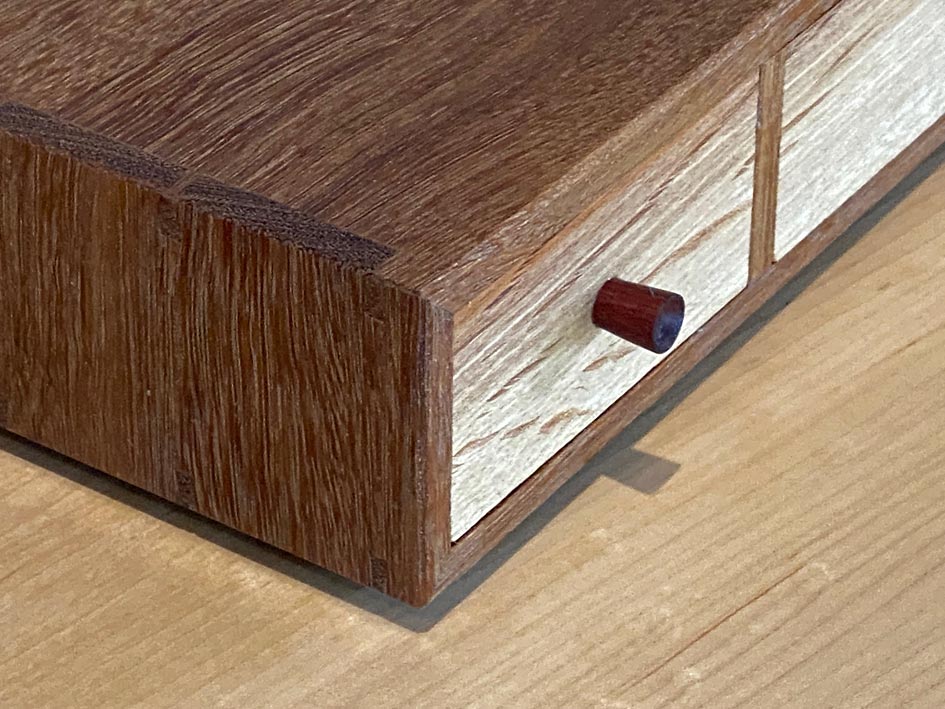


Dovetailed ... of course
smile.gif


Even my wife, who liked the first version, prefers this one. Happy wife, happy life.


Regards from Perth


Derek
Fantastic.

But... where did you find such a thin dovetail router bit? :cool: :devilish:
 
Back
Top