
Biscos are made by Lamello and are intended to be used alongside either the Tenso or Clamex for joint alignment on long runs. Colonial Saw carries them, not difficult to obtain.I've never seen those? There are plastic ones available, to be used with Corain (and other brands of solid surface material.
The Lamello alternative I am aware of is the one called Bisco. They are intended to fit into the wider slot, produced by the Zeta P-2. For some reason, they are very difficult to obtain though. I don't know why?

You are using an out of date browser. It may not display this or other websites correctly.
You should upgrade or use an alternative browser.
You should upgrade or use an alternative browser.
Is A Biscuit Just A Biscuit?
- Thread starter onocoffee
- Start date

onocoffee
Member
I just saw these while I was perusing one of the dealer sites. Looks like it's called the P-15/14 and not just the P-14, which is a self-locking connector.I've never seen those? There are plastic ones available, to be used with Corain (and other brands of solid surface material.
The Lamello alternative I am aware of is the one called Bisco. They are intended to fit into the wider slot, produced by the Zeta P-2. For some reason, they are very difficult to obtain though. I don't know why?
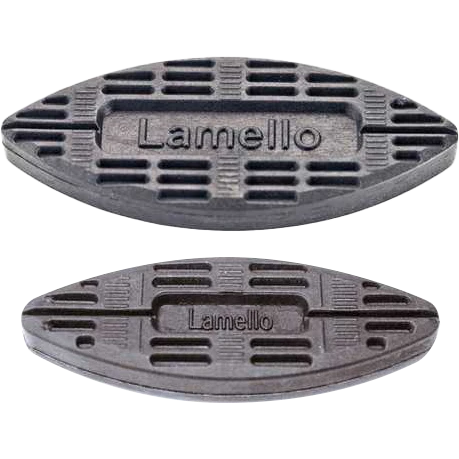
145301 - BISCO P-15/14 - Bulk Box of 80 | WTB Woodworking LLC
Bisco P is an alignment element that is part of the Clamex P system. It is easily installed using the Zeta P2 or CNC as it fits easily into the P-system groove without changing the cutter.Bisco P-14 is 7 mm thick, made of thick plastic and used in combination with Clamex P-14.Please Note: Bisco...
 www.wtbwoodworking.com

- Joined
- Oct 16, 2015
- Messages
- 5,830
Yeah, the Bisco is a temporary place holder, not intended to be left in place. The pull out the same as a wooden biscuit, not using the groove in the back.I just saw these while I was perusing one of the dealer sites. Looks like it's called the P-15/14 and not just the P-14, which is a self-locking connector.
145301 - BISCO P-15/14 - Bulk Box of 80 | WTB Woodworking LLC
Bisco P is an alignment element that is part of the Clamex P system. It is easily installed using the Zeta P2 or CNC as it fits easily into the P-system groove without changing the cutter.Bisco P-14 is 7 mm thick, made of thick plastic and used in combination with Clamex P-14.Please Note: Bisco...
I have never tried directly from Colonial, but there are a few distributors around here that show them as a catalog item, but not in stock.Biscos are made by Lamello and are intended to be used alongside either the Tenso or Clamex for joint alignment on long runs. Colonial Saw carries them, not difficult to obtain.
I recently dove into the Lamello world with a Zeta P2. The use of Tensos for scribes and faceframes with prefinished material is pretty darn slick. I was doing something similar with Dominos but obviously without self-clamping ability. I haven't used Clamex much other than testing though. I'm seeing a lot of lateral movement of the joint (when force is applied) after the Clamex nut is turned - I'd say around 5mm. At first I thought it was the Clamex fittings I got from overseas, but the Lamello sample included with my Zeta does the same. Is this normal or am I doing something wrong?

luvmytoolz
Member
Firstly, congrats on the Zeta, it's an unbelievable tool!I recently dove into the Lamello world with a Zeta P2. The use of Tensos for scribes and faceframes with prefinished material is pretty darn slick. I was doing something similar with Dominos but obviously without self-clamping ability. I haven't used Clamex much other than testing though. I'm seeing a lot of lateral movement of the joint (when force is applied) after the Clamex nut is turned - I'd say around 5mm. At first I thought it was the Clamex fittings I got from overseas, but the Lamello sample included with my Zeta does the same. Is this normal or am I doing something wrong?
The Clamex connectors have little ribbed sections at each end that effectively slot into each other. In my experience with both the genuine Clamex's and the cheap Asian imports, the function was identical and I got maybe 1mm movement before tightening. Both Tenso and Clamex's are designed to allow a tiny bit of adjustment, but 5MM definitely doesn't sound right, or even possible to me?
If you look at the pic attached (genuine Clamex on left, cheapo on right), the ribs are a stand out, but if you look at the mating connector the ribbed section fits inside a sectioned off area, that would allow at most 1-2mm play in either direction.
Attachments

Firstly, congrats on the Zeta, it's an unbelievable tool!
The Clamex connectors have little ribbed sections at each end that effectively slot into each other. In my experience with both the genuine Clamex's and the cheap Asian imports, the function was identical and I got maybe 1mm movement before tightening. Both Tenso and Clamex's are designed to allow a tiny bit of adjustment, but 5MM definitely doesn't sound right, or even possible to me?
If you look at the pic attached (genuine Clamex on left, cheapo on right), the ribs are a stand out, but if you look at the mating connector the ribbed section fits inside a sectioned off area, that would allow at most 1-2mm play in either direction.
Thanks! I should have been more clear - the mated and locked halves were moving within the machined slots along the elliptical path as a unit, rather than the halves moving relative to each other. This makes me think something was off with the slots - I was testing with plywood and maybe the P groove lost some of its integrity with repeated tests. In fact this must be it or there’s something very wrong with my machine (or my brain) - won’t be able to check until tomorrow though.

luvmytoolz
Member
They allow a little assembly wiggle room but most definitely it shouldn't move any really noticeable amount in the slot. Maybe it's partially technique, not holding it firm enough when the solenoid kicks in so it's moving a little bit creating a slightly wider key. Does the connector slide in quite firmly or it feels a little loose and very easily slid in?Thanks! I should have been more clear - the mated and locked halves were moving within the machined slots along the elliptical path as a unit, rather than the halves moving relative to each other. This makes me think something was off with the slots - I was testing with plywood and maybe the P groove lost some of its integrity with repeated tests. In fact this must be it or there’s something very wrong with my machine (or my brain) - won’t be able to check until tomorrow though.
Just also be aware that if you're using the cheapo Asian ones, all the ones I've seen you need to do on the 15mm setting, not 14mm as per genuine Lamello ones as they're slightly bigger.
Michael Kellough
Member
There is some lateral tolerance designed in. Maximum of about 4mm for one pair but if you use a few pairs random alignment variables will cut that 5mm down to maybe 2mm.
luvmytoolz
Member
The OP said it's actually sliding laterally in the slot 5mm. The curve of the key is a firm fit I've always found, it can spin around a little in each direction in the slot because of the curve, but not actually slide 5mm sideways.There is some lateral tolerance designed in. Maximum of about 4mm for one pair but if you use a few pairs random alignment variables will cut that 5mm down to maybe 2mm.
Michael Kellough
Member
Correct, the plastic thing won’t slide. What I’m describing is just the ability of one half of a pair to key into the other a little off-center. The 4mm I mentioned is really the maximum of +/- 2mm. I like to use a couple Domino’s along with the Clamex so I get the best of both. I’m super careful placing the Dominoes as that will set the lateral alignment of the parts. Then because of the tolerance of the Clamex pieces I can be a little more casual with placing them and know they’ll still mate.The OP said it's actually sliding laterally in the slot 5mm. The curve of the key is a firm fit I've always found, it can spin around a little in each direction in the slot because of the curve, but not actually slide 5mm sideways.
So I’m not sure what is happening with the live4ever’s test. Maybe oversized slots?
Last edited:
luvmytoolz
Member
I was thinking oversized slots, hence my user technique question earlier. Nothing else makes sense to me as he's used genuine and import connectors with the same results.Correct, the plastic thing won’t slide. What I’m describing is just the ability of one half of a pair to key into the other a little off-center. The 4mm I mentioned is really the maximum of +/- 2mm. I like to use a couple Domino’s along with the Clamex so I get the best of both. I’m super careful placing the Dominoes as that will set the lateral alignment of the parts. Then be of the tolerance of the Clamex pieces I can be a little more casual with placing them and know they’ll stop mate.
So I’m not sure what is happening with the live4ever’s test. Maybe oversized slots?
- Joined
- Oct 16, 2015
- Messages
- 5,830
They should not move laterally in the slot at all. They should even be somewhat tight when rolling them in. There can be some slight movement side to side, since the pair can rotate a little. However, once you tighten the cam, they should be rock solid. You should even be able to see them pull together. If they don't, you are cutting them too shallow.
Same with Tenso. The parts should be tight(no wiggle) when they snap together.
Same with Tenso. The parts should be tight(no wiggle) when they snap together.
Maybe I’m doing something very wrong but I’m totally lost here.
Made my pencil mark and cut two new slots at 14 depth. I believe technique is solid as a long time Domino user, but was extra careful. Grabbed the OEM Clamex p14 halves. They slide in with a little resistance, snug but moveable in the slots with finger pressure. We know the size is right because the halves are flush with the face of the slots (whereas P10 or P15 would be shallow or proud of the face, respectively). Lock the nut about a quarter turn.
The joint is locked. The pieces cannot be pulled apart when trying to pull my pencil marks apart (force exactly perpendicular to joint face). With a slight rocking force, I can open the joint about 1mm. However, with lateral force (i.e., parallel to the joint faces), I can quite easily separate my pencil marks by about 15mm in either direction, and also open the joint approx. 2.5mm at the ends of that lateral movement. This movement shifts the entire locked Clamex “biscuit” within the elliptical path of the slots. I realize these are meant to be used in multiples for a typical joint, but is this normal for a single Clamex connector?
Made my pencil mark and cut two new slots at 14 depth. I believe technique is solid as a long time Domino user, but was extra careful. Grabbed the OEM Clamex p14 halves. They slide in with a little resistance, snug but moveable in the slots with finger pressure. We know the size is right because the halves are flush with the face of the slots (whereas P10 or P15 would be shallow or proud of the face, respectively). Lock the nut about a quarter turn.
The joint is locked. The pieces cannot be pulled apart when trying to pull my pencil marks apart (force exactly perpendicular to joint face). With a slight rocking force, I can open the joint about 1mm. However, with lateral force (i.e., parallel to the joint faces), I can quite easily separate my pencil marks by about 15mm in either direction, and also open the joint approx. 2.5mm at the ends of that lateral movement. This movement shifts the entire locked Clamex “biscuit” within the elliptical path of the slots. I realize these are meant to be used in multiples for a typical joint, but is this normal for a single Clamex connector?
luvmytoolz
Member
Nope, definitely not normal!Maybe I’m doing something very wrong but I’m totally lost here.
Made my pencil mark and cut two new slots at 14 depth. I believe technique is solid as a long time Domino user, but was extra careful. Grabbed the OEM Clamex p14 halves. They slide in with a little resistance, snug but moveable in the slots with finger pressure. We know the size is right because the halves are flush with the face of the slots (whereas P10 or P15 would be shallow or proud of the face, respectively). Lock the nut about a quarter turn.
The joint is locked. The pieces cannot be pulled apart when trying to pull my pencil marks apart (force exactly perpendicular to joint face). With a slight rocking force, I can open the joint about 1mm. However, with lateral force (i.e., parallel to the joint faces), I can quite easily separate my pencil marks by about 15mm in either direction, and also open the joint approx. 2.5mm at the ends of that lateral movement. This movement shifts the entire locked Clamex “biscuit” within the elliptical path of the slots. I realize these are meant to be used in multiples for a typical joint, but is this normal for a single Clamex connector?
When the cam is fully locked it should be extremely difficult to force it open unless you're leveraging the timber to force the joint apart. Also, just confirming that 15mm play should be 1.5mm play?
Nope, 15mm! I shot a little video of all of this - just gotta figure out a way to share it. The Tensos do the exact same thing in these test slots actually. I never thought much of it for the projects I’ve done with Tensos because I was gluing those joints and they self-clamped well enough to glue.Nope, definitely not normal!
When the cam is fully locked it should be extremely difficult to force it open unless you're leveraging the timber to force the joint apart. Also, just confirming that 15mm play should be 1.5mm play?
Also, the Clamex halves aren’t getting forced apart. It’s the entire Clamex biscuit rotating that gives the joint this enormous amount of play.
luvmytoolz
Member
Ok I must admit I'm completely baffled by this, the connector rotating doesn't cause it to open up under normal circumstances. And most certainly not 15mm.Nope, 15mm! I shot a little video of all of this - just gotta figure out a way to share it. The Tensos do the exact same thing in these test slots actually. I never thought much of it for the projects I’ve done with Tensos because I was gluing those joints and they self-clamped well enough to glue.
Also, the Clamex halves aren’t getting forced apart. It’s the entire Clamex biscuit rotating that gives the joint this enormous amount of play.
I think we now need lots of detailed pics, and video also would help. Just post the videos to Youtube and insert the link in a post here.
Michael Kellough
Member
I’m puzzled too but I do think the slots should be a little deeper. I think the plastic mating edges should be about a half mm below the surface. If they are flush to begin with you aren’t really getting any clamping force when locked.
Ok here's a quick and dirty video from this afternoon. Sorry for the vertical video - I am no content creator. I'm feeling like I'm either a really big dummy or something is very wrong with my machine.
Let me know what other pics or video would be helpful and I can be more deliberate when I get back in the shop tomorrow.
Let me know what other pics or video would be helpful and I can be more deliberate when I get back in the shop tomorrow.
luvmytoolz
Member
The op's doing it at the 14mm setting, but all the 3rd party Clamex's I'm aware of need to be the 15mm setting as they are wider.I’m puzzled too but I do think the slots should be a little deeper. I think the plastic mating edges should be about a half mm below the surface. If they are flush to begin with you aren’t really getting any clamping force when locked.
luvmytoolz
Member
Ok here's a quick and dirty video from this afternoon. Sorry for the vertical video - I am no content creator. I'm feeling like I'm either a really big dummy or something is very wrong with my machine.
Let me know what other pics or video would be helpful and I can be more deliberate when I get back in the shop tomorrow.
Yep, (I can't hear the audio as I'm viewing remotely,) but you need to use the 15mm setting.
Similar threads

- Replies
- 2
- Views
- 372
- Replies
- 9
- Views
- 586
