My apologies for the delay on a review.
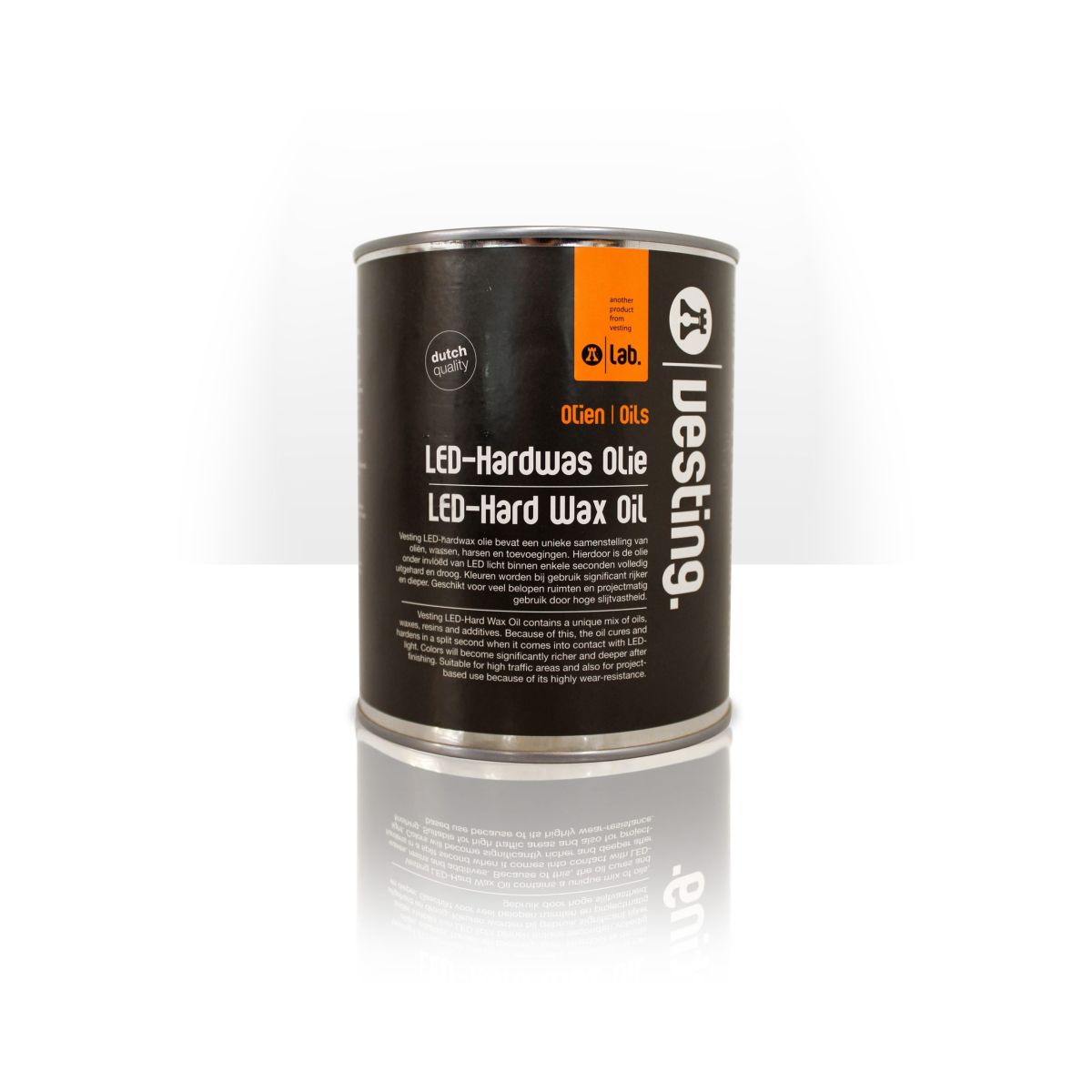
First: the UV oil is much thicker than Polyx, or most any finish I've ever used. It's important to warm the oil. I put the can by the woodstove, but you could just as easily put it in a can of warm water. 70-80 degrees F is recommended.
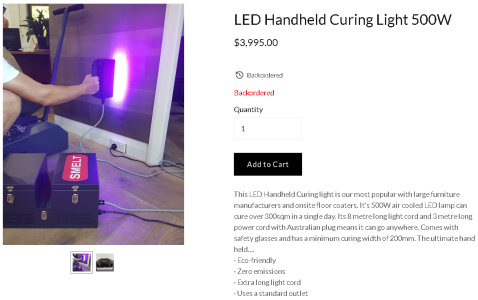
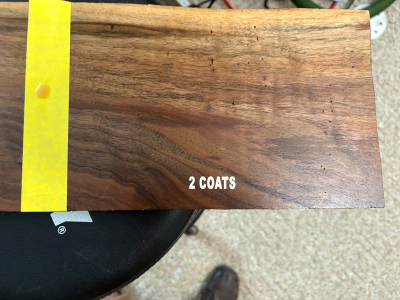
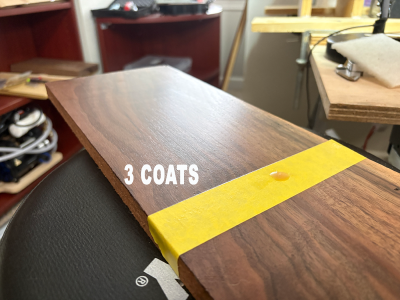
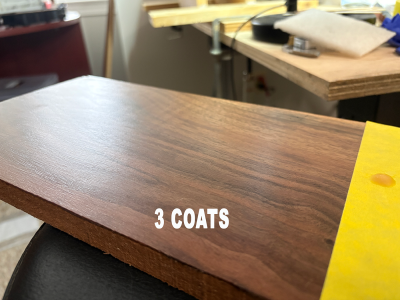
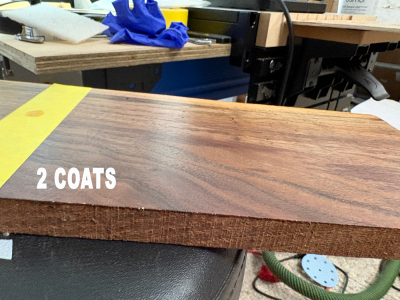
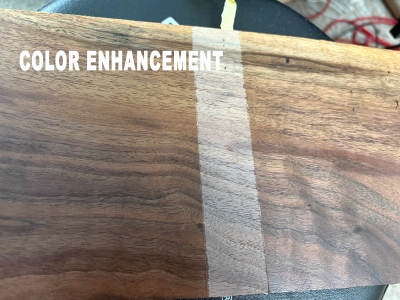
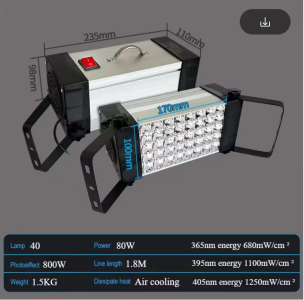
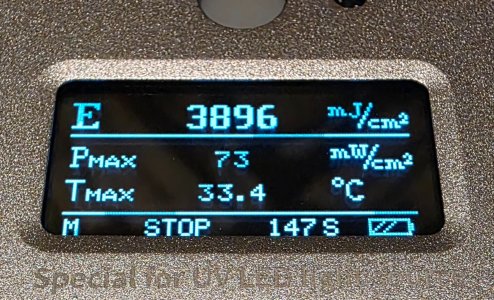
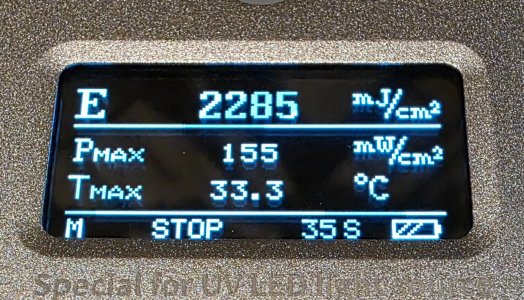
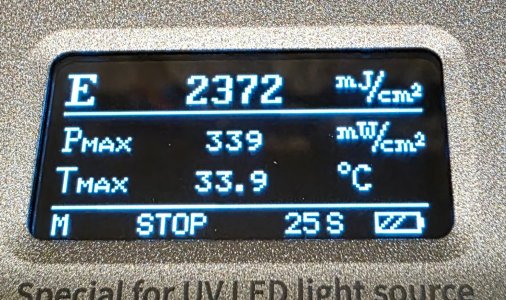
The Osmo light is ROBUST. Ballpark 10 pounds, in a metal case, transformer with fans, 500 watts of LED power. The provided glasses are quite dark, and I turned on every light in the house and also used an industrial headlamp on my noggin. The Osmo lamp is so powerful that it would be easy to burn the surface if you kept it one place, which of course you shouldn't! Cure was almost instant. There's a very slight color shift in curing on wood that really shows up with any finish on blue masking tape. I experimented with running the lamp over the UV Oil much faster than recommended, and it still cured solid. Instantly. Just amazing.
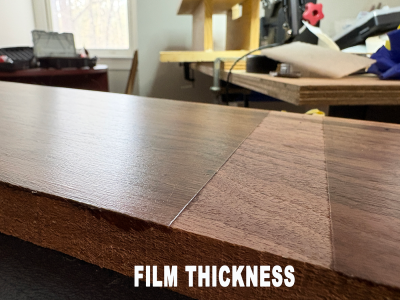
I first tested the oil on some high quality plywood sanded to 180, then followed that up with Doug fir, Alaska yellow cedar, and Western hemlock counters in my home. The fir was new and sanded to 180, the cedar and hemlock counters already had Polyx a handful of years since last application and I sanded at 320.
My first round of rolling on the UV Oil left a bumpy surface, using a mini 1/8" nap roller, high quality roller for enamels, varnishes, etc. Wanting a smooth surface, I dug deeper and found my Osmo mini rollers, and those leave a better surface, but still a little bumpy with vigorous rolling. Of course Polyx and Top Oil (same basic product just different packaging) are a wipe down finish, and being a thinner product, there's a good chance your usual method of wiping down won't work with the UV oil—as the UV oil is just too thick. I love the high quality 3M blue shop towels from Napa Auto for wiping down Polyx. That doesn't work for the UV oil, as the towel is slowly torn apart, leaving little blue felt-like pieces. I also tried high dollar cotton rags that were also amazing for Polyx. Also no good.
Achieving a final surface that is completely smooth was not easy. I'm picky as heck, being a fulltime woodworker of 30 some years. I want smooth, really smooth. The only way I was able to achieve that was to sand between coats with 320, then apply an almost dry Osmo mini roller to the surface to coat ultra thin, then go back and forth in alternating diagonal, with-grain, and counter-grain directions. I'm talking aggressive, darn near aerobic exercise kind of rolling. In short, whatever finish is there when still wet is exactly what you get after waiving the magic UV lamp to cure. Polyx is much more forgiving of minor texture or even a little sloppiness.
I left a couple counters in my home with the tiny tiny texture (as a test, and knowing I can sand at 320 and refinish later.) My family (not woodworkers) barely noticed, even after I said something. But they oooohed and aaahed at the smooth smooth finish I left on the Doug fir.
After texting with my Osmo rep—who is amazing and will always go the distance to help—I ordered the Osmo Easy Pads, which are just a branded very high quality lint free rag. Unfortunately I had no lint free rags, and being in Alaska, I couldn't have any get here for a week. The Osmo Easy Pads are on the way, and I'm fairly confident that will fix the issue. I'll report back on my next test.
All in all, I'm almost happy, but have the one last hurdle to get to a full smooth surface quickly. The online videos and instructions don't convey the difficulty I ran into with achieving a fully smooth surface. But heck—full disclosure here—finish has never been my strong point, despite woodworker being my livilihood for decades. Like the UV oil finish...maybe I'm just a bit thick.

Final thoughts: The instant cure felt miraculous. And zero curing during application and even in the roller tray was also very different. Sanding immediately after curing the first coat—full on revolutionary.
As for water beading on the cured UV Oil finish...Polyx leaves more of a huge water bead, as if it has a bit more wax. Wiping water off with a rag from the UV Oil finish leaves more tiny water droplets than on Polyx. Apparently it's 100% acceptable with Osmo to top coat the UV Oil with Polyx or any other interior Osmo product, if desired. Yeah then you have the curing issue in days, but a super thin top coat of Polyx would barely leave an odor after a couple days.
Speaking of odor. The uncured UV Oil has a smell. Some people report a headache without a respirator. I didn't mind it, and I'm fairly sensitive to odors. Once the magic UV lamp is waved and finish is cured, there is zero discernable odor. My family was out of town during my work, and my wife smelled nothing on coming home a day and a half after I finished the counters. And she could pretty much smell a drop of curing Polyx from 100 yards.
I'm fairly confident I'll get the ultra smooth surface I'm after with a little more learning curve. Hopefully the Osmo Easy Pads are just what I'm looking for. I'll report back when I know more.