Reuse or Replace Dowels in Chair Refinishing?

onocoffee

Member
Joined
Sep 23, 2024
Messages
1,670
Location
Baltimore, Maryland, USA
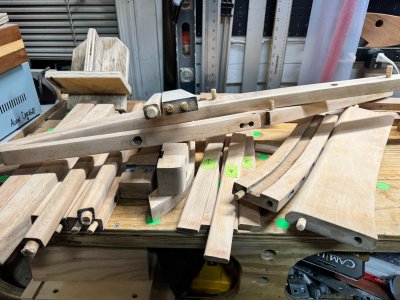
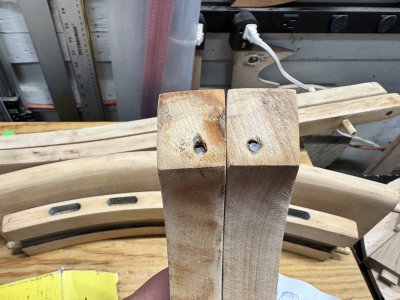
I'm refinishing a court chair from the 1920s for my dad. Got it stripped and taken apart. It was assembled using dowels and I'm wondering if I should replace them with new dowels or just clean them up and reassemble? The chair also uses slotted screws in certain spots - like to secure the arms and the seat. Most of them seem to be in good condition. Should they be replaced as well?

Thanks!
 

Attachments

  • IMG_3649.JPG
    IMG_3649.JPG
    3.3 MB · Views: 38
I'd definitely be replacing the dowels, especially if the chair had even the tiniest bit of wobble.

I would also generally change the screws if not for function, then for aesthetics.
 
For restoration, I always defer to Tom Johnson's practice (Thomas Johnson Antique Restoration on YT) when in doubt.

Unless the dowels (or tenons) are in poor condition, loose fit if not replaced, out of round, or the old glue cannot be properly removed, I'd prefer to keep and use the original dowels for two main reasons: 1) maintaining the authenticity 2) avoiding unnecessary work (e.g. removing or drilling out the old dowels).

If you clean a dowel hole and result in a bigger hole, you may need to redrill the hole and plug it -- which is more work. So be careful when cleaning the dowel holes for glue residue.

The same applies to screws and hardware as keeping the original character (sometimes, including minor blemishes) is desirable or important for an antique piece. Use the original materials where possible unless they would result in a weaker structure or strength.

For restoring antique pieces, consider using Old Brown Glue or the like, which would make future restoration effort (e.g. 50 years later :D) easier instead of yellow glue. However, don't shy from using yellow glue or even epoxy glue or new wood if that's the right glue or material to use for a fix.
 
Last edited:
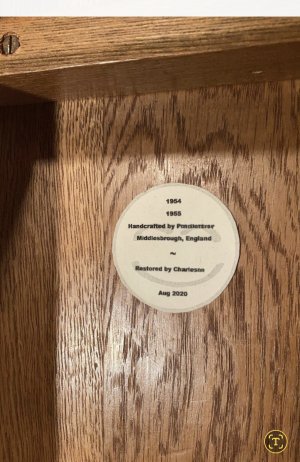
Btw, do you have the habit of signing and dating your work? If so, also consider attaching a label (with your name and date on it) to the underside of the chair to acknowledge your restoration effort. I did that when I helped fix a coffee table for a neighbor whose father built it while a school boy in the UK.

Names on label altered. The label was created by the neighbor at my suggestion. The coffee table now is owned by one of his sons, the maker's eldest grandson.

1000125177.jpg
 
Last edited:
I'm refinishing a court chair from the 1920s for my dad. Got it stripped and taken apart. It was assembled using dowels and I'm wondering if I should replace them with new dowels or just clean them up and reassemble? The chair also uses slotted screws in certain spots - like to secure the arms and the seat. Most of them seem to be in good condition. Should they be replaced as well?

Thanks!
If the old screws are usable, I would use them. Nothing screams "refurbished" as much as Phillips or Torx screws in a vintage piece...furniture or machinery.
 
I’ve managed to break some of the screws into the arms. What’s the best way to extract these?
Carefully drill through a pilot hole in some metal sheet (to keep it from wandering) into the centre of the screw top a bit, and use proper screw extractors is the only way I know to remove broken screws without causing further damage.
 
^^ those can work well, but I’ve learned that you need to be carefully aligned with the screw, if you hit the screw, the extractor shatters. Leastwise the ones I’ve had do, YMMV
 
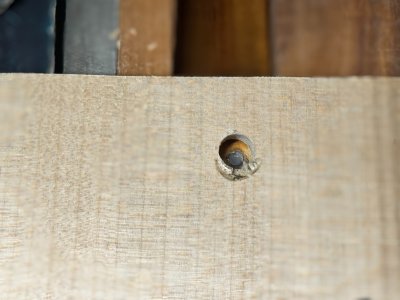
Just wanted to report that I was unable to fine the bit that See Jane Drill used. Harbor Freight supposedly had a diamond tipped hole saw for $7 but they were out of them. Ended up at Lowes and got the Spyder diamond tipped hole saw for $20 and successfully was able to remove both screws. Thanks for the tips!
 

Attachments

  • IMG_3677.jpg
    IMG_3677.jpg
    912.4 KB · Views: 15
I suspect, but lack evidence to support my suspicion, that antique furniture might not have used store-bought dowels, and the dowels may not be standard sized. You might have to ream out the dowel holes to the next larger size if that is the case. Though 1955, if that date is accurate, is not a very old and most of what I’ve seen written indicates that 100 years is what makes furniture an antique.

If it was a car, it would definitely be an antique, which I have seen variously defined as 25 years (for insurance purposes) and 50 years for auction catalogs.
 
I suspect, but lack evidence to support my suspicion, that antique furniture might not have used store-bought dowels, and the dowels may not be standard sized.
It's rare but on some of the older stuff I've pulled apart the dowels were barely round. Just sort of rough shaped round-like.
 
It's rare but on some of the older stuff I've pulled apart the dowels were barely round. Just sort of rough shaped round-like.
I think they made dowels with a steel plate with holes in it. They would make a square or oversized piece and drive it through the hole.

The dowels I used (1/4” diameter) for toy axels were so sloppily made that they were not even round. I found the drilling a hole in a flat piece of steel and tapping the dowels through did a good job of getting them to size and round.
 
Last edited:
I suspect, but lack evidence to support my suspicion, that antique furniture might not have used store-bought dowels, and the dowels may not be standard sized. You might have to ream out the dowel holes to the next larger size if that is the case. Though 1955, if that date is accurate, is not a very old and most of what I’ve seen written indicates that 100 years is what makes furniture an antique.

If it was a car, it would definitely be an antique, which I have seen variously defined as 25 years (for insurance purposes) and 50 years for auction catalogs.
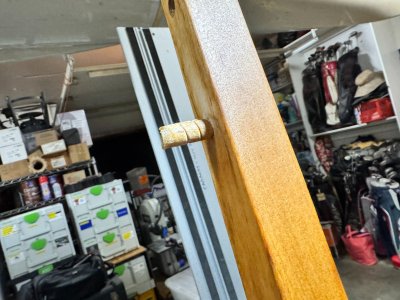
I don't know dowels, so I can't say. But here's one of the dowels.

Overall, I think the dowels are in good and reusable condition. I did a dry fit today and will just make sure they're clean of the old hide glue and use them.
 

Attachments

  • IMG_3846.JPG
    IMG_3846.JPG
    1.6 MB · Views: 5
Back
Top