Systainer Changed color

BJM9818

Member
Joined
Feb 17, 2011
Messages
230
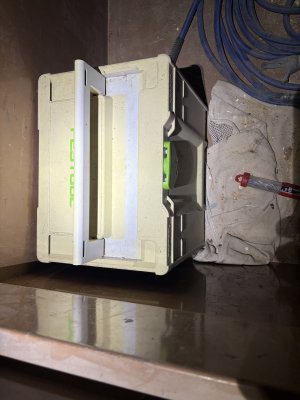
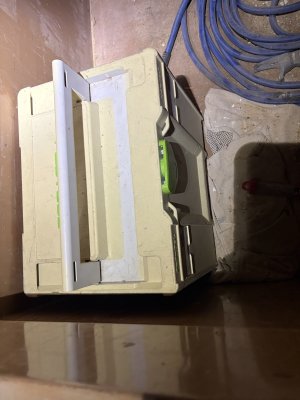
I had my HKC empty Systainer sitting in a job box for the past year. Besides an extension cord and a hammer the box was shut but empty.

I opened it up yesterday and found the Systainer changed colors but not under the handle. No chemicals were inside the jobox.

I have over 100 systainers, first ones dating back to 2007 and never had this happen.

Any thoughts?
 

Attachments

  • IMG_7297.jpeg
    IMG_7297.jpeg
    2.7 MB · Views: 34
  • IMG_7296.jpeg
    IMG_7296.jpeg
    2.8 MB · Views: 34
It appears to be light exposure with the clean “shadow” under the handle. Is that possible inside the job box?
I look at it differently...because there was no exposure to light, the color change had to be caused by exposure to different aromatic/environmental elements. That makes sense because of the 6-8 Systainers of mine that have changed color, some are exposed to sunlight and some have never been exposed to light.
 
It's not always light-related. The SYS-MFT I picked up last year during a warehouse fire sale had never been in sunlight and it had very yellow coloring. Quite a few of the Systainers that had sat in the warehouse for years had similar coloring as well.
 
Some of the classic's I've seen more yellowed than that, but I wonder if they maybe had bromide in them, which was renowned for yellowing.
 
I have a few Festool tool Systainers that were bought new back in 2002....They were my first Festool purchases and both are now a distinct yellowish colour....
Neither of them have been left exposed to sunlight and have always been stored in my dry workshop or van....Both are Classic Systainers!
I also have a TS55 EBQ from 2011 (TLoc Systainer) that I bought new,.....and it has started it's slightly visible colour change as well...🤔
 
I have a few Festool tool Systainers that were bought new back in 2002....They were my first Festool purchases and both are now a distinct yellowish colour....
Neither of them have been left exposed to sunlight and have always been stored in my dry workshop or van....Both are Classic Systainers!
I also have a TS55 EBQ from 2011 (TLoc Systainer) that I bought new,.....and it has started it's slightly visible colour change as well...🤔
Sounds like the bromide issue. With a couple of classic's I had they also got more brittle as they got older, to the point where the catches broke and the lid cracked.

I always suspected normal lighting, and/or especially flouro's seemed to add to the yellowing effect, not just being in the sun.

None of my T-Loc cases have even slightly yellowed however. Although I have always been careful to not leave them in the sun.
 
This from Google, to which I would add, storing in corrugated boxes will also cause this. Corrugated out gasses sulfur, which is heavier than air and settles to the bottom of the box. That outgassing can cause photochromic changes in a variety of finishes and materials. Until we learned that at work, we had a problem with black zinc plating turning brown or green. So “protecting the Systainers by keeping them in the original boxes may be of no help.:

Key Reasons for Yellowing:
  • UV Exposure (Photo-oxidation):Sunlight breaks molecular bonds, creating free radicals that react with oxygen and cause yellow discoloration, a common issue with ABS plastic used in electronics
    .
    • Heat and Environmental Aging: Long-term exposure to heat, humidity, and atmospheric pollutants can break down plastic polymers, leading to oxidation.
    • Bromine Oxidation: Many older plastics used flame retardants containing bromine. Over time, UV light causes this bromine to oxidize, turning the surface brown or yellow.
    • Additives/Plasticizers: Stabilizers or plasticizers can degrade or evaporate, causing the plastic to turn yellow and become brittle.
Can it be fixed?
Yes, the yellowing can often be reversed. Users on Reddit and YouTube mention a process called "Retrobrite," which uses a combination of hydrogen peroxide, ultraviolet light, and sometimes heat to reverse the oxidation process.
Key Takeaways:
  • Not Dirt: The yellowing is a chemical change, not surface dirt.
  • Common Materials: ABS, polypropylene, and styrene are highly susceptible.
  • Preventive Action: Store items away from direct sunlight and extreme heat.

  • Why does white plastic turn yellow after a long time?
    1. There is a raw material called plasticizer in plastic products, which mainly plays an anti-aging role, but it will volatilize i...


  • Why Old Plastic Turns Yellow (And How to Fix It)
    Old plastic turns yellow due to a chemical reaction called bromine oxidation. Manufacturers added bromine to the plastic to preven...


  • How to prevent and remove yellowing of white plastic? - Reddit
    Sadly, yellowing or dulling of color is a natural aspect of plastic due to the plasticizer in it (among other things). The yellowi...


My old Classic systainers did that...I still have them for incidental storage purposes. But the more recent ones have stayed pretty true to-date.
 
I suspected that the color change was indicative of structural change. The Google response appears to agree.

This, also from Google A.I.:

Yes, white plastic turning yellow almost always indicates a structural change in the polymer known as degradation. This process is typically caused by UV light, heat, or oxidation, which breaks molecular bonds and creates new compounds called chromophores that absorb blue light, making the material appear yellow.

Key Aspects of Structural Change:
  • Photo-oxidation: UV radiation breaks polymer chains, causing structural degradation, often making the plastic more brittle and prone to breaking.
  • Additive Breakdown: Often, additives like flame retardants (e.g., in older ABS plastic) or antioxidants degrade and change structure, resulting in yellow surface oxidation.
  • Irreversible Change: In most cases, this yellowing is not just a surface stain but a permanent modification of the material itself.
While some yellowing is merely a surface stain that can be cleaned, if it is caused by UV or heat exposure, it is a sign that the plastic's chemical structure has been altered, typically leading to reduced structural integrity
 
The other environmental factors that could cause this would NOx gases. NOx gases are known to react with certain aromatic antioxidants that may be added to the systainer. I've only observed this as a "pinking" effect, but who knows.
Was your vehicle parked in a commercial garage?
 
The Internet is filled with ways to re-whiten yellowed plastics, but it appears that it is not just the color that has changed, but also the structural integrity. I have no idea how to test to see if it is still safe to carry.

I have had old parachute cloth literally disintegrate when touched. This cloth was from lighting accessories and is made from nylon and polyester resins. Left unused for 20+ years, I can poke my finger easily through the fabric.

You could write to Festool and ask if the yellowed boxes are safe to carry. Then if it fails, and if you kept the reassurance letter, you can come back to them for compensation.

If you are just worried about the color, there are numerous articles online describing how to re-whiten yellowed plastics.
 
@Packard
Personally, I'm not overly worried or concerned about the yellowing.....The tools that I store inside the cases are my main concern and are still going strong (OF2000 router and Rotex RO150E) after 24 years and, although the cases have changed colour, the Systainer strength doesn't appear or feel to have been affected as far as I can tell.
 
Back
Top