onocoffee
Member
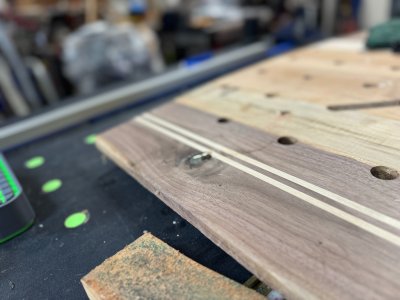
I finally had the chance to take both the RS 2 E and LS 130 EQ for a spin on a real project. Working on my outdoor workbench and it was Sanding Time. Used the RS 2 to keep it flat with P80 and P120 on both sides, then to P180 on the topside.
While using both the RS and LS, I found them to be jump around at times - much like an RO150 would do. The RS would be gliding along and then suddenly, jump and make a hard left turn. I was trying to think about how I might be able to better control the sander. Now, I do have to note that after I finished with the RS 2, I noted some swirl marks and then realized that I forgot to turn down the suction. I ended up backing down to P120 Granat and re-sanding the top with the ETC EC 150/3, and that cleaned it up.
For the final sanding, I used P180 Grant on the LS 130 keeping the pad inline with the grain across the top. But like the RS 2, there were points where the LS would jump and skip. No left turns, just a bit of jumping - and typically in the same spot across the boards in the top. I thought it might be the way I was holding it and wondered if I might be pushing too hard on the top and leaning it forward, but I'm not sure.
At the end, I think the top looks good and is ready for finishing. Planning on using Waterlox as the workbench will live outside.
While using both the RS and LS, I found them to be jump around at times - much like an RO150 would do. The RS would be gliding along and then suddenly, jump and make a hard left turn. I was trying to think about how I might be able to better control the sander. Now, I do have to note that after I finished with the RS 2, I noted some swirl marks and then realized that I forgot to turn down the suction. I ended up backing down to P120 Granat and re-sanding the top with the ETC EC 150/3, and that cleaned it up.
For the final sanding, I used P180 Grant on the LS 130 keeping the pad inline with the grain across the top. But like the RS 2, there were points where the LS would jump and skip. No left turns, just a bit of jumping - and typically in the same spot across the boards in the top. I thought it might be the way I was holding it and wondered if I might be pushing too hard on the top and leaning it forward, but I'm not sure.
At the end, I think the top looks good and is ready for finishing. Planning on using Waterlox as the workbench will live outside.