Using the DFC500

onocoffee

Member
Joined
Sep 23, 2024
Messages
1,421
Location
Baltimore, Maryland, USA
I was just watching this video from FTUK about the new DFC500 and wondering if anyone has had the opportunity to use it coming from the original DF500? Specifically, I'm curious to know about the 700-style handle and how well it maintains the plunge. I've learned to plunge with the 500 by holding and pushing from the back by the plug-it cable. This keeps everything in-line. With the offset of the handle, does this change that? I'm presuming not?

And how more useful is the newer fence design over the older (pre-R) version? Thanks!

 
I have used the DF700 and don't like its weight or its handle as it's not in line with its cutter, meaning that while I'd have to push it hard, I also have the be careful of not tilting the machine. I'm not a fan of the DF700 where there're a large number of mortises to be made.

But from the look of the DFC500, the base of the handle is lower and more in line with the cutter. I would expect the handling to be smoother than the DF700.

That said, I've expressed reservations about making vertical plunges with the battery in the way if they are done from the front side of the machine.
 
I note Chuck above doesn't like the DF700 but to me and everyone else I know that owns or has tried both models, we found that the DF700 is so much more manoeuvrable and manageable than the DF500. The large D handle gives so much more control and balance on especially trickier mortises.

So when a mate and I played with the DFC500 last week, we were both really impressed, and I must say I think it's a big improvement over the old model.

The pins are better, and the handle as with the DF700 is very comfortable, and the surprising thing with it is that it allows you to apply more leverage without any extra effort.

I actually had to hold it back a little to not plunge too fast or hard as the grip is now so good it almost makes you inadvertently plunge too hard. It really is a different beast now and is very nicely balanced and ergonomic. I still think the DF700 is the better beast because of the weight and grip, but the DFC500 is a really nice unit.

And for those who don't like the DF700 because of the D handle, it would still be worth not immediately writing off the DFC500 and give a try.

My mate who does the occasional built-ins has the DF500 and DF700 is actually considering getting the DFC500 now.
 
Here’s what my colleagues say about it:

The majority of people used to the DF 500 struggle with the DFC when trying it first. They’re accustomed to handling the DF, and the different weight, balance, and grip make the cordless tool feel less precise to them. But this sounds more like a muscle memory problem to me. The apprentice—who has never used a Domino before—prefers the ergonomics of the DFC grip.

(The DF 500 RQ—the latest version of the DF 500—also got the new base plate with the new pin and clamping upgrades.)
 
Here’s what my colleagues say about it:

The majority of people used to the DF 500 struggle with the DFC when trying it first. They’re accustomed to handling the DF, and the different weight, balance, and grip make the cordless tool feel less precise to them. But this sounds more like a muscle memory problem to me. The apprentice—who has never used a Domino before—prefers the ergonomics of the DFC grip.

(The DF 500 RQ—the latest version of the DF 500—also got the new base plate with the new pin and clamping upgrades.)
There were several that tried it before my mate and I did, and on the first go all of them plunged way too hard, and having tried it myself I get why. I was expecting the same as the DF500 but just with a better and more manageable grip, but knowing it's a different beast you can adjust pretty quickly. I really do think it's a very worthwhile upgrade to the old model.

If I was after a DF500, I'd buy the DFC even if I really preferred a corded model, just for the new ergonomics and control that come with the D handle.
 
(The DF 500 RQ—the latest version of the DF 500—also got the new base plate with the new pin and clamping upgrades.)
Does anyone know if the new base plate fits an older DF-500? Wonder if there will be an upgrade kit offered...doesn't seem likely, but a boy can dream, can't he?

EDITED TO ADD: Just looked. the RQ isn't on EKAT yet.
 
I wonder why they didn't release the RQ with the same handle as the DFC. Is it because they have too many old motor bodies in stock?
 
And how more useful is the newer fence design over the older (pre-R) version? Thanks!
The new fence offers more registration points, sometimes needed for narrow stock. It's also tool-free to retract them if you don't want them, unlike the paddles, which you would need an Allex key to hold them back.
 
... the handle as with the DF700 is very comfortable, and the surprising thing with it is that it allows you to apply more leverage without any extra effort.
This is what I expected when I compared the two handles from their images and the use of the DF700. The base of handle on the DFC is much lower and when one can push close to the base, the action is similar to holding the barrel of the old DF500 Q near the cord, except that the handle offers a better grip.

I was surprised that the cordless DFC isn't much heavier than the DF500Q despite the battery.
 
I much prefer the handling of the DF 700 over the DF 500, although the weight of the 700 can be an issue. With the 500 you have to knowingly place your fingers correctly around the end of the handle whereas with the 700 it's just grab & go.

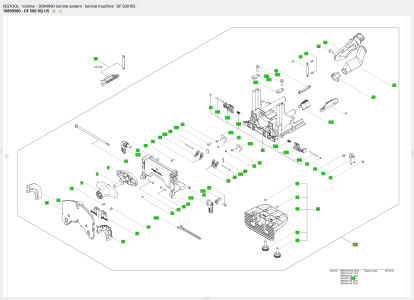
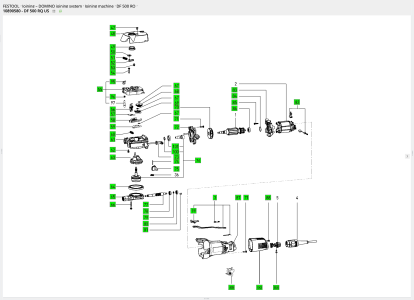
It looks like the DF 500 RQ will be coming to the states... :D ...it's just a matter of when.
 

Attachments

  • DF 500 RQ US Fence Parts List.png
    DF 500 RQ US Fence Parts List.png
    710.8 KB · Views: 3
  • DF 500 RQ US Body Parts List.png
    DF 500 RQ US Body Parts List.png
    344.6 KB · Views: 3
Last edited:
Not to be a contrarian, but i find the DF500 to be easy to use. In fact doing some vertical plunges into a couple of stiles yesterday with the TSO Bigfoot, I was thinking how easy it was, and they are the more challenging cuts to make IMO.

It has taken some time and practice, but it has really grown on me.

Thst said, I have used the 700 only once or twice, but I dont remember any issues or struggles with it.
 
Not to be a contrarian, but i find the DF500 to be easy to use. In fact doing some vertical plunges into a couple of stiles yesterday with the TSO Bigfoot, I was thinking how easy it was, and they are the more challenging cuts to make IMO.

It has taken some time and practice, but it has really grown on me.

Thst said, I have used the 700 only once or twice, but I dont remember any issues or struggles with it.
I think whatever you start with you very quickly get comfortable using it so it becomes second nature or memory muscle using it. If the DFC500 was the first one you bought and used for a long period, you'd probably have trouble getting used to the older model if you used it after having the DFC for some time.

To me the evolution with the DF700 was fantastic and I think the influence of the DF700 on the new DFC500 is really awesome and fixed the slightly awkward handling of it, but to be fair there was never anything actually wrong with the DF500, it was an absolutely and an amazing ground breaking tool when released.

How many tools have literally changed the entire cabinetmaking and hobbyist field overnight like the Domino did!
 
That's a reasonable point, but i would add that some tools can be very difficult to use, even with practice.

For me, the DF 500 seems to be getting easier and easier to use. I really like it, especially after having cut mortises with a router.
 
Not to be a contrarian, but i find the DF500 to be easy to use. In fact doing some vertical plunges into a couple of stiles yesterday with the TSO Bigfoot, I was thinking how easy it was, and they are the more challenging cuts to make IMO.

It has taken some time and practice, but it has really grown on me.

Thst said, I have used the 700 only once or twice, but I dont remember any issues or struggles with it.
Not a contrarian at all.

I befriended a few store workers at a Festool authorized seller place. Admittedly, they were all in their late 60s and early 70s (well past their muscle age), and none preferred the DF700 because of its weight and pushing. The only reason they would recommend the DF700 to a customer was because the customer needed the cutting capacity, not because of the pins or the handle.

Anyone who has done enough vertical plunges freehand* (one of them is me) can attest that the DF500's barrel handle is the best for that job, not the DF700 or the DFC (judging from its configuration, not from experience). The plunge on the DF500 is done steadily and smoothly with miminal risk of moving the machine while plunging -- even more so if an after-market or 3D printed support bracket is used.

Of course, if you are being careful and have only a small number of vertical mortises to mill, all models will not make much a difference. The story would be different if we're talking about a lot of mortises.

*plunging vertically with the machine against a batten or the edge of a board, for example, in the case of a mid-panel joinery is not considered a freehand operation for the purpose of this discussion.
 
Last edited:
The only reason they would recommend the DF700 to a customer was because the customer needed the cutting capacity, not because of the pins or the handle.

That is how it should be.
Anyone who has done enough vertical plunges freehand* (one of them is me) can attest that the DF500's barrel handle is the best for that job

I agree. If you’re coming from the DF 500, you’ll find it better suited for this. But if you’re new to the Domino system, the DFC will also serve you well—especially if it’s the one you’ve trained on. Experience and practice will help you plunge the DFC with a high level of precision. There is a learning curve for those used to the DF because balance and ergonomics are different.
 
Anyone who has done enough vertical plunges freehand* (one of them is me) can attest that the DF500's barrel handle is the best for that job, not the DF700 or the DFC (judging from its configuration, not from experience). The plunge on the DF500 is done steadily and smoothly with miminal risk of moving the machine while plunging -- even more so if an after-market or 3D printed support bracket is used.
I'll certainly give you that one Chuck...especially when it comes to using the 500 with the Big Foot. I did vertical plunges for 10 years before I finally got the Big Foot...what a difference. :D
 
Back
Top