Michael Kellough
Member
A preliminary look.
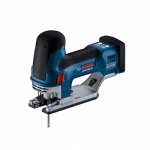
BOSCH GST18V-60BCN cordless jigsaw.
[attachimg=1]
I was thinking about buying a cordless jigsaw and the best one (Mafell PS 2-18) would take “3-6 months) to get here.
The Bosch was delivered in less than 12 hours.
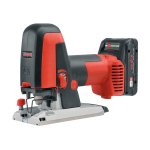
[attachimg=2]
Very similar in appearance but the Bosch is forever fixed at 90 degrees. The Mafell has an optional tilt base that can ride against a guide rail or even engage with the top of the Mafell rail. The jigsaw can also ride the rail by itself. A ski that clips onto the base/shoe keeps the shoe parallel to the work surface and is included in the T-Lok Systainer.
In addition to the wait time the Mafell costs $919 compared to the Bosch at $209.
I’ve been having very little luck posting photos from my iPhone lately I’ll just describe another difference between the tools. The reciprocating shaft on the Mafell is about twice the diameter of the Bosch shaft. This (and whatever clever shaft guidance is hidden inside) seems to allow Mafell to avoid the need for blade guidance.
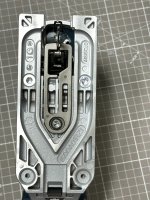
At full extension the Bosch shaft has some undesirable slack so it does require blade guidance, which is typically a mixed bag and it is in this case too. A tapered yoke extends from back in the base to support the blade. A socket head cap screw (there is no place provided to store the included 3mm hex key) accessible from the side of the base can be used to open or close the yoke for best engagement of the blade. Unfortunately in this sample the yoke is offset to one side so when one fork of the yoke touched the blade the other side was still at least a mm away. There is no easily accessible way to adjust the gross position of the yoke.
To get to the yoke fixing screw you have to remove the plastic overshoe from the base (requires removing two screws with a not included #20 Torx driver). Then a button head cap screw that secures the yoke is visible. It requires a #30 Torx driver that is also not included. The hole in the yoke that the screw goes through is oversized so two axis of movement need to be corrected while tightening the screw. Predictably, when the screw binds against the seat in the yoke (there is no washer) it moves the yoke clockwise. There should be another screw or two to position the yoke before the #30 Torx clamps it down.
As it turned out the little hex key was almost thick enough to act as a temporary shim to keep the yoke from moving too much while the clamp screw was tightened. The adjustment is not perfect but it’s better than I was ever able to get with the blade guides on my Festool Trion jigsaw. A hole could be drilled thru the plastic overshoe to get to the #30 Torx but there needs to be a way to shim the yoke from the front of the shoe. Maybe a long thin metal wedge.
A few specs from Bosch. The blade stroke is 1” and the maximum thickness to wood 6-1/8”. Can cut 3/8” steel. It has an led to illuminate the cut area but I’m not sure it’s in the best location. Has a switch to direct air to keep the cut line clear. Hope it works better than in past Bosch jigsaws where I couldn’t tell if it was engaged or not. It does come with a swiveling dust port that is very easy to add to the tool. Should greatly reduce the negative influence of a vac hose on the ability to follow a cut line. The jigsaw is well balanced with a 4 amp battery attached. It would get a little light up front with a heavier battery. It has very easy to operate power switches on both sides so it’s probably the easiest to use dual handed tool I have seen.
I know it’s not fair to compare the Bosch (which comes in a card box with some loose bits) to the Mafell which cost more than four times as much and comes in very well kitted T-Lok Systainer. Hopefully the results from making sawdust will be good. I’ll follow up when that is done.
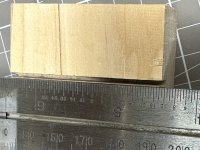
Cuts close enough to 90 degrees.
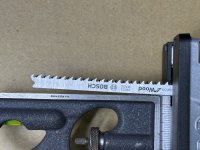
Follow up on the blade guide adjustment. I must have left a little bit too much friction so that when the saw was running the blade got hot enough to expand a little which increased the friction to the point where the blade turned blue where it rubbed on the guide. Not unlike what often happens on my Trion.
[attachimg=5]
BOSCH GST18V-60BCN cordless jigsaw.
[attachimg=1]
I was thinking about buying a cordless jigsaw and the best one (Mafell PS 2-18) would take “3-6 months) to get here.
The Bosch was delivered in less than 12 hours.
[attachimg=2]
Very similar in appearance but the Bosch is forever fixed at 90 degrees. The Mafell has an optional tilt base that can ride against a guide rail or even engage with the top of the Mafell rail. The jigsaw can also ride the rail by itself. A ski that clips onto the base/shoe keeps the shoe parallel to the work surface and is included in the T-Lok Systainer.
In addition to the wait time the Mafell costs $919 compared to the Bosch at $209.
I’ve been having very little luck posting photos from my iPhone lately I’ll just describe another difference between the tools. The reciprocating shaft on the Mafell is about twice the diameter of the Bosch shaft. This (and whatever clever shaft guidance is hidden inside) seems to allow Mafell to avoid the need for blade guidance.
At full extension the Bosch shaft has some undesirable slack so it does require blade guidance, which is typically a mixed bag and it is in this case too. A tapered yoke extends from back in the base to support the blade. A socket head cap screw (there is no place provided to store the included 3mm hex key) accessible from the side of the base can be used to open or close the yoke for best engagement of the blade. Unfortunately in this sample the yoke is offset to one side so when one fork of the yoke touched the blade the other side was still at least a mm away. There is no easily accessible way to adjust the gross position of the yoke.
To get to the yoke fixing screw you have to remove the plastic overshoe from the base (requires removing two screws with a not included #20 Torx driver). Then a button head cap screw that secures the yoke is visible. It requires a #30 Torx driver that is also not included. The hole in the yoke that the screw goes through is oversized so two axis of movement need to be corrected while tightening the screw. Predictably, when the screw binds against the seat in the yoke (there is no washer) it moves the yoke clockwise. There should be another screw or two to position the yoke before the #30 Torx clamps it down.
As it turned out the little hex key was almost thick enough to act as a temporary shim to keep the yoke from moving too much while the clamp screw was tightened. The adjustment is not perfect but it’s better than I was ever able to get with the blade guides on my Festool Trion jigsaw. A hole could be drilled thru the plastic overshoe to get to the #30 Torx but there needs to be a way to shim the yoke from the front of the shoe. Maybe a long thin metal wedge.
A few specs from Bosch. The blade stroke is 1” and the maximum thickness to wood 6-1/8”. Can cut 3/8” steel. It has an led to illuminate the cut area but I’m not sure it’s in the best location. Has a switch to direct air to keep the cut line clear. Hope it works better than in past Bosch jigsaws where I couldn’t tell if it was engaged or not. It does come with a swiveling dust port that is very easy to add to the tool. Should greatly reduce the negative influence of a vac hose on the ability to follow a cut line. The jigsaw is well balanced with a 4 amp battery attached. It would get a little light up front with a heavier battery. It has very easy to operate power switches on both sides so it’s probably the easiest to use dual handed tool I have seen.
I know it’s not fair to compare the Bosch (which comes in a card box with some loose bits) to the Mafell which cost more than four times as much and comes in very well kitted T-Lok Systainer. Hopefully the results from making sawdust will be good. I’ll follow up when that is done.
Cuts close enough to 90 degrees.
Follow up on the blade guide adjustment. I must have left a little bit too much friction so that when the saw was running the blade got hot enough to expand a little which increased the friction to the point where the blade turned blue where it rubbed on the guide. Not unlike what often happens on my Trion.
[attachimg=5]