Packard
Member
Do the cut edges look “ground” or “snap-cut”? In other words, was it cut with a wet saw or a glass cutter (carbide wheel).I don't know, it was always supplied to me.
I always cut the acrylic, but glass is a no.

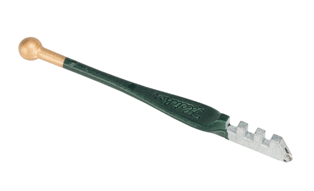
Carbide wheel:

Do the cut edges look “ground” or “snap-cut”? In other words, was it cut with a wet saw or a glass cutter (carbide wheel).I don't know, it was always supplied to me.
I always cut the acrylic, but glass is a no.

I'm pretty sure the last textured glass I messed with was wet sawn. It's been a while though, most recently everything had polished edges (shelves)Do the cut edges look “ground” or “snap-cut”? In other words, was it cut with a wet saw or a glass cutter (carbide wheel).
Carbide wheel:
View attachment 380432


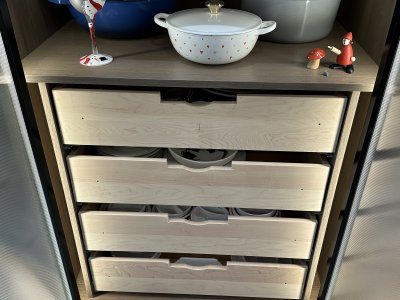
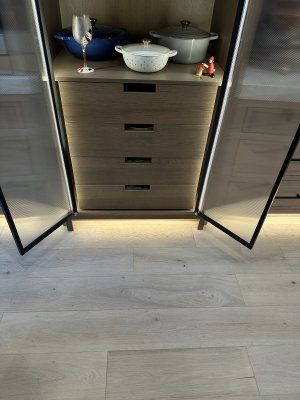
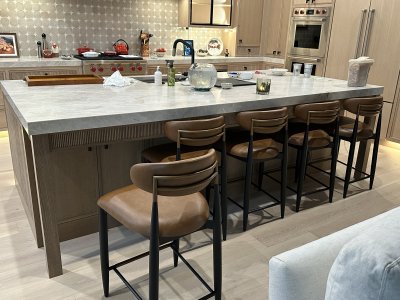
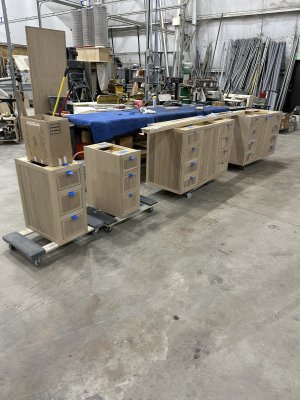
The drawers behind the tall glass doors.Looks fantastic Tom, as always. I have a couple of questions. Are the large "panels" in the tall cabinet of the vanity unit, drawers? They seem pretty large, for a bathroom. All of the rest of the drawers seem to have push-to-open drawer guides, why the dangerous looking elephant heads? No doubt it's an adult space, children's heads may never be an issue, but they look snaggy.
The Xs are a cool touch, until that day someone takes out a toe or two.
Again, adults, do whatever, not my foot. I like the look, but that doesn't mean easy to live with (insert ex wife joke)
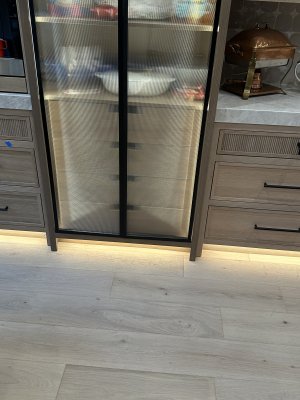
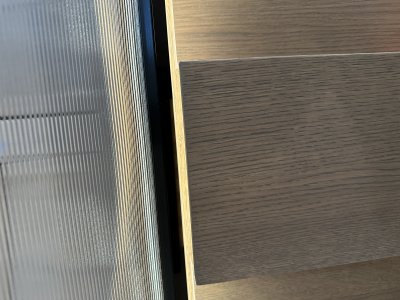
What kind of hinges are on the glass kitchen doors, where the drawers are behind? I really like the glass panel look, but hinging them out of the way of drawers takes some planning.
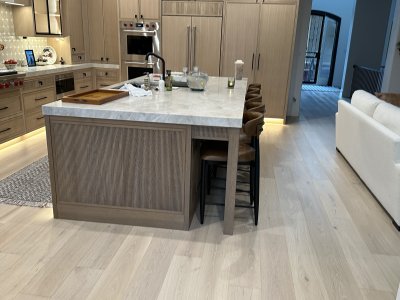
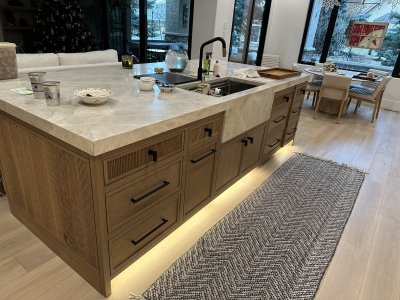
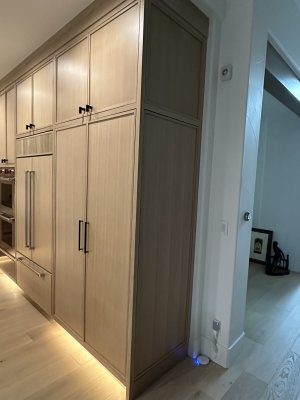
Are the lighted toe kicks on an ordinary wall switch? or something fancy? a motion sensor/timer?

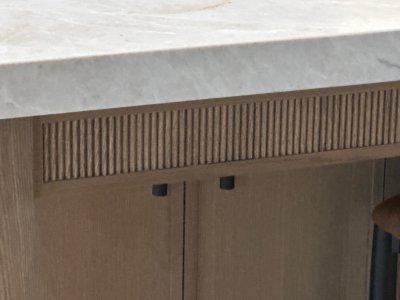
I am ignorant when it comes to scoring glass - never worked for me. So, please forgive my ignorance, which side of reeded glass do you score?I have 1/8" reeded glass in the sloped wall dividing my kitchen and bathroom set in quarter sawn oak framing. I scored and cut the glass to varying height myself to match the ceiling slope. It really scores and snaps no different than any other art glass. Only one side is fluted the other side is flat.
As far as I know, you can only score the smooth side. The wall mounted glass cutter cannot follow contours, and it is so long since I used a hand held scoring cutter that I’m not sure I still have the skill set required.I am ignorant when it comes to scoring glass - never worked for me. So, please forgive my ignorance, which side of reeded glass do you score?
Peter
My reeded glass was about 1” on center. It was originally a side-lite for an entryway door. It was clearly not up to code for that application as modern code requires tempered glass. It was probably the equivalent of “double-strength” glass.I have 1/8" reeded glass in the sloped wall dividing my kitchen and bathroom set in quarter sawn oak framing. I scored and cut the glass to varying height myself to match the ceiling slope. It really scores and snaps no different than any other art glass. Only one side is fluted the other side is flat.