Glue Bottles - What you Love or Hate

Corner Weld (by Framica) was formulated for miters, which is essentially end grain to end grain. But with an open time of one minute or less, not useful for most woodwork.

Framers, however, apply glue to one surface, put the two pieces in an underpinner and step on the pedal. Done. 10 minutes later the frame can be loaded with glass, art and backer. You could not do that with any of the Titebond products.

Fast forward to 0:50 to see how quickly miters are joined with an underpinner. Underpinned joints need glue though. Some Cinese imported picture frames try to get by with the V-nails only. It is not really acceptable. The underpinner I had was entirely manual, with the foot pedal providing all the pressure.


With your manual underpinner did the device have a stronger overarm clamp than is shown on this rig? Looks ok for a pneumatic pinner but maybe not for withstanding pressure for a longer time.
 
With your manual underpinner did the device have a stronger overarm clamp than is shown on this rig? Looks ok for a pneumatic pinner but maybe not for withstanding pressure for a longer time.

It was adequate for clamping. The mouldings never lifted while driving the v-nails.

I bought it used from a framer going out of business. It was not a premium machine. But much faster than cross nailing the corners, which I used to do.

By the way, if anyone wants to buy a used mat cutter, most framers retired theirs when they leased their CNC automatic mat cutter, but held onto it “just in case”. But the automatic cutters proved to be very reliable, and I do believe that many framers have forgotten how to use their manual machines.

Mailing out inquiries to all the area framers will likely get you offers on that and other framing equipment.

Note: My spell checker changed my correctly spelled “area framers” to “Arab framers”. A.I. spellers should not quit their day jobs.
 
Someone must like it, otherwise, the asking prices wouldn't be that high. I always prefer a simple set-up, and that means I just want to open a glue bottle and use it. I don't want something that adds extra work like a glue dish or a wedge to open the nozzle cap.

One exception is the OBG, which needs to be kept warm during its use.

As for epoxy glue, which is expensive, it has its place in woodworking, but I haven't known any furniture maker -- full-time or amateur -- in my neck of wood who uses it as their go-to glue. It's messy and hard to clean up like PVA or hide glue.
I like it but not enough to pay $70 for it. In the video she bangs on about not contaminating the glue with your fingers and a finger is my primary application tool! YouTube advice at its best!
 
Yeah but the real danger is the fact that wood glue can stain skin! Oh no!

Am I the weird one then that after a day of gluing stuff up I get a high degree of satisfaction as I peel the dried glue off my fingers?
 

Attachments

  • wood.glue.PNG
    wood.glue.PNG
    7.7 KB · Views: 14
Yeah but the real danger is the fact that wood glue can stain skin! Oh no!

Am I the weird one then that after a day of gluing stuff up I get a high degree of satisfaction as I peel the dried glue off my fingers?
I don't know if I would like that. I keep a wet towel at the ready to wipe up squeeze out and my fingers. Stuff coating my fingers gives me the heebie-jeebies. I think it comes from my days working in kitchens making dough. That sensation of the dough sticking to my hands and caking all over them - UGH!!!
 
Coming in a little late here.

I have one similar to this Rockler set ...


The spreader is nonsense, but the bottle is great as it is thin-walled and easy to squeeze plus works with gravity (depending on the viscosity of the glue). The important part is the little cap for the bottle, which is silicon. That makes it easy to clean, and the viability of a glue bottle actually comes down to this - blocked outlets (as glue dries) are the main issue with Titebond bottles.

Regards from Perth

Derek
 
Paul Sellers uses fingers like some of you guys. He even smears glue everywhere with some shavings!

But why? Applying glue a well-planned activity, and shouldn't you have time to get whatever glue spreader you own other than your fingers?
 
Paul Sellers uses fingers like some of you guys. He even smears glue everywhere with some shavings!

But why? Applying glue a well-planned activity, and shouldn't you have time to get whatever glue spreader you own other than your fingers?
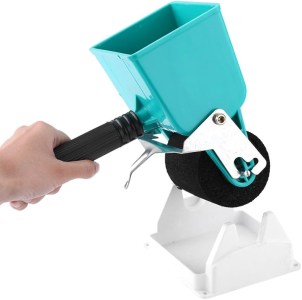
I never use my fingers to spread glue, depending on the project I'll use a brush, silicon scraper, or my 3" roller/feeder glue applicator as pictured.

I do somehow always get glue over my hands and whatever t-shirt I happen to be wearing though no matter how neat I'm trying to be.
 

Attachments

  • Glue.Applicator.png
    Glue.Applicator.png
    560.1 KB · Views: 13
Last edited:
For large areas I like to use a plastic glue trowel to spread glue. For domino holes a metal painters spatula (sometimes a small brush). For small areas either my fingers, or a small silicone roller are used to spread the glue. Just like onocoffe I always make sure to have a damp cloth near when applying glue.
 
Coming in a little late here.

I have one similar to this Rockler set ...


The spreader is nonsense, but the bottle is great as it is thin-walled and easy to squeeze plus works with gravity (depending on the viscosity of the glue). The important part is the little cap for the bottle, which is silicon. That makes it easy to clean, and the viability of a glue bottle actually comes down to this - blocked outlets (as glue dries) are the main issue with Titebond bottles.

Regards from Perth

Derek
Sorry Derek, $54 for a glue bottle is the Australia tax at work! To expand on that I was once accused of selling Clearvues too cheaply by a retailer because it forced them to lower their prices and he wanted me to do the importation and sell them to him so he could mark them up and make some more money. That company went bust and for me it was karma.
 
Note that I said I had one similar, not the one in the link. I think it was from AliExpress, which is likely the source for the Carbatec and Rockler stock. A fraction of that price. I agree $54 is robbery. The point of my post was to comment on the silicon cap.

Regards from Perth

Derek
 
I use the Harbor Freight acid brushes, 36 for $2.99 from my local store, or 72 for $15.00 from Amazon (listed as a Harbor Freight item).

So cheap, that I use them once and throw them away. I could run them under warm water and clean them and use them over and over again, but I don’t.

The only thing cheaper is using my finger tips, and I don’t do that.

 
Long ago, I used to use Bondo spreaders, for large-area glue ups, but it requires cleaning. After enough times of forgetting, I switched to cutting small rectangles out of scrap laminate. Use it once and throw it out, pretty much like acid brushes, though I will drop them into a dedicated cup of water. I get a whole day out of them that way.
 
I use my fingers but I always wear nitrile gloves. Bigger areas I’ll use a plastic spreader for speed. To put glue in holes I use a bamboo skewer.
Years ago when I had my first helper - the son of a neighbor - we were on a job site and were replacing rotten siding. I happened to notice him in the trailer looking for something. I asked him what he was looking for. Dust masks and latex gloves. I asked him why he was looking for those items and he directed me to the warnings on the tube of Dap Latex caulking. The label did indeed have a warning that the caulking did contain silicates and that the inhalation of silicates was a proven cause of lung disease and possibly cancer and that skin contact was to be avoided. I asked him if he was planing on snorting any of the caulking straight from the tube. He decided to skip the mask. He did try the gloves for about the length of time for the residue of the first seam tooling glued his glove fingers together. I was glad when he decided to get a job at the local YMCA.

Peter
 
Long ago, I used to use Bondo spreaders, for large-area glue ups, but it requires cleaning. After enough times of forgetting, I switched to cutting small rectangles out of scrap laminate. Use it once and throw it out, pretty much like acid brushes, though I will drop them into a dedicated cup of water. I get a whole day out of them that way.
A few years ago a building a few doors down closed and had filled a skip full of office equipment.

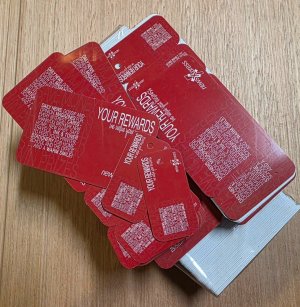
I love a good dumpster dive so along with a heap of other stuff, I recovered an unopened carton of plastic business card sized loyalty cards, which I've since been using as throwaway glue spreaders for when the brush or roller aren't suitable!

They each also had 2 mini cards around 30mm high attached which are useful as small scrapers.

Sadly my wife didn't understand my excitement.
 

Attachments

  • Plastic.Cards.jpg
    Plastic.Cards.jpg
    285 KB · Views: 10
Can’t remember his name but one of the old timers who used to be covered by Fine Woodworking magazine was said to use plain old Elmers white glue, because it had less solids and he could get tighter joints.
I'm late to this thread.

That would likely be Frank Klauz. He uses Elmers white glue exclusively. He also adds 5% starch to it to make a stronger. I did that for a couple projects after taking a week-long workshop with him. Then I got lazy and went with Titebond. I need to go back to that once my nearly-empty bottle is, well, empty.
 
Back
Top